
It was 3 o’clock in the morning when I realised my beautiful Siamese queen wasn’t actually dying.
She was calling.
The sound — that raw, haunting yowl — had me out of bed in a panic, convinced something was catastrophically wrong. But no. She was absolutely fine. In fact, from her perspective, she was having the time of her life, rolling on the kitchen tiles like her body had declared war on all rational thought.
The next morning, our neighbours politely (but firmly) asked if our cat was okay.
Welcome to breeding Siamese.
If you’re planning to breed from your queen — or you’ve got a female cat and you’re wondering what all the fuss is about — this is the article you need. Because calling behaviour is loud, relentless, and absolutely nothing like what you see in the movies.
Quick Answer: A cat in season (calling) displays dramatic behaviour changes — extreme affection, rolling, presenting, and intense vocalisation — that repeat every 2-3 weeks through the breeding season until she mates or is spayed. If you’re not planning to breed, spay her between seasons; if you are, get her to stud during a call.
👇 Skip to the 8 things every breeder needs to know about calling
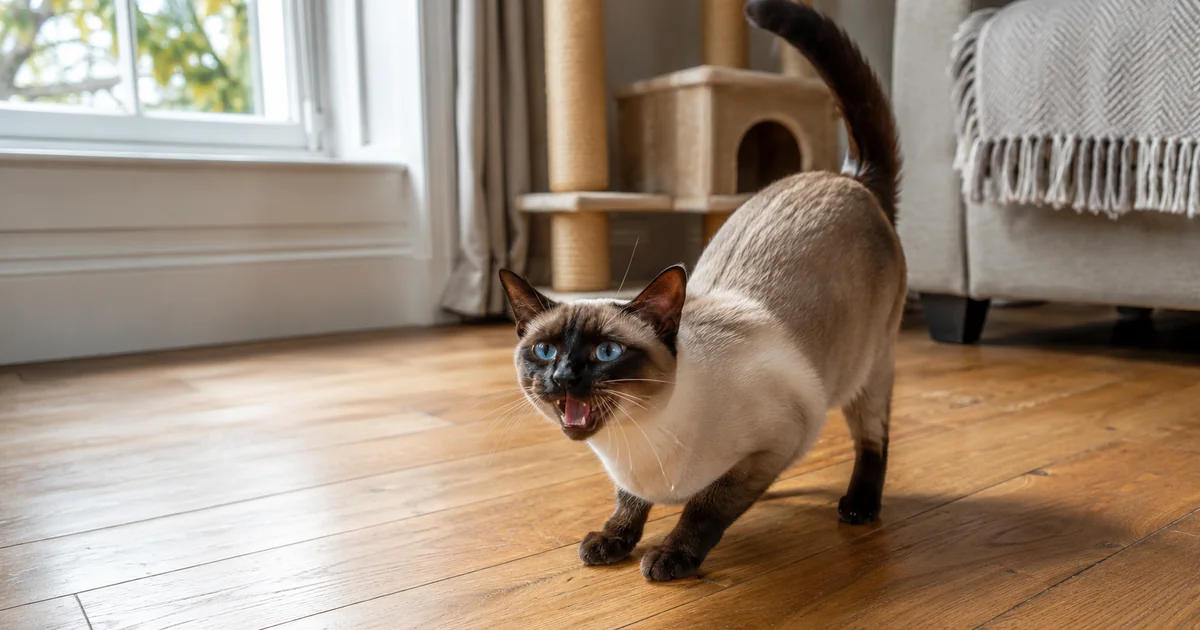
What “In Season” Actually Means
Let’s start with the biology, because it’s actually quite elegant — and completely different from how humans work.
Cats are induced ovulators. That’s the key bit. Unlike us, a female cat doesn’t release her eggs on a fixed cycle. She releases them only when she mates. So calling — that theatrical display of behaviour and noise — is her way of saying: “I’m ready. Where are the boys?”
Once she’s been mated successfully, she’ll ovulate, become pregnant, and the calling stops. If she’s not mated, the cycle resets and she’ll call again in 1-3 weeks. Then again. And again. Solid throughout the breeding season.
Cats are also polyoestrous — meaning they cycle repeatedly through the breeding season rather than going into one big heat and then stopping. For indoor cats under artificial light, this can happen year-round. For outdoor cats in the UK, the breeding season typically runs January through September, triggered by lengthening daylight.
So if your queen isn’t mated during her first call in January, she’ll call again in February. Then March. And so on, until either she mates or you get her spayed.
When Does Calling Start?
Most female cats have their first call between 6 and 12 months of age.
But here’s where breed matters — and Siamese and Oriental breeders know this painfully well. Some girls, especially in the Oriental breeds, can start calling as young as 4 months. Four months old and already giving you the performance of a lifetime at 2am.
I had one girl at Burnthwaites who first called at 5 months. I genuinely didn’t know what was happening. I thought I was doing something wrong with her diet. Turned out she was just precocious — very Siamese of her.
Body weight also plays a role. A larger kitten might reach sexual maturity earlier than a tiny one. So if you’ve got a queen who’s well-grown by 6 months, don’t be shocked if she calls before a year old.
What Calling Looks Like — The Behaviour
Right. This is where it gets entertaining.
A calling cat doesn’t just quietly decide she’s ready to breed. She completely transforms.
The first sign you’ll notice is personality shift. Your independent, aloof queen suddenly becomes your best friend — and I mean aggressively your best friend. She’ll rub against you constantly, demand affection, and cry for attention if you leave the room.
Then comes the rolling. Full-on, dramatic rolling on the floor, the furniture, the kitchen tiles — anywhere hard seems to be her preference, for some reason. She’ll throw herself down and writhe around like she’s the lead in a Siamese soap opera.
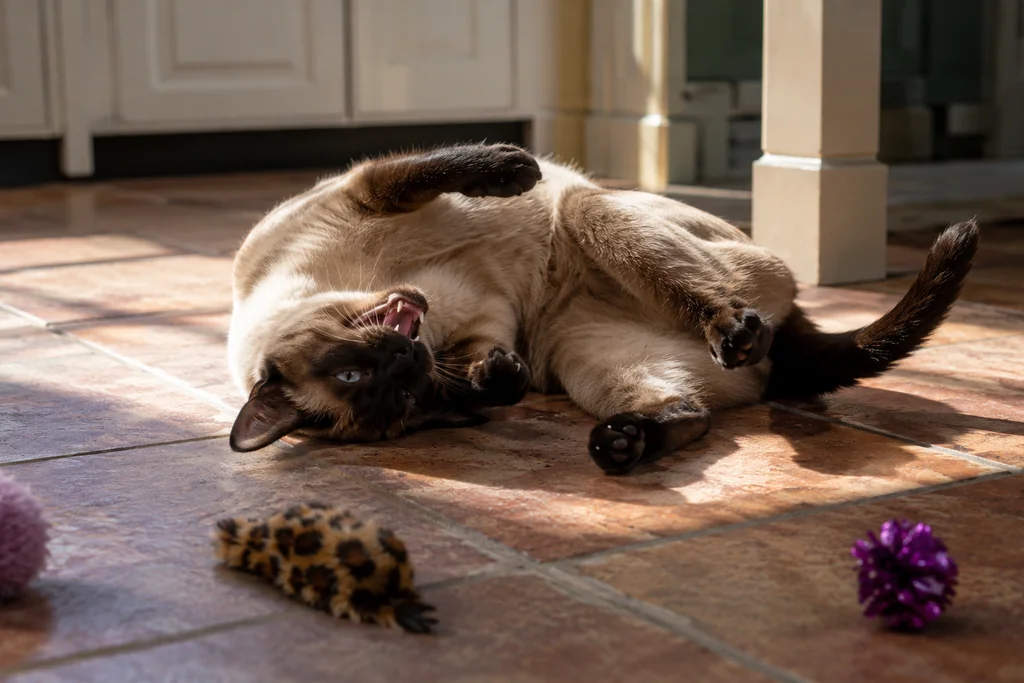
Next, she’ll start treading — paddling her back feet rhythmically, alternating left and right, her whole rear end rising and falling. If you’ve ever watched a kitten kneading dough on your lap, it’s similar, but more intense and at the wrong end of her body.
Then there’s presenting. This is the lordosis posture — she’ll raise her rear, flatten her front end, and deflect her tail to the side. If you stroke her lower back, she’ll press upwards into your hand and deepen the posture. From a breeder’s perspective, this is how you know she’s genuinely ready: if she assumes lordosis when you touch her, she’s in the fertile window.
She’ll also become obsessed with her own vulva area — excessive licking and grooming. You might notice swelling, discharge, or marking around her hind quarters.
And scent marking. Oh, the scent marking. She’ll back up to vertical surfaces — walls, furniture, doorways — and spray or rub, leaving pheromones to advertise her availability to every male cat in a five-mile radius.
All of this happens in a specific sequence, usually peaking around day 3-5 of the call. But here’s the thing — every queen is different. Some display all of these behaviours intensely. Others are more subtle.
What Calling Sounds Like — The Vocal Performance
If the behaviour doesn’t convince you she’s calling, the noise will.
The calling cat develops a distinctive yowl — deep, prolonged, and genuinely unsettling if you don’t know what you’re listening to. It’s nothing like a normal meow. It’s this haunting, almost mournful sound that rises and falls, and it can absolutely convince you your cat is in agony.
I’ve had vets show up thinking I’d called about an injury because someone heard the noise and panicked.
Siamese and Oriental cats? They’re absolutely relentless. They’re already loud cats by nature, but a calling Siamese is something else entirely. It’s like she’s amplifying her entire personality through her voice box.
The calls happen at all hours. Not just 3am, though that seems to be peak performance time. Early morning. Late evening. Midday. She’ll yowl, go quiet for 20 minutes, then start again. And again. And again.
Here’s the YouTube bit — search for “Siamese cat calling in season” or “cat in heat sound” if you want to hear what you’re dealing with.
That yowl — it’s not cute. It’s not pleasant. It’s primal and intense, and if you live in a terraced house or a flat, your neighbours will absolutely notice.
How Long Does a Calling Season Last?
Individual call: typically 4-10 days if she’s not mated. Some queens are quick — in and out in 4-5 days. Others will stretch it to a week or more.
Then she’ll go quiet for 1-3 weeks — a reprieve that feels like paradise after days of 3am yowling.
Then she’ll call again.
And again. Through the entire breeding season, this cycle repeats — potentially every 2-3 weeks — until she mates or you spay her.
Variation between queens is huge, though. I’ve got one girl who calls maybe once every 3-4 weeks. That’s the dream scenario. I’ve also had girls who barely settle between calls — maybe 10 days quiet, then calling again. That’s the nightmare scenario, and it’s utterly exhausting.
Some breeders I know swear their queens calm down once they’ve been mated once. Others say there’s zero difference. In my experience at Burnthwaites, first-time mothers tend to be a bit less frantically vocal on subsequent cycles, but that’s just observation, not science.
What I’ve Actually Learned (After 22+ Years at Burnthwaites)
Right. The textbook stuff is useful, but here’s what nobody puts in the breeder books — what you actually learn after two decades of queens calling on you.
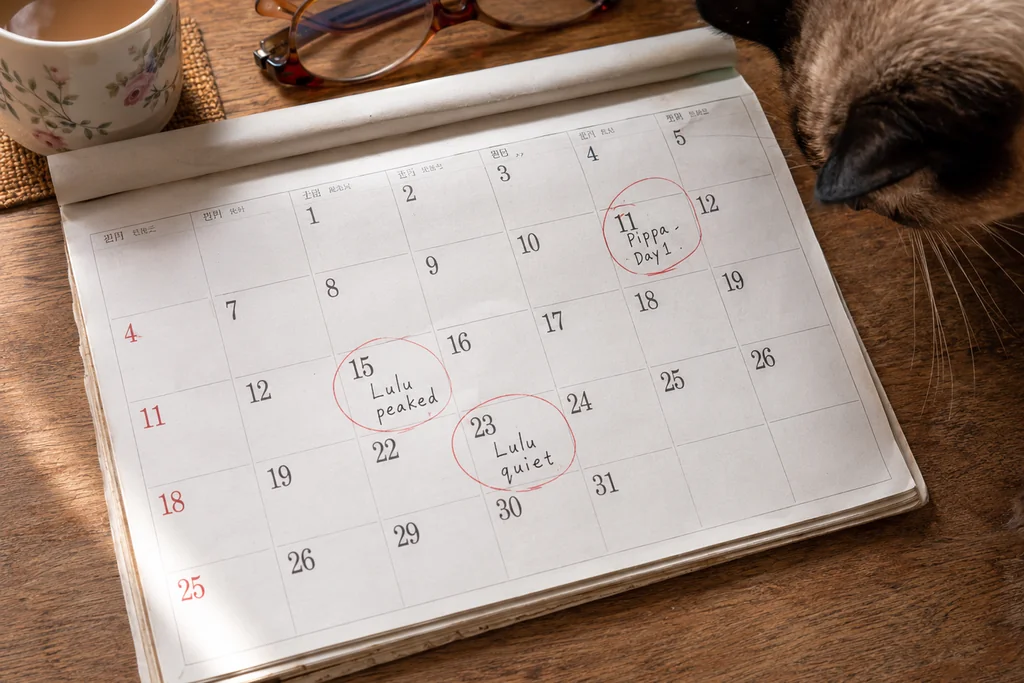
Track every single call. I keep a paper calendar — yes, paper, not an app — for every queen at Burnthwaites. Date she started calling, day she peaked (lordosis), date she went quiet. After two seasons of data per girl, you can predict her cycle to the day. Some queens are like clockwork — exactly 18 days between calls. Others are erratic, but even the erratic ones develop a pattern over a year. Without records, you’re guessing. With records, you can book the stud six weeks ahead and not waste a single fertile window.
Some queens hide it almost completely. I’ve had Siamese girls who barely vocalised, but the rolling and treading were unmistakable. If you’ve got a quiet caller (rare in Siamese, but it happens — more common in Orientals you’d not expect), watch for the behavioural signs even harder, because the audio cue isn’t there to alert you. I lost a fertile window once on a girl called Pippa because I assumed silence meant she wasn’t calling. She’d been in lordosis for three days. Lesson learned.
Sisters synchronise. If you’ve got two queens in the same household, expect them to lock onto each other’s cycles within two or three months. The first to call sets the pace; the rest follow. It’s pheromonal, and there’s nothing you can do about it. Plan for double trouble — book two studs simultaneously, or stagger them tightly. I had three girls call within four days of each other once. The house didn’t sleep for a week.
The first call is rarely the right call. A girl calling for the first time at 6 or 7 months isn’t ready to be mated, even if her behaviour says she is. She’s not physically mature. Wait for her second or third call (typically 18-24 months) before booking stud. Calling is a fertility signal, not a green light to breed — those are different things, and good breeders don’t conflate them.
Diet affects cycle length. This is anecdotal but consistent across my girls — a queen on a high-protein, named-meat diet calls cleaner and shorter than one on a cheaper food. I can’t prove the mechanism, but I’ve watched it happen across enough cats to call it pattern, not coincidence. If you want a manageable cycle, feed her properly between seasons.
What to Do When She Calls — Your Options
You’ve got two paths here. Clean fork in the road.
Option 1: You’re planning to breed. Get her to stud during her call. That’s why calling exists — she’s telling you (loudly, incessantly) that she’s fertile and ready to be mated. If you’ve got a suitable tom or you’re planning to take her to a stud, now’s the time. The fertile window is typically days 3-5, when she’s displaying lordosis and the behavioural signs are at their peak.
For more on that process — see our guide to going out to stud.
Option 2: You’re not planning to breed. Get her spayed — but spay her between calls, not during a season. Spaying a calling cat isn’t impossible, but it’s messier, the bleeding is heavier, and the hormones make recovery slightly more complicated. You want to wait until she’s quiet again, then book the spay for the next 1-2 weeks.
If you keep delaying the spay and just “letting her get on with it” — repeated calling without mating — you’re setting her up for problems down the line. Cystic ovaries, pyometra (uterine infection), and other reproductive issues become increasingly likely the longer she cycles without mating.
So don’t sit on it. Make a decision, and act on it.
The Things Nobody Warns You About
Right. Let’s talk about the bits they don’t mention in the breeder books.
Entire toms appearing from nowhere. If your queen calls near an open window, every entire male cat in a three-block radius will suddenly know about it. You’ll find them on your windowsill, spraying your garden, fighting each other. The smell is incredible. The noise is worse. It’s like your garden becomes a cat convention that nobody invited.
Neuter boys getting ideas. Even neutered males can attempt to mate with a calling female. They won’t be able to complete the mating (no sperm production), but they’ll go through the motions. If you’ve got a neuter boy and a calling girl, you might see mounting behaviour that’s honestly uncomfortable to witness. Separate them during her season.
The discharge. There’s some spotting and discharge. Not heavy, usually, but it’s there. Keep her litter tray spotless because she’ll be using it more frequently, and you’ll want to notice any changes.
The sleep deprivation. This is the real toll. Three weeks of broken sleep — because that’s not an exaggeration, that’s reality — takes it out of you. You’ll find yourself making questionable decisions by day 5. I once drove to the vets at midnight to check if her calling was normal, and the vet gently explained that, yes, cats do indeed call in season.
The awkward visitors. Your mother-in-law arrives unannounced. Your queen chooses that moment to assume full lordosis and start yowling. The explanations are always weird. “No, Mum, she’s not in pain. She’s just… amorous.” Brilliant conversational energy.
Spaying and Neutering — A Quick Note
If you’re not breeding, spay her. Please. Early spaying (before her first call) is fine — many breeders and vets recommend it around 4-6 months.
If you’ve got a male and you’re not planning to breed from him, neuter him. An entire tom is a completely different animal from a neutered male — they’re territorial, they spray, they roam, and they contribute to the calling chaos if there are queens nearby.
Spaying and neutering solves most of this. One surgery. Problem gone. Sleep restored. Neighbours happy.
Key Takeaways
- Calling is triggered by breeding readiness, not a fixed cycle. Cats are induced ovulators — she releases eggs only when mated, so calling is her way of signalling fertility.
- First calls typically occur between 6-12 months, but can start as early as 4 months. Oriental and Siamese breeds are particularly precocious, and larger kittens mature earlier.
- Calling behaviour follows a predictable sequence: affection, rolling, treading, presenting (lordosis), scent marking, and excessive grooming. Lordosis is the key sign she’s in her fertile window.
- The yowl is nothing like a normal meow — it’s deep, prolonged, and unsettling. Siamese and Oriental cats are especially vocal, and the noise continues at all hours.
- Each season lasts 4-10 days if unmated, then she goes quiet for 1-3 weeks before calling again. This cycle repeats throughout the breeding season (January-September in the UK) until she mates or is spayed.
- If breeding, get her to stud during her call when lordosis is evident (days 3-5). If not breeding, spay her between seasons, not during active calling.
- Repeated calling without mating increases the risk of cystic ovaries and pyometra. Don’t delay the decision — breeding or spaying — waiting just causes problems.
- Be prepared for entire toms outside your windows, neuter boys attempting to mount, discharge, sleep deprivation, and awkward conversations with visitors. It’s the reality of breeding queens, and it’s why most non-breeding cat owners opt for spaying.
Frequently Asked Questions
Can I stop a cat calling without spaying her?
Not effectively, no. Hormonal injections exist (such as progestin treatments), but they’re temporary, not ideal long-term, and carry their own health risks. Mating is the biological solution if you’re breeding. Spaying is the permanent solution if you’re not. There’s no safe middle ground of “managing” ongoing calls.
Do calling cats actually feel pain?
No. The yowl and the behaviour might sound and look distressed, but she’s not in pain. She’s frustrated — biologically driven to seek out a mate. It’s intense, it’s dramatic, but it’s not painful. The sound is just how Siamese and Orientals are built to communicate reproductive readiness.
How many times should a queen call before I take her to stud?
As soon as you’re ready and she’s old enough (typically 18 months minimum, though some breeders wait until 2 years). Don’t wait for multiple cycles if you’re planning to breed — there’s no benefit. Just ensure she’s healthy, fully grown, and you’ve got a suitable stud lined up. First or second call is fine.
Can two calling queens living together stress each other out?
Not inherently. Two queens calling at the same time is loud and chaotic, but they won’t stress each other out — if anything, they might synchronise their cycles due to pheromone exposure. The real problem is the noise and the workload for you. Keep them separated if you can, especially if you’re trying to manage multiple queens.
Is there a way to know exactly when she’ll ovulate?
Lordosis and behavioural signs (peak affection, rolling, treading) are your best indicators. She’s most fertile on days 3-5 of the call. If you’re taking her to stud, the stud owner will usually assess her readiness when you arrive. There’s no home test that’s reliable — you’re relying on her signals.
What if she goes out of call while I’m trying to arrange stud access?
It happens. If she’s coming out of her call and you’ve missed the window, wait for the next one (usually 1-3 weeks). Don’t stress. Breeders deal with timing misses all the time. Book the stud earlier next cycle if possible, or have a backup plan. Her fertility will return.
Will my queen calm down after being mated once?
Maybe. Some queens do seem quieter or less frantically vocal after their first litter. Others show no difference whatsoever. It’s individual. What does change is her confidence and maturity — first-time mothers are often more intense in their calling than experienced mums. But there’s no guarantee she’ll be less loud.
Can I accidentally breed my queen if a tom gets through an open window?
Yes. If she’s calling and an entire tom has access, mating can happen. This is why breeders keep calling queens away from open windows and why intact cats need secure housing. One moment of distraction and you’ve got an accidental litter. Keep her indoors and secure during her seasons, especially if you’re not planning to breed.