I judged my first cat show in 2014. Stood behind a pen, trying to look like I knew what I was doing, clipboard in hand, pretending my heart was not hammering in my chest. Over 12 years later, I have judged hundreds of cats across five GCCF sections — and I still get a buzz every single time I walk into a show hall.
But here is what nobody tells you when you are starting out: cat showing is one of those hobbies that looks intimidating from the outside but is genuinely welcoming once you are in it. The problem is finding a decent guide that explains how it all actually works without drowning you in jargon or assuming you already know the difference between an Open class and a Miscellaneous class.
That is what this page is for. Whether you are thinking about entering your first show, wondering what GCCF shows are all about, or you have been showing for a while and want to understand the system better — start here. I will walk you through all of it.
How do GCCF cat shows work? The GCCF (Governing Council of the Cat Fancy) runs pedigree cat shows across the UK throughout the year. Exhibitors enter their cats into classes based on breed, age, and experience. Judges assess each cat against the official breed standard and award certificates to the best examples. You do not need to be a breeder to take part — household pets have their own classes too. Shows are friendly, social events where the cat fancy community comes together. Read on for the full breakdown.
Key Takeaways
- Most GCCF shows are All Breed Championship Shows; breed clubs run smaller breed-specific shows, and the annual Supreme Cat Show sits on top as the flagship.
- You don’t need a pedigree cat to show — Household Pet classes welcome moggies and have their own title system.
- Entry fees are typically £40–£50 per show, depending on how many classes you enter.
- Show whites (white blanket, litter tray, food bowl, water bowl) are mandatory at most GCCF shows.
- Vetting in happens first thing on show day — no cat enters the hall without passing.
- The Supreme Cat Show is the UK’s biggest cat show and a brilliant first day out as a spectator.
What Is the GCCF?
The GCCF — Governing Council of the Cat Fancy — is the UK’s primary registration body for pedigree cats and the organisation that oversees cat shows in Britain. Think of it as the Kennel Club, but for cats. It has been running since 1910, which makes it one of the oldest cat registries in the world.
The GCCF registers pedigree cats, maintains breed standards, licenses judges, and runs the show calendar. If you have a GCCF-registered cat and want to show it, this is the system you will be working within. There are other registries — TICA and FIFe both operate in the UK — but the GCCF is by far the largest and the one most UK breeders and exhibitors work with.
Types of GCCF Cat Show
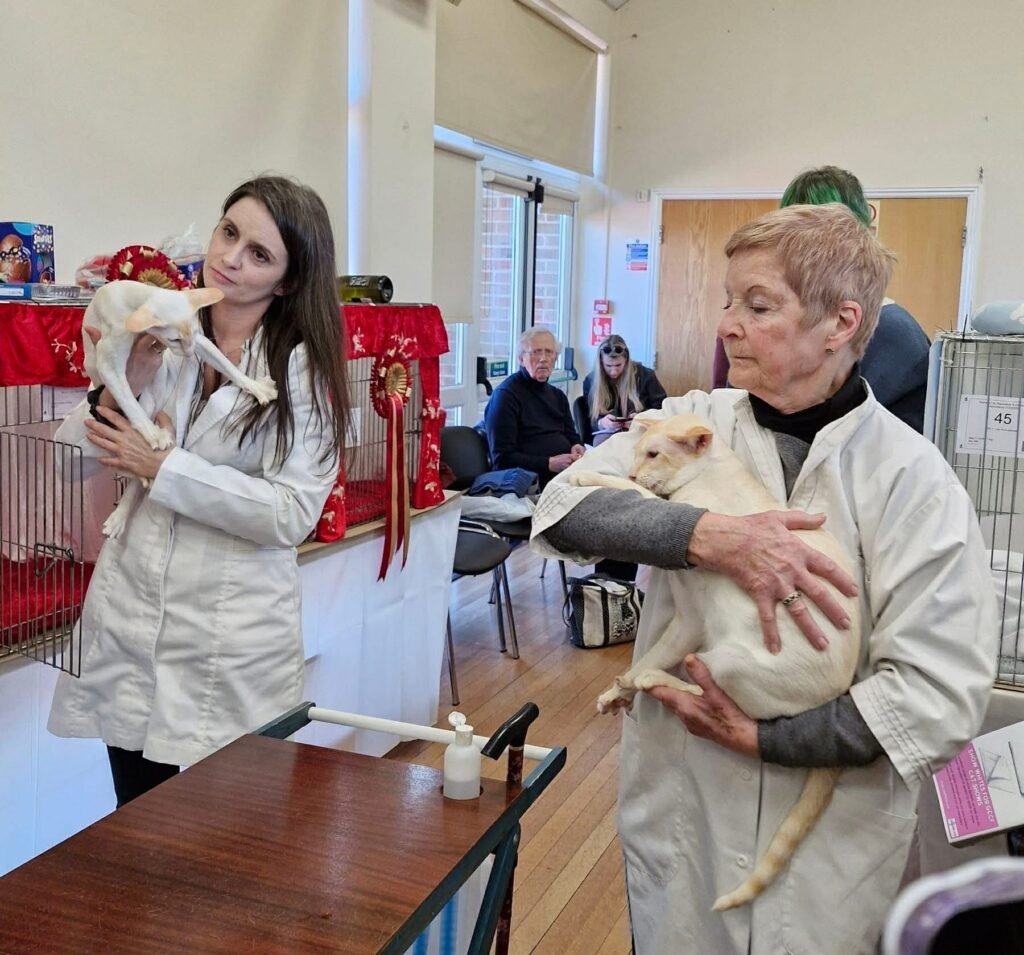
There are really only a couple of show formats worth knowing about, and both award Challenge Certificates.
All Breed Championship Shows are the bulk of the show calendar. Open to any GCCF-registered breed, held all year round at venues across the country. This is where most exhibitors spend most of their show days, and where most CCs are won.
Breed Club and Section Shows are run by individual breed clubs and breed sections. They are still Championship shows — cats can still win CCs — but the field is narrower because entries are limited to the breed(s) the club covers. They are often a good first outing for a newcomer: fewer entries, a more relaxed atmosphere, and breed-club members are usually generous with advice.
Then there is The Supreme Cat Show — the biggest and most prestigious GCCF show of the year. Held annually at a major UK exhibition venue (the location changes year to year), The Supreme is the cat world’s equivalent of Crufts. Cats qualify for The Supreme by winning at Championship shows throughout the year. If you have never been to a cat show before, The Supreme is a brilliant place to go as a spectator — hundreds of cats, stunning drapes, and an atmosphere that will either make you want to show your own cat immediately or convince you that cat people are completely mad. Probably both.
Show Classes Explained
GCCF shows are divided into classes, and this is where it can feel a bit overwhelming if you are new. Here is the simple version.
Open Classes are the most important. Every pedigree cat entered at a Championship show must be entered in its Open class. This is the class where Challenge Certificates are awarded. Cats compete against others of the same breed, colour, sex, and age group (kitten, adult, or neuter).
Side Classes are additional classes you can enter alongside the Open class. There are dozens of these — Debutante (first show), Limit (not yet won a CC), Breeders, and various miscellaneous classes. Side classes are where a lot of the fun is, especially for newer exhibitors.
Household Pet Classes are for non-pedigree cats (or pedigree cats shown as pets). You absolutely do not need a pedigree cat to enter a GCCF show. Household pets are judged on condition, temperament, and overall appeal rather than breed standard. The household pet section has its own titles and awards — and some of the most beautifully presented cats I have ever seen at shows have been household pets.
What Does a Judge Actually Look For?
I can answer this one from personal experience — I have been doing it long enough.
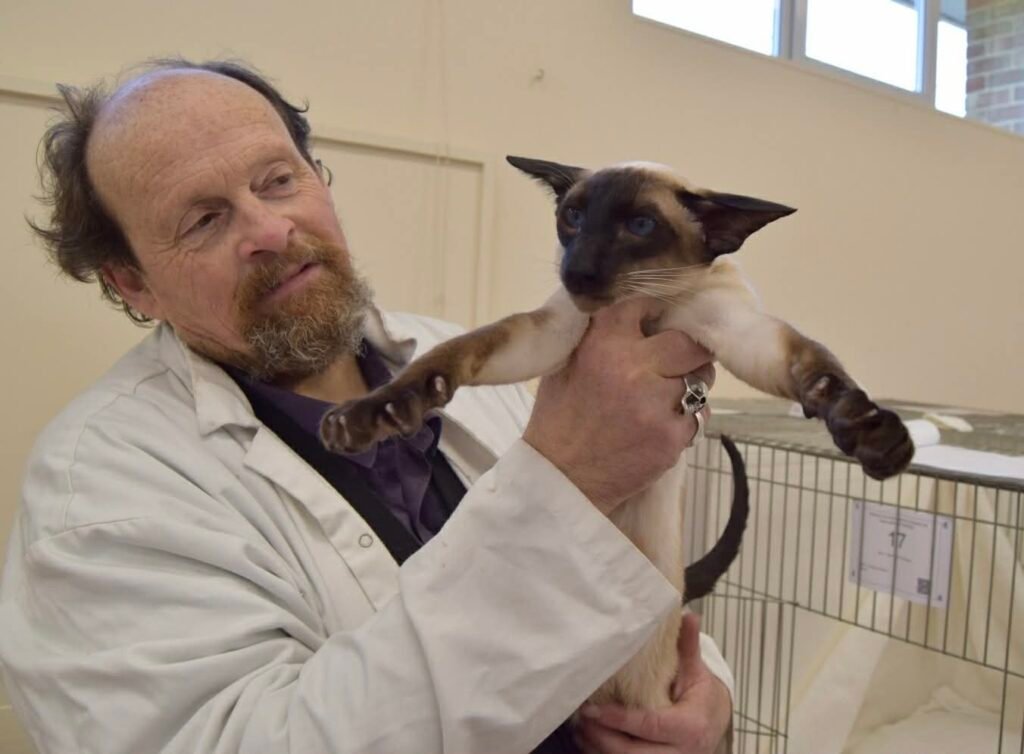
For pedigree cats, judges assess against the breed standard. Every GCCF-recognised breed has a published standard of points that describes the ideal cat for that breed: head shape, eye colour, body type, coat texture, colour, pattern, and temperament. Judges are looking for the cat that comes closest to that standard on the day.
For Siamese, the standard calls for an elegant, long, svelte body with fine bones and firm muscles. The head should be a long wedge — no pinch at the whiskers, no dip in the profile. Eyes should be a vivid, deep blue. Coat should be short, fine-textured, and close-lying, with clear contrast between the body colour and the points. Colour on the points should be even and well-defined. (For a deeper dive into the breed itself, see my Siamese cat breed profile.)
But here is the thing that surprises most people: temperament matters. A cat that is aggressive, stressed, or impossible to handle in the ring is not going to do well, no matter how perfect its structure is. Judges need to be able to examine the cat — look at the teeth, feel the body condition, assess the tail for kinks. If your cat clamps onto the judge’s hand like a furry bear trap, that is not going to end well for anyone.
Household pets are judged differently. The standard is more subjective — condition, presentation, temperament, and that indefinable “look at me” quality that some cats just have. A well-groomed moggy with a gorgeous personality can absolutely take Best in Show in the household pet section.
Getting Started — How to Enter Your First Show
Right. You want to have a go. Here is what you need to do.
Step 1: Register your cat. If it is a pedigree, it needs to be registered with the GCCF on either the Active or Breeding register. If it is a household pet, you still need to register it — the GCCF has a non-pedigree register specifically for this.
Step 2: Find a show. The GCCF website publishes a full show calendar. Pick a show that is reasonably close to home for your first outing. A smaller breed-club show is often a good first outing — fewer entries, a more relaxed atmosphere, and the club members are usually happy to help a newcomer settle in.
Step 3: Enter your cat. Entry forms are usually available through the show manager or the GCCF website. You will need your cat’s registration number, vaccination details, and you will choose which classes to enter. Entry fees are typically £40–£50 per show, depending on how many classes you enter.
Step 4: Prepare your cat. Your cat needs to be in top condition — clean coat, clean ears, trimmed claws. For Siamese and Orientals, the coat should be sleek and glossy. A bath a few days before the show can help, but not all cats appreciate this (mine have opinions about water that I shall not repeat here).
Step 5: Get your equipment. You will need a white show blanket, a white litter tray, a white water bowl, and a white food bowl — these are called “show whites” and they are mandatory at most GCCF shows. If it is The Supreme, you will also want show drapes for your pen — I have a full guide on how to make your own.
Step 6: Turn up and enjoy it. Arrive at vetting-in time, get your cat settled in its pen, and then relax. Talk to people. Watch the judging. Ask questions. The cat show community is one of the friendliest hobbies I have ever been part of — people genuinely want to help newcomers.
Vetting In and Show Day
Every cat at a GCCF show must pass a veterinary inspection before entering the hall. This is called vetting in and it happens first thing in the morning. The show vet checks for signs of illness, parasites, ear mites, ringworm, and general fitness. If your cat does not pass vetting in, it does not show that day. Non-negotiable — and rightly so, because a show hall with hundreds of cats in close proximity is not the place for a sick animal. (For more on keeping your show cat in top condition, see my Siamese cat health guide.)
Once you are through vetting in, you set up your pen. Cats go in, show whites go in, litter tray gets filled, water bowl goes down. At most shows, exhibitors then leave the hall while judging takes place — the judge works through the cats in their classes without the exhibitor present. You come back later to find out results.
At The Supreme, it works differently. Exhibitors stay in the hall, and cats are taken to the judges who judge them at a judging station. It is more of a spectacle — which is partly why The Supreme draws such huge crowds.
The Title System
This is the bit that gets competitive exhibitors hooked.
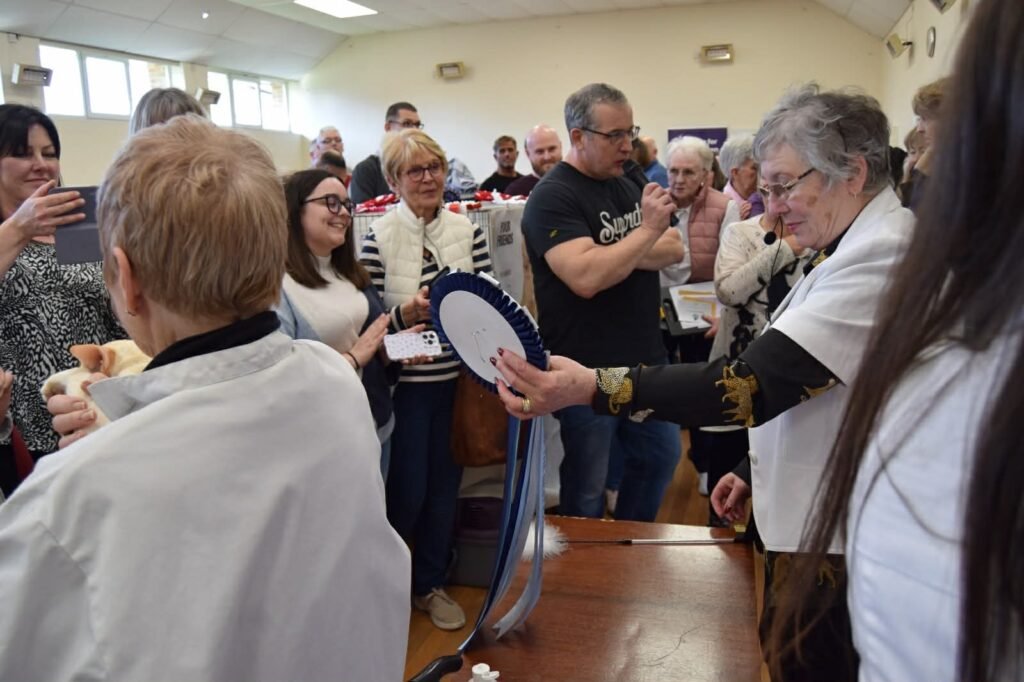
Pedigree cats earn titles by winning Challenge Certificates (CCs) at Championship shows. Win three CCs under three different judges and your cat becomes a Champion. Keep winning and you progress through Grand Champion, UK Grand Champion, Imperial Grand Champion, and ultimately UK Imperial Grand Champion. Each level requires additional certificates won at progressively higher levels.
Neuters have a parallel system — they win Premier Certificates rather than Challenge Certificates, and the titles run from Premier through to Imperial Grand Premier.
Kittens earned their own titles from 5 April 2025: Kitten Champion (KC) for pedigree kittens and Kitten Master Cat (KMC) for household pet kittens. Both work on the same basis — three certificates, three different judges. The subtle difference from adult CCs is that the three KCs (or KMCs) must come from three different show dates: at a back-to-back weekend, only one counts. Entire and neutered kittens compete together in the same class, split only by male and female.
Household pets have their own title system too, working through Master Cat awards.
I will be honest — chasing titles is addictive. There is nothing quite like the feeling of your cat earning its third CC and becoming a Champion. Watching your breeding produce Champions is even better.
Title Progression Ladder
| Entire Title | What It Takes | Neuter Equivalent |
|---|---|---|
| Kitten Champion (KC) | 3 KC certificates from 3 different judges on 3 different show dates — unlike adult CCs, only one KC counts per day | Kitten Master Cat (KMC) — same structure, for household pet kittens | Champion (CH) | 3 Challenge Certificates from 3 different judges | Premier (PR) — 3 PCs from 3 different judges |
| Grand Champion (GRCH) | 3 Grand Challenge Certificates from 3 different judges | Grand Premier (GRPR) — 3 Grand PCs from 3 judges |
| Imperial Grand Champion (IGRCH) | 5 Imperial Grand Challenge Certificates from 5 different judges | Imperial Grand Premier (IGRPR) — 5 Imperial Grand PCs from 5 judges |
| UK Grand Champion (UK GRCH) | 2 UK Grand Challenge Certificates from 2 different judges — awarded only at The Supreme | UK Grand Premier (UK GRPR) |
| UK & Imperial Grand Champion (UK IGRCH) | Cat holds both UK Grand and Imperial Grand titles | UK & Imperial Grand Premier (UK IGRPR) |
| Olympian Bronze / Silver / Gold (OB / OS / OG) | 5 Olympian Certificates per level (at least 4 at All Breed Shows), each from a different judge | Same ladder applies for Olympian-titled Premiers |
Supreme Certificate winners add “Supreme” to whatever title they already hold — so the ultimate accolade is Supreme UK & Imperial Grand Champion (or the neuter equivalent).
Common Mistakes New Exhibitors Make
After twenty-plus years, I have seen a lot of first-timers make the same mistakes. Save yourself the grief:
Not socialising the cat beforehand. A cat that has never been in a carrier, never been handled by a stranger, and never experienced a noisy environment is going to be stressed at a show. Get your cat used to being handled, travelling, and being in unfamiliar places well before show day. (My Siamese cat behaviour and training guide covers socialisation in depth.)
Forgetting the show whites. Every single time — someone turns up without white bowls or a white blanket. If in doubt, bring spares.
Entering too many classes. For your first show, enter the Open class and maybe one or two side classes. Do not enter everything on the schedule — you will overwhelm yourself and your cat.
Ignoring grooming. Even if your cat looks beautiful to you, judges notice details. Clean ears, trimmed claws, clean eyes, no knots in the coat. Preparation is everything.
Taking it too seriously too soon. It is meant to be fun. If you and your cat are not enjoying it, something is wrong. The wins will come — but only if you both keep wanting to turn up.
Why Show Your Cat?
Honestly? Because it is brilliant.

You meet people who love cats as much as you do. You learn more about your breed than any book can teach you. You get to see your cat assessed by someone who has dedicated years to understanding what makes a good example of that breed. You get a day out that revolves entirely around cats — and I cannot think of a better way to spend a Saturday.
For breeders, showing is essential. It is how you validate your breeding programme. It is how other breeders see your cats. It is how you earn the titles that prove your lines produce quality. Without showing, you are breeding in a vacuum.
For pet owners, it is simply fun. The household pet section is one of the fastest-growing parts of the show scene, and it is packed with people who just love their cats and want to celebrate them.
Either way — give it a go. The worst that happens is you spend a day surrounded by cats. I have had worse Saturdays.
Cat Show Glossary
Cat showing is dense with jargon. Here are the terms you’ll hear most often, in plain English.
Frequently Asked Questions
How do I enter a GCCF cat show?
Register your cat with the GCCF in your name, find a show on the GCCF website show calendar, complete the entry form, and pay the entry fee. Your cat must be vaccinated and in good health. For pedigree cats, you will need your GCCF registration number handy.
Can I show a non-pedigree cat at a GCCF show?
Yes. The GCCF runs Household Pet classes at most shows. You need to register your cat on the GCCF’s non-pedigree register. Household pets are judged on condition, temperament, and overall appeal rather than breed standard.
How much does it cost to enter a cat show?
Entry fees are typically £40–£50 per show, depending on how many classes you enter. You may also need to factor in travel costs and show equipment (show whites, drapes). A day at a show is not expensive — it is the rosette addiction that gets you.
What is The Supreme Cat Show?
The Supreme is the GCCF’s flagship annual show, held once a year at a major UK exhibition venue (the location can change year to year). It is the largest cat show in the UK and one of the biggest in Europe. Cats qualify for The Supreme by winning at Championship shows throughout the year.
What does a judge look for in a Siamese cat?
Judges assess Siamese cats against the GCCF breed standard — looking for a long, svelte body; wedge-shaped head; vivid deep blue eyes; short, fine-textured coat; and clear contrast between body colour and points. Temperament and condition also matter.
Do you win money at cat shows?
No. GCCF cat shows do not offer prize money. The rewards are titles, certificates, rosettes, and — for breeders — the reputation and recognition that comes with producing quality cats. The real prize is the community.
What are show whites?
Show whites are the white equipment you need for your cat’s pen at a GCCF show — a white blanket, white litter tray, white water bowl, and white food bowl. They are mandatory at most shows because they create a neutral background for judging.
What time do I need to arrive at a cat show?
Vetting in usually opens around 7:30–8:00am, and you must be vetted in before judging starts (typically 10:00am). Aim to arrive about an hour before vetting opens — the queue can build quickly, and you don’t want a stressed cat or a missed start. Each show publishes its own timings in the schedule.
Can I touch other people’s cats at a show?
No — and this one is non-negotiable. Touching another exhibitor’s cat risks transferring infection, and at most shows it’s explicitly forbidden. Look, admire, ask questions — but keep your hands to yourself unless the owner specifically invites you to handle their cat.
What if my cat hates being shown — can I retire it?
Absolutely. Some cats love the being shown, some tolerate it, and some genuinely hate it. If yours falls into the third group, retire it without guilt. There is no point putting a cat through something that stresses it. A miserable cat does not show well anyway, and there is more to a good cat’s life than a rosette.
GCCF-Compliant Show Whites — Everything You Need For Your First Show
Forgetting the whites is the single most common first-time mistake. I’ve put together a complete GCCF-compliant kit — double-thickness polar fleece blankets (no pilling), compliant litter tray, water bowl and food bowl — everything you need to walk into any show fully kitted, priced from £2.49 for individual pieces up to £43.95 for a full double-pen kit with vet bed.
See the Full Show Whites Guide →
The Show Whites guide explains what GCCF requires, which kit fits which pen, and how to buy — with direct Add-to-Cart buttons through to our sister shop, Cattylicious.
Cat Show Articles
Browse all of our cat show and exhibiting articles below.
-
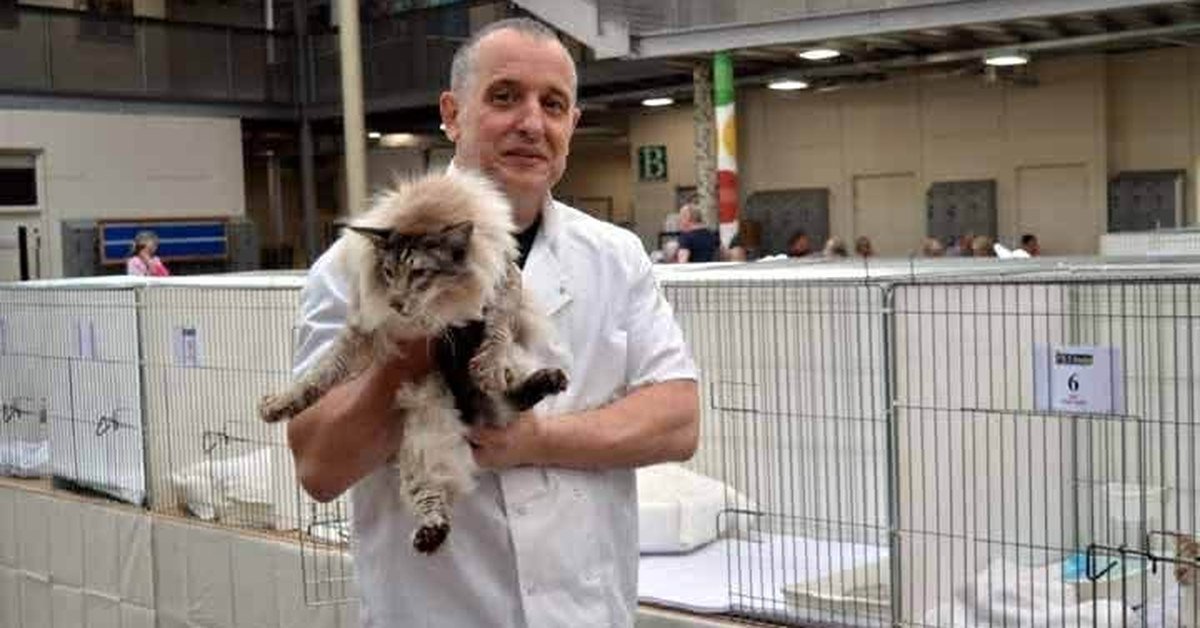
How to Make Your Own Cat Show Drapes For The Supreme
There are many people who make beautiful cat show drapes which they have for sale. But often they can be expensive. If you want to save money or just fancy having a go at making a basic set of drapes yourself then keep reading. I have put together step by step instructions on making your…
-
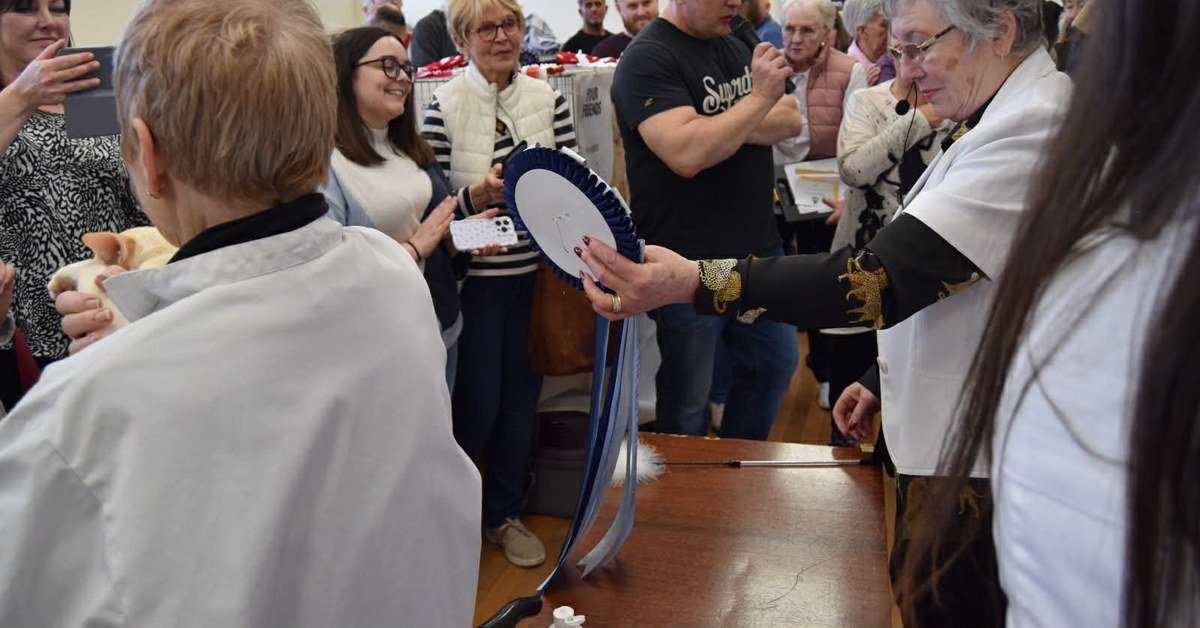
5 Ingredients of a Show-Winning Cat
What separates a Best in Show cat from a good one? After years of judging, here are the five ingredients I look for in a true show-winning cat.