Siamese cat behaviour is unlike anything else you will live with. I have kept Siamese for over twenty years and I have been woken at 3am by a cat yelling because his food bowl was only half full. I have had furniture shredded, curtains climbed, and a stud cat who sprayed everything including — memorably — a visiting judge’s handbag.
Siamese cats are not like other cats. That is not marketing speak. It is a statement of fact that every Siamese owner discovers within about forty-eight hours of bringing one home.
They are louder, needier, smarter, funnier, and more opinionated than any other breed I have worked with — and as a Full GCCF Judge across five sections and a certified feline behaviourist, I have worked with a lot of breeds. But Siamese are the ones that follow you into the bathroom, argue with you about dinner, and then fall asleep on your chest purring like a broken tumble dryer.
This page covers everything you need to know about Siamese cat behaviour — the brilliant bits, the challenging bits, and the things nobody warns you about before you sign the breeder’s contract.
Key Takeaways
- Siamese cat behaviour is unlike any other cat breed — louder, needier, smarter, and more demanding of attention.
- Vocalisation is the single biggest thing new owners underestimate. If you want a quiet cat, do not get a Siamese.
- Most Siamese behaviour problems (scratching, spraying, destructive behaviour) stem from boredom, loneliness, or stress — not aggression.
- They are highly trainable — clicker training works brilliantly with this breed.
- Siamese thrive in multi-pet households and generally do well with other cats and dogs.
- If you work full-time, seriously consider getting two Siamese together — they entertain each other and separation anxiety drops dramatically.
- Minimum daily enrichment: 15–20 minutes interactive play, vertical space, puzzle feeders, and companionship (human or feline).
Browse our Siamese behaviour & training articles
Are Siamese cats friendly? Very. Siamese are one of the most social, affectionate, and people-oriented cat breeds. They bond deeply with their owners, actively seek out human company, and are generally welcoming to visitors, children, other cats, and dogs. Their friendliness is genuine — but it comes with a need for attention and companionship that many first-time owners underestimate.
In short: Most Siamese cat behaviour problems — excessive vocalisation, scratching, spraying, and destructive behaviour — stem from boredom or loneliness, not aggression. They are highly trainable (clicker training works brilliantly), thrive in multi-pet households, and make wonderful family pets provided you understand they will demand your attention and are not shy about telling you so.
| Trait | Level | What to Expect |
|---|---|---|
| Vocalisation | Very High | Loud, persistent, conversational — they will talk to you constantly |
| Attachment / Bonding | Very High | Velcro cats — follow you everywhere, prone to separation anxiety |
| Intelligence | Very High | Problem-solvers — will open doors, learn tricks, find your hiding spots |
| Sociability (Other Pets) | High | Generally excellent with other cats and dogs |
| Trainability | High | Responds well to clicker training and positive reinforcement |
| Energy / Play Drive | High | Active, playful well into adulthood — needs daily interactive play |
| Destructive Potential | Moderate–High | Bored Siamese will find ways to entertain themselves (you will not like most of them) |
Siamese Vocalisation — Why They Are So Loud
Vocalisation is the single most distinctive aspect of Siamese cat behaviour. The voice is legendary — and if you have not lived with one, it is difficult to convey just how loud, how persistent, and how varied their vocalisations are. This is not your average moggy meowing at the food bowl. A Siamese in full voice sounds somewhere between a crying baby and a broken car alarm — and they will keep going until you respond.
This is not a fault. It is a breed characteristic, and it is one of the things Siamese owners either love or find utterly maddening. There is no middle ground.
Siamese cats vocalise to communicate — and they have a remarkably wide range. After twenty years I can tell the difference between “I am hungry,” “I am bored,” “there is a cat outside and I am furious about it,” and “I just want you to know I exist.” Each has a distinct pitch, duration, and level of urgency. Experienced Siamese owners develop a genuine understanding of what their cat is saying, which sounds absurd until you have lived it.
If you want a quiet cat, do not get a Siamese. I mean that kindly — but it is the single most important thing to know before committing. I cover body language and vocal cues in more detail in our article on reading your cat’s body language, and International Cat Care has an excellent overview of cat vocalisation and body language if you want the veterinary perspective.
Attachment, Bonding and Separation Anxiety
Of all Siamese cat behaviour traits, the deep attachment is the one most often described as “dog-like” — and for once, that comparison is genuinely useful. They follow their person from room to room, demand to be involved in whatever you are doing, and will physically position themselves on your lap, your keyboard, your book, or wherever else guarantees maximum attention.
This deep bonding is one of the most rewarding things about the breed. It is also the root cause of one of the most common Siamese cat behaviour problems: separation anxiety.
A Siamese cat left alone for long periods — particularly if it is the only pet in the household — will often develop stress-related behaviours. Excessive vocalisation (howling when you leave), destructive behaviour, inappropriate toileting, over-grooming, and changes in appetite are all common signs. I have seen cats develop genuine depression from understimulation and loneliness. Our article on stress in cats covers the warning signs in detail, and Cats Protection publishes useful behaviour guidance on environmental stressors.
If you work full-time and your Siamese will be home alone for 8+ hours daily, seriously consider getting a companion. In my experience, two Siamese together are actually easier to manage than one alone — they entertain each other, and the separation anxiety drops dramatically. If you are still deciding whether a Siamese is right for your household, our complete owner’s guide covers everything from preparation to daily care.
Intelligence and Problem-Solving
Siamese are consistently rated among the most intelligent cat breeds, and anyone who has lived with one will tell you the reputation is earned. They learn routines instantly. They work out how to open cupboards, drawers, and doors (including round handles — ours learned that within a week). They understand cause and effect, and they will absolutely manipulate you once they figure out which behaviours get a response.
This intelligence is a double-edged sword. A mentally stimulated Siamese is a joy — curious, engaged, interactive, and endlessly entertaining. A bored Siamese is a wrecking ball with ears. If you do not provide mental stimulation, they will create their own — and their idea of entertainment rarely aligns with yours. This is the side of Siamese cat behaviour that makes them so entertaining to live with, and so exhausting if you’re not prepared for it.
Puzzle feeders, interactive toys, cat trees with multiple levels, and daily play sessions are not optional extras for this breed. They are essential. I cover enrichment strategies in our article on keeping indoor cats happy.
Living With Other Pets — Dogs, Cats, and Multi-Pet Households
One of the most common questions I get asked is whether Siamese cats get along with other animals. The short answer is yes — generally very well.
Siamese Cats and Dogs
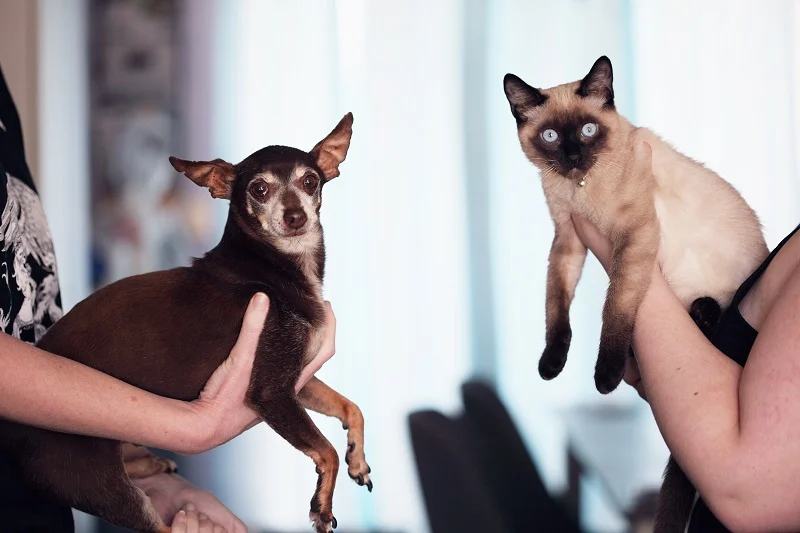
Siamese cats tend to do remarkably well with dogs, particularly if they are introduced properly. Their confident, outgoing temperament means they are far less likely to hide from a dog than many other breeds. I have seen Siamese cats completely dominate the family dog within a matter of days — and the dog usually seems quite happy about the arrangement.
The key is a proper, gradual introduction — not throwing them in a room together and hoping for the best. Scent swapping, separate spaces, supervised meetings, and patience. We cover the step-by-step process in our guide to introducing cats and dogs, and there is more on the general question in are Siamese cats good with dogs?
Siamese Cats and Other Cats
Siamese are social cats by nature and generally thrive in multi-cat households — especially with other Siamese or Oriental breeds. They are pack-oriented in a way most cat breeds are not. That said, they can be jealous and territorial, particularly if a new cat arrives and disrupts an established bond.
In my experience as a breeder, the most successful multi-cat introductions happen when both cats are young, or when the resident Siamese has already shown they enjoy feline company. If your Siamese is the clingy, one-person type, adding a second cat needs careful thought. Our article on do Siamese cats get along with other cats? goes into the specifics, including what to watch for during introductions and when to stop pushing it.
Common Siamese Cat Behaviour Problems and How to Solve Them
Most Siamese cat behaviour problems are not really “problems” at all — they are symptoms of unmet needs. A Siamese that is destructive, aggressive, or toileting outside the litter tray is almost always telling you something. The trick is figuring out what.
Scratching and Furniture Damage
Scratching is a normal, healthy behaviour — cats do it to maintain their claws, stretch their muscles, and mark territory. The problem is not that your Siamese scratches. The problem is where they choose to scratch.
The solution is simple in theory: provide better alternatives. A tall, sturdy scratching post (not a flimsy carpet-covered one that falls over) positioned near their favourite sleeping spots will redirect most scratching behaviour within days. We have detailed guides on both why cats scratch furniture and how to stop them.
Spraying and Toileting Issues
Spraying — territorial urine marking — is different from ordinary urination. Neutered cats can and do spray, though far less than intact males. Stress, a new cat in the household, or changes to their environment are the most common triggers. Our articles on the difference between cat spray and pee and how to clean cat pee cover identification and clean-up in detail.
Litter tray problems are equally common and almost always have a cause you can fix — wrong litter type, tray in a noisy location, not enough trays for the number of cats, or a medical issue. The rule of thumb is one tray per cat plus one extra. Our litter training guide and litter tray training article cover the practical steps.
Aggression and Fighting
Siamese cats have a reputation for aggression, and it is partly deserved — but it needs context. They are not aggressive in the way people often assume. What they are is intense, territorial, and extremely confident. A Siamese that feels threatened or overstimulated will lash out faster than most breeds, but genuine unprovoked aggression is unusual and typically indicates a medical problem or chronic stress.
Inter-cat aggression — fighting between cats in the same household — is more common. Siamese can be possessive of their favourite person, and this sometimes causes conflict with other cats who want the same attention. Redirected aggression (where the cat is frustrated by something it cannot reach and takes it out on the nearest target) is another common pattern. Our article on why cats fight covers the different types and how to manage them.
Training Your Siamese Cat
Of all the breeds I have worked with, Siamese cat behaviour responds best to structured, reward-based training. Their intelligence, food motivation, and desire for interaction make them natural candidates for clicker training and positive reinforcement. I have trained Siamese to sit, come when called, high-five, and use a touch stick — all with a clicker and some decent treats.
The key is to keep sessions short (5 minutes maximum), use high-value rewards, and stop while the cat is still engaged. Siamese get bored quickly if the challenge is too easy, and frustrated quickly if it is too hard. Find the sweet spot and they will genuinely enjoy the process.
We have detailed guides on clicker training for cats and the more advanced touch stick method. There is also practical advice on training your cat to stay off the counters — a common request from new Siamese owners who discover that their kitchen worktops are no longer their own.
Enrichment — Keeping a Siamese Cat Happy
If there is a single takeaway from this entire page, it is this: a bored Siamese is a destructive Siamese. This breed needs stimulation — mental and physical — every single day.
Minimum requirements for a happy Siamese:
- Interactive play — at least 15–20 minutes of active play daily (wand toys, laser pointers, fetch — yes, Siamese will play fetch)
- Vertical space — cat trees, wall shelves, high perches. Siamese love to be above you
- Puzzle feeders — make them work for some of their food. It engages their brain and slows down fast eaters
- Window access — a window perch overlooking the garden or a bird feeder provides hours of entertainment
- Companionship — either human or feline. A Siamese that spends long periods alone will suffer
- Rotation — swap toys in and out. The toy that was ignored yesterday becomes fascinating again after a week in the cupboard
Our article on keeping indoor cats happy covers enrichment strategies in much more detail, including how to set up your home to be genuinely stimulating for a breed that needs more than most.

Reading Your Siamese Cat’s Body Language
Siamese cat behaviour is famously expressive — they communicate constantly, not just with their voice but with their entire body. Tail position, ear orientation, pupil size, and body posture all tell you what your cat is feeling, and learning to read these signals will transform your relationship with them.
A tail held high with a slight curve at the tip means confidence and happiness. Ears flat against the head means fear or aggression. A slow blink is a sign of trust (and you can slow-blink back — they understand it). Siamese are particularly expressive compared to other breeds, and their vocal cues layered on top of their body language give you a remarkably detailed picture of their emotional state at any given moment. These behavioural traits are shared across all Siamese colour variants — whether you have a Seal Point, Blue Point, or any other variety covered in our Siamese cat breed profile, the underlying temperament is the same.
Our full guide to reading your cat’s body language covers all the signals in detail, with illustrations of what each posture and expression means.
Siamese Cat Behaviour Glossary
- Allogrooming
- Mutual grooming between cats. A sign of strong social bonding — common in well-adjusted multi-Siamese households.
- Allorubbing
- When cats rub their bodies against each other or their humans. Scent-mixing behaviour that marks you as part of the social group.
- Bunting
- Head-butting with the cheek or forehead. Deposits facial pheromones and signals affection/ownership.
- Clicker Training
- A positive-reinforcement training method using a small handheld clicker to mark a desired behaviour the instant it happens, followed by a treat. Siamese are particularly responsive to clicker work.
- Flehmen Response
- The open-mouthed, grimacing face a cat pulls when investigating an interesting scent. They are pulling air across the vomeronasal organ in the roof of the mouth.
- Kneading
- Rhythmic pressing with alternating front paws. Kitten comfort behaviour that carries into adulthood — a sign of contentment.
- Middening
- Depositing faeces in prominent places as a territorial marker. Rare in well-managed households but can appear with severe stress or territorial disputes.
- Overstimulation Aggression
- Sudden biting or scratching during petting when the cat has reached its threshold. More common in Siamese than many breeds — learn the warning signs (tail flicking, skin twitching, ears flattening).
- Positive Reinforcement
- Rewarding behaviour you want to encourage. The only training method that works reliably with cats — punishment damages the bond and increases stress.
- Redirected Aggression
- When a cat is frustrated by something it cannot reach (e.g. a cat outside the window) and takes it out on the nearest target. Common trigger for inter-cat fighting in multi-cat households.
- Spraying
- Territorial urine marking performed in a standing position, usually against a vertical surface. Different from toileting. Stress and territorial triggers are the most common causes.
- Trilling
- A short, rolling “prrrrt?” sound between a meow and a purr. Siamese use it as a friendly greeting — usually while approaching you.
Frequently Asked Questions
The Siamese cat behaviour questions I get asked most often — with straight answers from a breeder of 20+ years.
Bringing home a kitten? Don’t wing it.

I wrote an eBook for new kitten owners that covers everything you actually need to know — how to prepare your home, what to feed, litter training that actually works, stopping the biting and scratching, reading your kitten’s body language, and what’s normal versus what’s not. It comes with printable checklists, a vaccination record and a first-week diary.
It’s called Kitten Care for New Cat Owners, it’s an instant download, and it will save you a lot of late-night Googling at 4am.
Siamese Cat Behaviour & Training Articles
Browse all of our Siamese cat behaviour and training articles below.
-
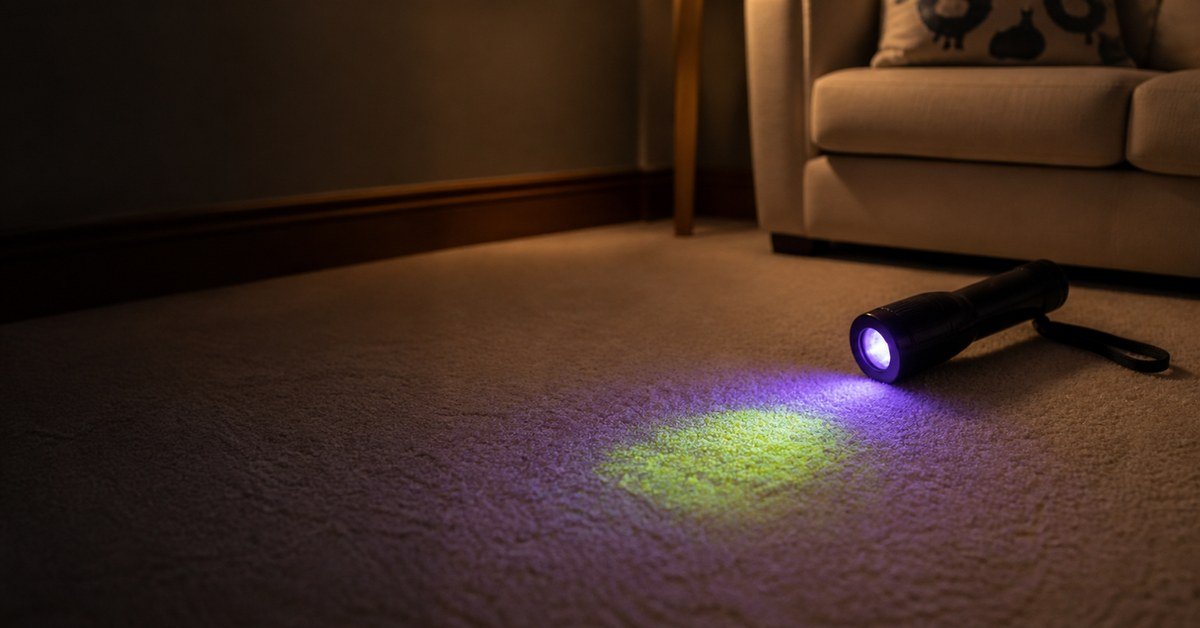
How to Clean Cat Pee (and Actually Kill the Smell for Good)
The complete UK guide to cleaning cat pee off carpet, mattress, sofa and hard floors. Enzyme cleaners that work, products that don’t, and why bleach makes it worse.
-
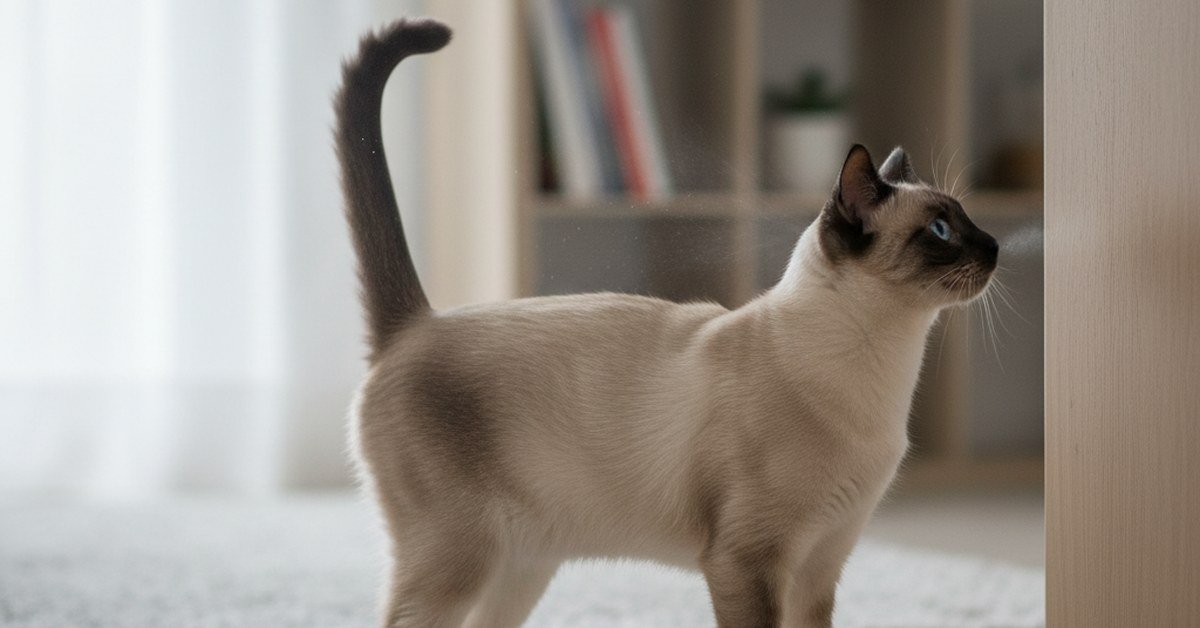
Cat Spray vs Cat Pee: How to Tell the Difference (And Why It Matters More Than You Think)
You walk into the spare room. Something smells wrong. Really wrong. That sharp, eye-watering, “oh no, not again” kind of wrong. You look down. There’s a puddle on the floor near the litter tray. Then you look up. There’s a streak running down the wall by the door. Two messes. Same cat. But here’s the…
-

Do Siamese Cats Get Along With Other Cats? A Breeder’s Honest Answer
Do Siamese cats get along with other cats? A breeder of 20+ years shares what actually happens when you add a second cat to a Siamese household — the good, the bad, and the hissing.
-
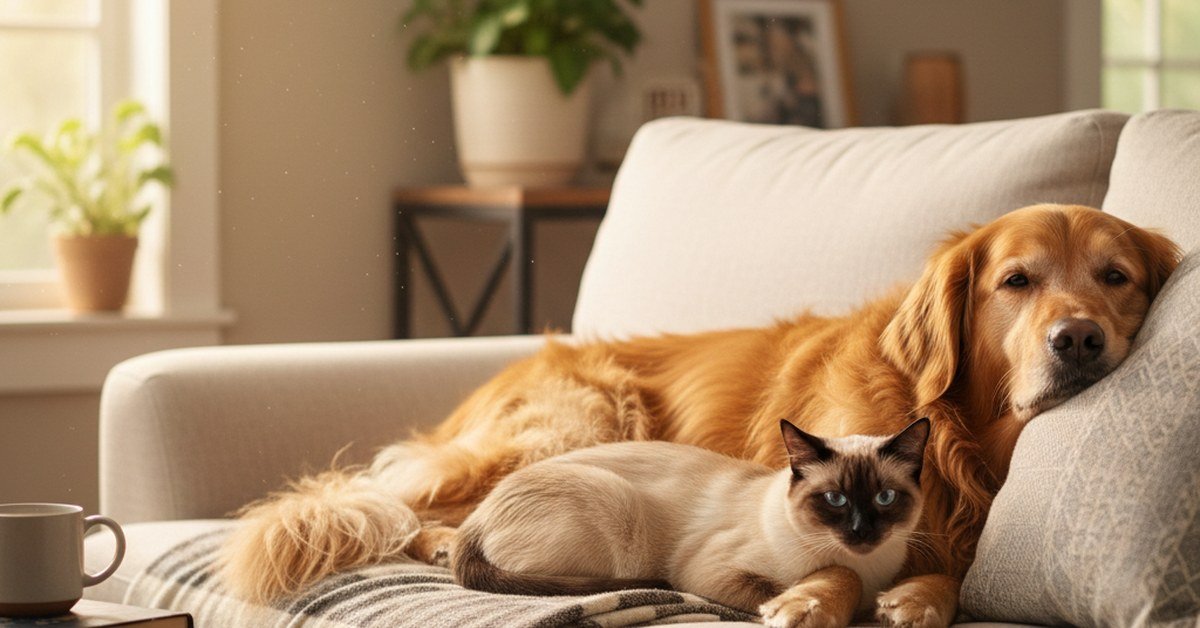
Are Siamese Cats Good With Dogs? A Breeder’s Honest Take
Are Siamese cats good with dogs? A breeder of 20+ years shares what really happens when cats and dogs share a home — the introductions, the disasters, and the surprising friendships.
-
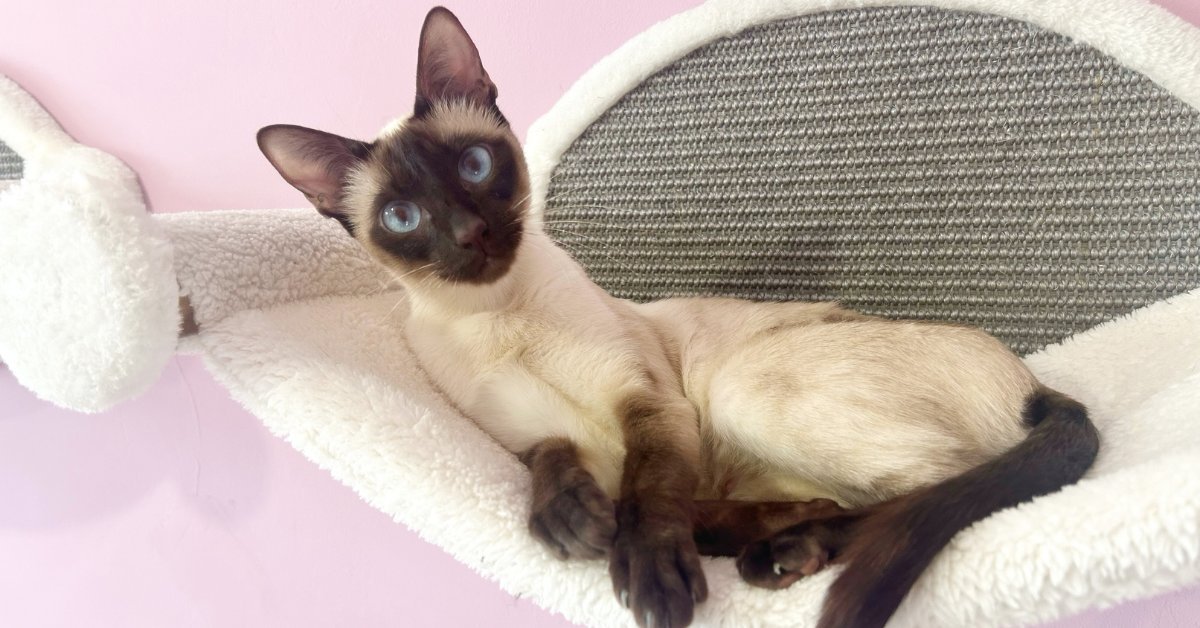
Stress in Cats: Signs, Triggers & What Actually Helps
I knew something was wrong with my seal-point queen the morning she stopped meeting me at the kitchen door. She’d done it every single morning for three years. Half five, kettle goes on, and there she’d be — threading between my ankles, yowling about breakfast like she hadn’t been fed in a fortnight. It was…
-
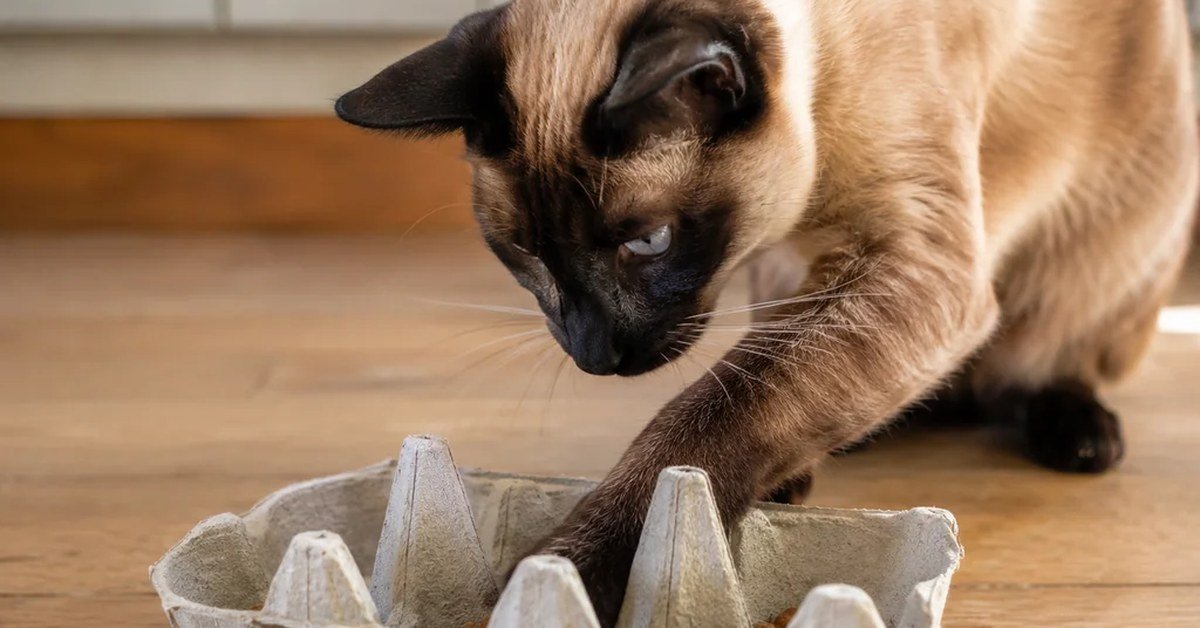
Choosing Cat Toys: A Practical Owner’s Guide
How to choose cat toys your cat will actually play with, from hunting toys to puzzle feeders, plus play and safety tips from a lifelong cat owner.