
Siamese cat health is the single topic I get asked about more than any other. I have been breeding Siamese and Oriental cats for over twenty years, and in that time I have seen more health conditions than I would care to count — some minor, some heartbreaking, and a few that taught me lessons I will never forget. This page exists because I get asked the same question constantly: “Are Siamese cats prone to health problems?”
The honest answer is yes, there are certain conditions this breed is more susceptible to than the average moggy. But Siamese are also one of the longest-lived pedigree breeds, and the vast majority of health issues I see are either preventable or manageable when caught early.
Everything below comes from real experience — years of breeding, showing, and judging Siamese cats for the GCCF as a GCCF-registered breeder, cat judge, and feline behaviourist. I am not a vet, and nothing here replaces veterinary advice. But I can tell you what to watch for, what I have learned the hard way, and when you absolutely must get your cat to a professional.
If I could give every new Siamese owner a single piece of health advice — just one — it would not be about the genetic conditions or the cancers or any of the dramatic stuff below. It would be about something far more mundane that most people overlook completely. Ignoring it costs owners hundreds in vet bills every single year, and I have seen it cause real suffering in cats that were otherwise perfectly healthy. We’ll get to it in a moment — first, the genetic conditions people always ask about.
Key Takeaways
- Siamese typically live 15–20 years — among the longest-lived pedigree breeds.
- The breed is predisposed to a handful of conditions: PRA (eye), amyloidosis, dental disease, feline asthma, and certain cancers.
- Dental disease is the single most common problem — and the most preventable. Start a brushing routine from kittenhood.
- PRA-Rdac is the DNA test every responsible Siamese breeder should do — always ask for the result when buying a kitten.
- Annual vet checks for adults, twice-yearly plus blood work from age 7.
- Pet insurance: take out a lifetime policy while your cat is young. Breed-specific risks make it worth it.
- With cats — especially Siamese — early is always better than late. If in doubt, call your vet.
Browse our Siamese health articles
Are Siamese cats prone to health problems? Siamese cats are generally healthy, robust cats — but they are predisposed to a handful of breed-specific conditions including progressive retinal atrophy (PRA), respiratory issues, dental disease, and certain cancers. Most are manageable with early detection and good preventative care.
In short: buy from a breeder who health-tests, brush the teeth from day one, get a lifetime pet insurance policy while the cat is young, and move to twice-yearly vet checks at age 7. Do that and you stand a very good chance of a long, healthy life for your Siamese. If you want the visual breed guide alongside the health one, start with the Siamese Cat Breed Profiles pillar page — full colour and pattern coverage for all 32 GCCF-recognised variants.

How Long Do Siamese Cats Live?
This is one of the most common questions I am asked, and the answer is encouraging. Siamese cats typically live between 15 and 20 years, making them one of the longest-lived pedigree breeds. I have personally had cats reach 19 and 20 years of age — healthy, active, and alert right up to the end.
The biggest factors affecting lifespan are genetics (buy from a breeder who health-tests), diet (see my cat nutrition guide), environment (indoor cats generally live longer because they are not exposed to road traffic, fights, or contagious disease), and veterinary care (regular check-ups, vaccinations, dental care).
The leading causes of death in older Siamese cats tend to be cancer (particularly lymphoma) and kidney disease. Neither is inevitable, but they are worth knowing about so you can discuss screening with your vet as your cat ages. Early detection transforms the outlook for both.
Indoor versus outdoor is the single biggest environmental factor. A well-kept indoor Siamese with regular vet care can realistically expect 17–20 years. A Siamese with outdoor access averages closer to 10–12 years because the risk of being hit by a car, picking up FIV or FeLV, or getting injured in a territorial fight is simply much higher. That is a personal decision every owner has to make, but the data is clear.
Siamese Cat Health — Conditions at a Glance
A quick-reference Siamese cat health table of the main breed-specific conditions. Each is covered in detail below.

| Condition | How Common | Testable? | Preventable? |
|---|---|---|---|
| Progressive Retinal Atrophy (PRA-Rdac) | Uncommon (with testing) | Yes — DNA test | Yes — responsible breeding |
| Amyloidosis | Uncommon | No | No — monitor with vet checks |
| Mediastinal Lymphoma | Rare | No | No — early detection helps |
| Feline Asthma | Common | Diagnosed by vet | Manageable — reduce triggers |
| Dental Disease | Very Common | Vet inspection | Yes — routine dental care |
| Strabismus (crossed eyes) | Common | Visual | Cosmetic only — no treatment needed |
| Pica (eating non-food items) | Common | Behavioural observation | Manageable — environmental controls |
Breed-Specific Genetic Conditions
Every pedigree breed carries some genetic baggage, and Siamese cat health is no exception. The conditions below are ones that responsible breeders actively screen for, and that owners should be aware of from the outset.
Progressive Retinal Atrophy (PRA-Rdac)
The good news is that a DNA test now exists for PRA, and any responsible breeder should be testing their breeding cats before producing kittens. International Cat Care has a thorough overview of PRA if you want the veterinary perspective.
If you are buying a Siamese kitten from a GCCF-registered breeder, ask for the PRA test result. If they cannot provide one, walk away. I have written about PRA specifically in Siamese cats and our own experience of an Oriental cat losing his sight — that article is worth reading if you want to understand what this condition actually looks like day to day.
Amyloidosis
Amyloidosis is a condition where abnormal proteins (amyloid) build up in the organs, most commonly the liver and kidneys. Siamese cats — particularly certain bloodlines — are more prone to this than other breeds. Symptoms can include loss of appetite, weight loss, lethargy, and jaundice. By the time symptoms appear the damage is often advanced, which makes regular veterinary health checks especially important for this breed. There is currently no DNA test for feline amyloidosis, so vigilance and early vet involvement are the only real defences.
Mediastinal Lymphoma
Siamese cats have a higher incidence of certain cancers, particularly mediastinal lymphoma — a cancer of the lymph tissue in the chest. This is not something most owners will encounter, but it is worth knowing about. Symptoms include difficulty breathing, coughing, and loss of appetite. Early detection improves outcomes significantly — which is one reason to take any persistent respiratory symptom seriously rather than assuming it is asthma or a hairball.
For a broader look at the genetic conditions that can be screened for, see my guides on feline genetic diseases and DNA testing and DNA tests specifically for Siamese cats.
Dental Health — A Particular Weakness
On every Siamese cat health page I’ve ever written, dental comes first. If there is one area where Siamese consistently let themselves down, it is their teeth. Periodontal disease, gingivitis, and tooth resorption are all more common in this breed than the general cat population. I have lost count of the number of Siamese I have seen with dental problems — including some of my own cats.
This is the “one thing” I mentioned at the top of this page. Dental disease is the single most common health issue I see in Siamese cats, and it is the one that causes the most unnecessary suffering — because it is almost entirely preventable with a basic routine started early.
Why Siamese Dental Disease Matters
Untreated dental disease is not just a mouth problem. The bacteria from inflamed gums enter the bloodstream and put constant strain on the kidneys and heart. A Siamese with chronic periodontal disease is at significantly higher risk of kidney and heart problems later in life. That is why dental care is not cosmetic or optional — it is preventative medicine for the whole cat.
Tooth Resorption
Tooth resorption is a particular curse in Siamese. The body begins to break down its own tooth structure, often below the gum line where owners cannot see it. The first sign is usually the cat dropping dry food, turning its head sideways to eat, or pawing at its mouth. By the time the cat shows these signs the tooth is often beyond saving and needs extraction under general anaesthetic. Your vet can spot early resorption on routine dental inspection — this is why the annual dental check matters.
Building a Dental Routine
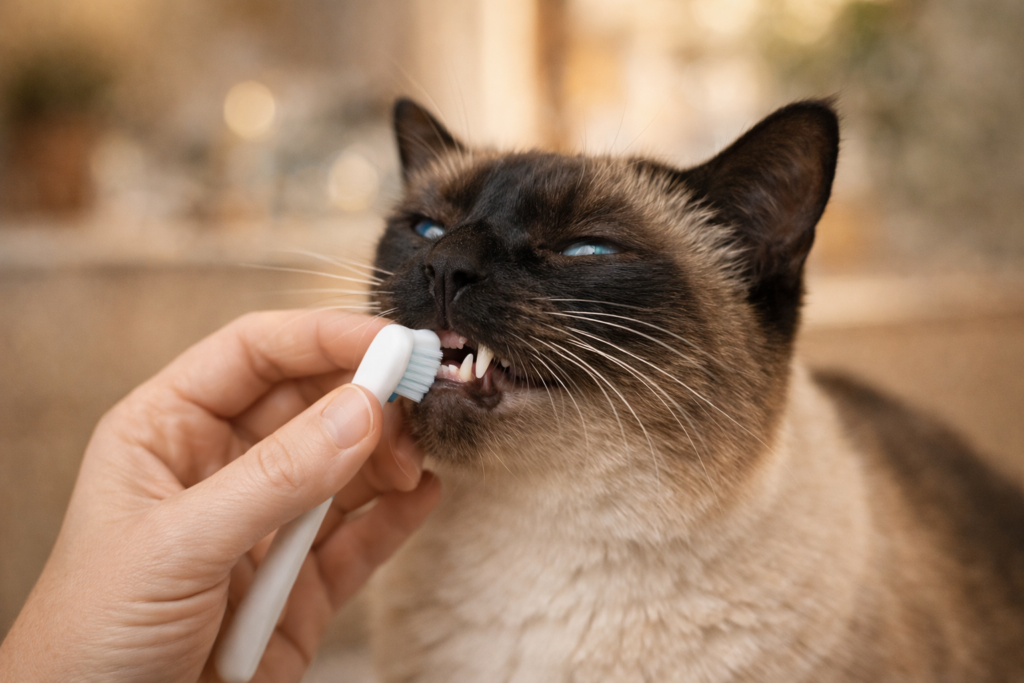
The single most important thing you can do is establish a dental care routine early. Brush the teeth from 12 weeks of age while the kitten is still forming habits. Use a soft feline toothbrush and cat-safe enzymatic toothpaste (never human toothpaste — fluoride is toxic to cats). Build up from one second of brushing to thirty seconds over a few weeks. Pair it with a treat afterwards and it becomes a non-event.
I have written extensively about this:
- Feline Oral Hygiene — 5 Step Plan
- Tooth Decay in Cats
- Dental Care for Cats
- Cats With Broken Teeth
- Cats With Bad Breath (often the first sign of dental disease)
If your vet recommends a dental scale under anaesthetic, do it. The cost (£200–£600 depending on complexity and whether extractions are needed) is worth it. Untreated dental disease causes pain, affects appetite, and can lead to kidney and heart problems down the line.
Eye Conditions
Beyond PRA (covered above), Siamese cats are known for two distinctive eye characteristics that are technically “conditions” but rarely cause problems.
Strabismus (crossed eyes) is a hereditary trait in Siamese. It is caused by abnormal routing of the optic nerve and is largely cosmetic — most crossed-eyed Siamese navigate the world perfectly well. It is less common in modern show lines than it used to be, but it still appears.
Nystagmus (involuntary eye movement) sometimes accompanies strabismus. Again, this rarely affects the cat’s quality of life. If you notice your cat’s eyes flickering or drifting, mention it to your vet, but in most cases it is simply a breed quirk.
For the more serious hereditary eye condition in the breed, see the PRA section above or my dedicated article on progressive retinal atrophy.
Respiratory Issues
Siamese cats are more susceptible to respiratory problems than most breeds. This includes feline asthma, chronic bronchial disease, and upper respiratory infections.
Feline Asthma
Feline asthma in Siamese tends to present as persistent coughing, wheezing, or laboured breathing — often worse in dusty environments or during stress. If your cat is crouching low with its neck extended and coughing, that is not a hairball. Get to a vet. Asthma in Siamese cats can usually be managed with inhaled corticosteroids delivered via a feline inhaler (the AeroKat chamber is the standard), but it requires a proper diagnosis — usually chest X-rays and sometimes bronchoscopy — before treatment begins.
Once diagnosed, manage the environment too: unscented cat litter, no aerosols or air fresheners near the cat, and a HEPA air purifier in rooms where the cat spends most time. These small changes can significantly reduce the frequency of flare-ups.
Upper Respiratory Infections
Upper respiratory infections are also common, particularly in kittens and multi-cat households. Symptoms include sneezing, nasal discharge, and watery eyes. Most URIs are viral (calicivirus or feline herpesvirus) and while they clear up with supportive care, secondary bacterial infections can develop and need antibiotics. Good ventilation, regular vaccination, and reducing stress all help reduce the risk.
If you are considering a Siamese and have allergy concerns, the respiratory section of that article covers the related considerations for allergy sufferers living with this breed.
Common General Health Issues
Beyond the breed-specific conditions, Siamese cats can develop the same problems as any other cat. A few that I see come up more frequently:
Pica
Siamese are notorious for eating non-food items, particularly wool, fabric, and plastic. This is thought to be linked to their Oriental heritage and possibly to early weaning — International Cat Care has a useful overview of the condition and management strategies. It can cause intestinal blockages if severe — a blockage is a surgical emergency and genuinely life-threatening. If your Siamese chews blankets or clothing, it is not just a quirk — monitor it carefully, keep fabrics out of reach, and provide plenty of chew-appropriate enrichment (cardboard, cat grass, puzzle feeders).
Obesity
Less common in Siamese than in some breeds (they tend to be naturally lean), but it does happen, especially in neutered indoor cats. I have written about how to exercise an overweight cat and the broader overweight pets problem. Prevention through portion control and play is far easier than fixing it later. If you can feel your cat’s ribs easily without pressing, and there is a clear waist when viewed from above, the weight is fine. If neither is true, start adjusting now.
Depression and Stress
Siamese are social, vocal, and emotionally intelligent cats. They bond deeply with their owners and do not cope well with isolation, changes in routine, or the loss of a companion. Depression in cats is real, and Siamese are particularly vulnerable to it. If your cat’s behaviour changes suddenly — withdrawal, loss of appetite, excessive vocalisation — take it seriously. Consider whether a companion cat (ideally another Siamese or Oriental) would help; the breed often thrives in pairs.
Appetite and Eating Issues
If your cat stops eating, do not wait. Cats — especially Siamese — can develop hepatic lipidosis (fatty liver disease) within days of not eating. My article on what to do if your cat will not eat covers the immediate steps. More than 48 hours without food in an adult cat is vet territory, not wait-and-see territory.
Fleas and Parasites
Not breed-specific, but still one of the most common issues I hear about from new owners. Covered in detail in my flea treatment guide and the companion piece on treating fleas at home. Year-round treatment is the only real answer — UK winters are no longer cold enough to kill off household fleas reliably.
Siamese Cat Health by Age
Siamese cat health priorities for a Siamese cat shift as they age. Here is what I focus on at each stage, and what I tell every new owner to watch for.
Kittens (0–12 Months)
The biggest risks for Siamese kittens are upper respiratory infections, intestinal parasites, and hypoglycaemia (low blood sugar — a risk in any very young or underweight kitten). Vaccination begins at 9 weeks with a booster at 12 weeks. This is also the time to start handling their mouth regularly so dental care becomes routine later. Microchipping is legally required in England before the kitten leaves the breeder. If you are bringing a kitten home, my kitten care guide covers everything you need for the first few weeks.
Young Adults (1–6 Years)
The “maintenance” phase. Annual vet check-ups, annual boosters, regular dental inspections, and monthly weight checks are the baseline. Neutering typically happens around 4–5 months and can affect weight, so adjust portions accordingly. Watch for early signs of dental disease (bad breath, reluctance to eat dry food) and respiratory issues (persistent coughing). Pica tends to emerge in young adults — if it appears, take steps to manage it before it becomes an emergency.
Mature Adults (7–10 Years)
From seven onwards I move cats to twice-yearly vet visits and add annual blood work. Routine blood work picks up early kidney disease, thyroid issues, and diabetes long before any outward symptom appears — which is exactly when treatment is most effective. If your vet detects a heart murmur on a routine check, ask about an echocardiogram — heart disease in cats is worth investigating early regardless of breed. Dental care should intensify: a professional scale under anaesthetic every 1–2 years is normal at this age.
Seniors (10+ Years)
This is where the breed-specific risks start to compound. Continue twice-yearly vet visits. Blood work becomes essential — it picks up early kidney disease, thyroid issues, and diabetes before symptoms appear. Dental problems often escalate in older Siamese, so do not skip the dental check. Arthritis is common but easy to miss in cats — if your Siamese stops jumping up to favourite spots or seems stiff after resting, mention it to your vet. Provide heated beds and non-slip mats on hard floors for older cats. With good care, there is no reason a Siamese cannot live well into their late teens and beyond.
Vaccinations, Worming and Parasite Prevention
This is the routine, unglamorous half of Siamese health care. Done well, it prevents most of what could otherwise go wrong. Done badly, it is where nearly every preventable illness starts.
Vaccination Schedule (UK)
The core UK vaccination schedule for Siamese cats, based on WSAVA vaccination guidelines, is:
- 9 weeks: First vaccination — feline herpesvirus, calicivirus, and panleukopenia (the “cat flu + enteritis” trio, often abbreviated as FHV, FCV, FPV)
- 12 weeks: Second vaccination — same three plus FeLV if considered at-risk
- 13 weeks: Ready to leave breeder (GCCF minimum rehoming age)
- Annually thereafter: Booster for the core three; FeLV boosters typically every 2–3 years
Do not skip boosters “because the cat is indoor only”. Calicivirus and FHV are brought in on clothing and shoes. FPV (panleukopenia) is extraordinarily resistant in the environment and fatal. A lapsed booster can mean starting the primary course again — there is no upside.
Worming
Kittens: every two weeks from 3 weeks old until 8 weeks, then monthly until 6 months. Adults: every 3 months as a minimum. Outdoor hunters: monthly. Use a vet-recommended product that covers both roundworm and tapeworm. Over-the-counter “supermarket” wormers often underdose, so the cheaper option usually ends up costing more because it does not work.
Fleas and Ticks
Year-round, no excuses. UK winters no longer kill household fleas. Use a prescription-strength product from your vet (Bravecto, Stronghold Plus, or Advocate are commonly used) rather than a supermarket spot-on — the resistance problem with over-the-counter products is real. One flea in the house means fifty in the carpet by week two; prevention is always easier than treatment. My flea treatment guide covers the details.
Insurance for Siamese Cats
Given the Siamese cat health risks on this page, pet insurance is not optional — it is essential. A serious condition (dental extraction, cancer treatment, abdominal surgery for pica) can easily run into thousands of pounds. A lifetime policy costing £22–£38 a month in the UK for a young cat will typically cover up to £10,000+ of treatment per year.
Get a Lifetime Policy While the Cat Is Young
The single most important decision is to buy a lifetime (not time-limited) policy while the cat is young and healthy. Any condition that develops before insurance is in place becomes a “pre-existing condition” and will be excluded — forever. At that point you are essentially uninsurable for that condition.
What to Look For
- Lifetime cover — resets annually, covers chronic conditions year after year
- Minimum £7,000 annual vet fee limit; £10,000+ preferred
- Dental cover included — not all policies include this, and Siamese will need it
- Hereditary and congenital conditions covered — some insurers exclude PRA or similar hereditary conditions
- Reasonable excess (£75–£125 is typical) and no percentage-of-claim co-payment
- No age-related exclusions if you plan to keep the cat insured into old age
Indicative UK monthly costs for a Siamese kitten on a mid-range lifetime policy (2026): £22–£38 depending on insurer, excess, and cover level. The Association of British Insurers publishes guidance on pet insurance types and what to look for. Premiums rise with age, so expect the figure to double or triple by age 12.
Preventative Care Checklist
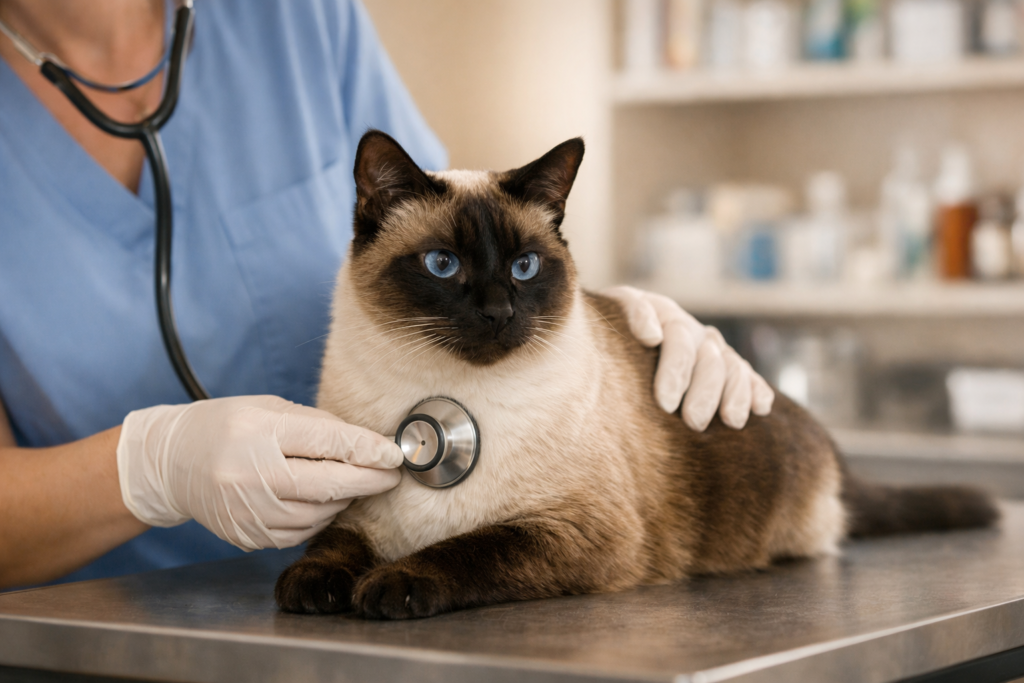
Most of the conditions on this Siamese cat health page are either preventable or manageable with early detection. Here is what I recommend as a minimum for every Siamese cat:
- Annual vet check-up — twice-yearly for cats over 7 years old
- Vaccinations — keep up to date with primary course and annual boosters
- Dental check — at every vet visit, and a professional scale if recommended
- Brush teeth — at least 3x per week with cat-safe enzymatic toothpaste
- DNA testing — PRA-Rdac for any breeding cat (and ask for results when buying a kitten)
- Weight monitoring — weigh monthly, especially after neutering
- Parasite prevention — year-round flea/tick treatment and quarterly worming (monthly for hunters)
- Pet insurance — lifetime policy while your cat is young and healthy
- Senior blood work — annually from age 7
- Heart screening — echocardiogram if any murmur detected
- Observation — you know your cat better than anyone. If something changes, trust your instinct and call the vet
Does Coat Colour Affect Siamese Health?
Short answer: no. Seal point, blue point, chocolate, lilac, tabby point, red point — the health risks covered on this page apply equally across all Siamese colour variants. Some owners of flame point (red point) Siamese ask whether their cats face different issues, but the cs gene responsible for the pointed coat pattern does not influence disease susceptibility. A flame point Siamese has the same breed-specific predispositions as any other Siamese. The colour of the coat changes nothing about the care they need.
When to Contact Your Vet — Non-Negotiable Red Flags
This Siamese cat health red-flag list is non-negotiable. Do not wait and see with any of the following:
- Not eating for more than 24 hours
- Difficulty breathing, persistent coughing, or wheezing
- Straining to urinate (especially in males — this is an emergency)
- Sudden blindness or walking into things
- Jaundice (yellowing of the ears, gums, or skin)
- Unexplained weight loss
- Blood in urine or faeces
- Collapse, seizures, or sudden loss of coordination
- Any lump or swelling that appears suddenly
- Pawing at the mouth, reluctance to eat dry food, or dropping food while eating
I have been doing this for over two decades, and the lesson that applies to every aspect of Siamese cat health is this: with cats, early is always better than late. If in doubt, call your vet. That is what they are there for — and if you are looking for one who is specifically set up to handle cats, the Cat Friendly Clinic directory from International Cat Care is the best place to start.
Siamese Health Glossary
Quick-reference Siamese cat health glossary for the terms that appear throughout this page.
- PRA-Rdac
- Progressive Retinal Atrophy — a genetic eye condition causing gradual blindness. DNA testable. Every Siamese breeding cat should be tested.
- Amyloidosis
- Abnormal protein deposits in organs (usually liver/kidneys). More common in Siamese. Not DNA testable — monitor with regular vet checks.
- Mediastinal Lymphoma
- Cancer of lymph tissue in the chest cavity. Higher incidence in Siamese. Early detection improves outcome.
- Feline Asthma
- Chronic inflammatory airway disease. Managed with inhaled corticosteroids (AeroKat chamber).
- FHV, FCV, FPV
- Feline herpesvirus, feline calicivirus, and feline panleukopenia virus — the core UK vaccination trio.
- FIV / FeLV
- Feline Immunodeficiency Virus and Feline Leukaemia Virus. Spread through cat-to-cat contact. Screened for at breeder level.
- FLUTD
- Feline Lower Urinary Tract Disease. Straining to urinate is an emergency — especially in males.
- Tooth Resorption
- The body breaks down its own tooth structure, often below the gum. Very common in Siamese. Treatment is extraction under anaesthetic.
- Hepatic Lipidosis
- Fatty liver disease. Develops rapidly when a cat stops eating. 48+ hours without food is a veterinary emergency.
- Pica
- Eating non-food items. Siamese are particularly prone. Can cause intestinal blockages.
- Strabismus
- Crossed eyes. Hereditary Siamese trait, cosmetic, rarely affects quality of life.
Frequently Asked Questions
The Siamese cat health questions new owners ask me most often — with straight answers, in plain English.
Do Siamese cats have more health issues than other breeds?
Siamese cats are predisposed to certain breed-specific conditions including PRA (progressive retinal atrophy), dental disease, respiratory problems, and certain cancers. However, they are generally robust cats and are one of the longest-lived pedigree breeds, often reaching 15–20 years. Responsible breeding and preventative care significantly reduce the risk of most conditions.
How long do Siamese cats live?
Siamese cats typically live between 15 and 20 years, making them one of the longest-lived pedigree cat breeds. Indoor Siamese cats tend to live longer than those with outdoor access. Good genetics, proper nutrition, regular veterinary care, and dental maintenance all contribute to a longer, healthier life.
What is the leading cause of death in Siamese cats?
Cancer — particularly lymphoma and mediastinal lymphoma — is a leading cause of death in older Siamese cats. Kidney disease is also significant. Regular veterinary check-ups, especially for cats over 7 years of age, help with early detection and treatment.
Should I get pet insurance for a Siamese cat?
Yes — pet insurance is strongly recommended for Siamese cats due to their predisposition to certain breed-specific conditions. A lifetime policy taken out while your cat is young and healthy will provide the best cover. Dental treatment, which Siamese cats frequently need, is covered by some but not all policies, so check the small print. UK monthly cost for a young Siamese on a mid-range lifetime policy is typically £22–£38.
What DNA tests should a Siamese breeder do?
At a minimum, Siamese breeders should test for progressive retinal atrophy (PRA-Rdac). Additional recommended tests include FIV/FeLV screening. Blood group testing is not necessary for Siamese-to-Siamese matings because all Siamese are blood group A, but should be done if outcrossing to a non-Siamese stud. When buying a kitten, always ask the breeder for copies of the parents’ DNA test results. A good breeder will provide these without hesitation.
At what age should a Siamese cat start having blood work?
From age 7. I recommend annual blood work starting at the seventh birthday — it picks up early kidney disease, thyroid issues, and diabetes long before any outward symptom appears, which is exactly when treatment is most effective. From age 10, move to twice-yearly vet visits with blood work at each. The small annual cost of blood work is worth vastly more than the cost of treating an advanced condition caught late.
Are Siamese cats prone to asthma?
Yes. Siamese are more susceptible to feline asthma than most breeds. Signs include persistent coughing, wheezing, or crouching low with the neck extended while coughing. This is not a hairball — it needs veterinary diagnosis. Once diagnosed, asthma is usually managed with inhaled corticosteroids delivered via an AeroKat feline chamber, combined with environmental changes (unscented litter, no aerosols, HEPA air purifier).
How often should I brush a Siamese cat’s teeth?
At least three times a week, ideally daily. Start from 12 weeks old while the kitten is forming habits. Use a soft feline toothbrush and cat-safe enzymatic toothpaste — never human toothpaste, which is toxic to cats. Build up from a few seconds to 30 seconds per session. Siamese are particularly prone to dental disease, and home brushing is the single most effective preventative step.
Is pica dangerous in Siamese cats?
Yes, potentially. Siamese are notorious for eating wool, fabric, and plastic. Mild pica is a behavioural quirk, but severe cases can cause intestinal blockages — which are a surgical emergency. If your Siamese is actively consuming non-food items, keep those items out of reach, provide plenty of chewing enrichment (cardboard, cat grass, puzzle feeders), and speak to your vet. Signs of a blockage include vomiting, loss of appetite, lethargy, and abdominal pain — any of these warrant immediate veterinary attention.
Are flame point Siamese cats more prone to health problems?
No. Flame point (red point) Siamese cats have the same breed-specific health predispositions as any other Siamese colour variant. Coat colour in Siamese is determined by the cs gene, which does not influence disease susceptibility. All the conditions covered in this guide — PRA, dental disease, respiratory issues, and others — apply equally regardless of point colour.
Bringing home a kitten? Don’t wing it.

I wrote an eBook for new kitten owners that covers everything you actually need to know — how to prepare your home, what to feed, litter training that actually works, stopping the biting and scratching, reading your kitten’s body language, and what’s normal versus what’s not. It comes with printable checklists, a vaccination record and a first-week diary.
It’s called Kitten Care for New Cat Owners, it’s an instant download, and it will save you a lot of late-night Googling at 4am.
Siamese Cat Health Articles
Browse all of our Siamese cat health and wellbeing articles below.
-
Kitten Vaccinations: A UK Breeder’s Complete Guide to What, When and Why
When and why kittens are vaccinated in the UK: the 9 and 12-week schedule, what cat flu, panleukopenia and FeLV vaccines protect against, and when a kitten is fully covered.
-
Are Siamese Cats Hypoallergenic? The Truth From a Breeder Who Gets Asked Every Week
Are Siamese cats hypoallergenic? No — and the reason might surprise you. A breeder explains what actually causes cat allergies and what allergy sufferers can do.
-
Hypoglycaemia in Kittens: Spotting and Treating It Fast
Hypoglycaemia in kittens is easily missed and can be fatal — but it’s quick to treat if you catch it. Symptoms, causes, emergency first aid and prevention, with a real video case study of a kitten’s recovery.
-
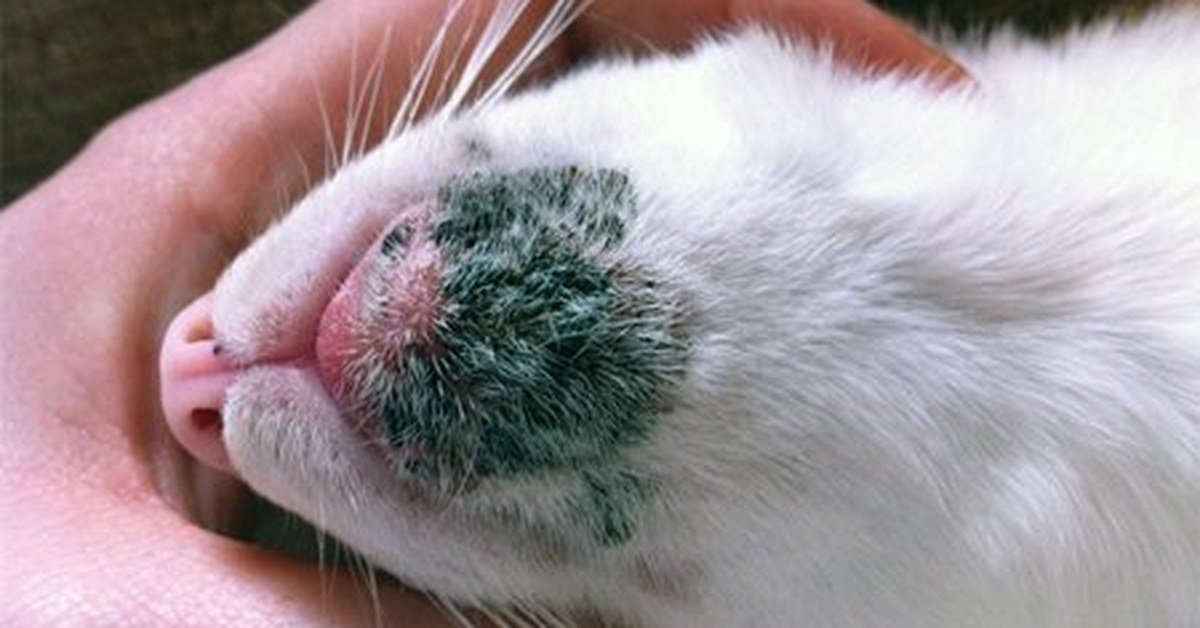
Feline Acne: A Breeder’s Guide to Those Black Spots on Your Cat’s Chin
Black spots on your cat’s chin? That’s feline acne. A breeder explains what causes it, when to worry, home treatments that actually work, and when to call the vet.
-
Depression in Cats: Signs, Causes & How to Help
Cats can become low, withdrawn and off their food. Learn the signs of depression in cats, the likely causes, and the gentle steps that help them feel themselves again.
-
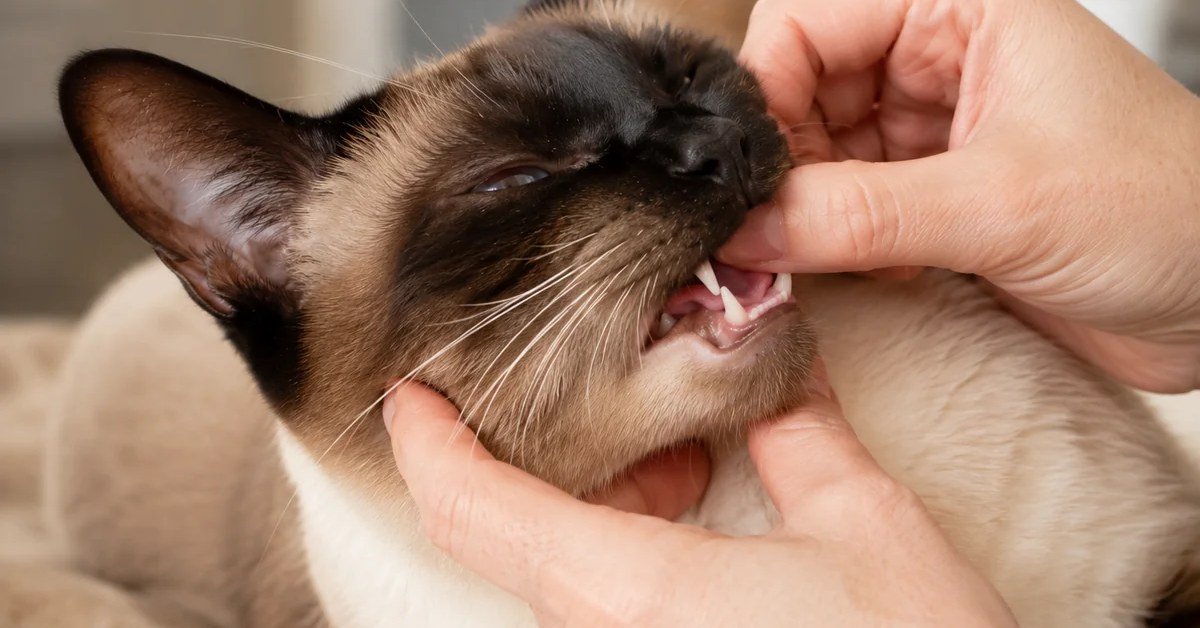
Cats With Bad Breath: Causes, Dangers & Prevention
Bad breath in cats is rarely just “cat breath” — it’s usually a warning sign of gum or dental disease. Here’s what causes it, why it matters, and how to prevent it.
-
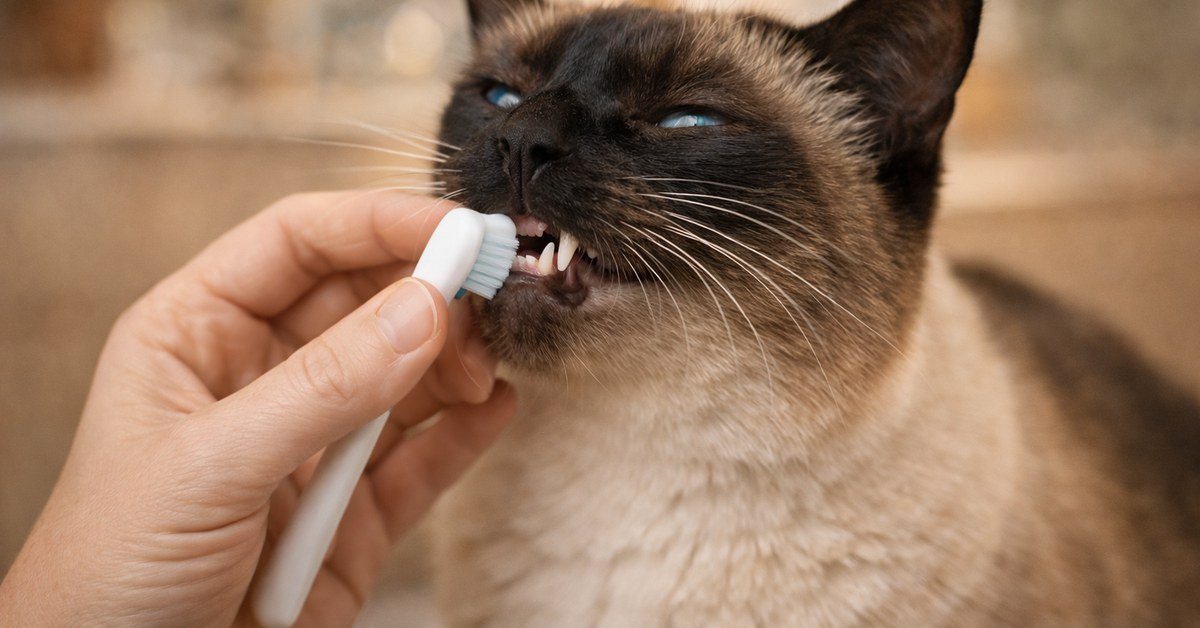
Cats With Broken Teeth: Signs, Pain & Treatment
A broken tooth can leave a cat in real pain and lead to a dental abscess. Learn the signs of broken teeth in cats, why they hurt, and what treatment your vet will advise.
-
PRA in Siamese Cats: DNA Testing & Responsible Breeding
Progressive retinal atrophy (PRA) in Siamese and Oriental cats explained — what the rdAc gene does, how the DNA test works, and simple breeding guidelines that mean no kitten need ever go blind from it.
-
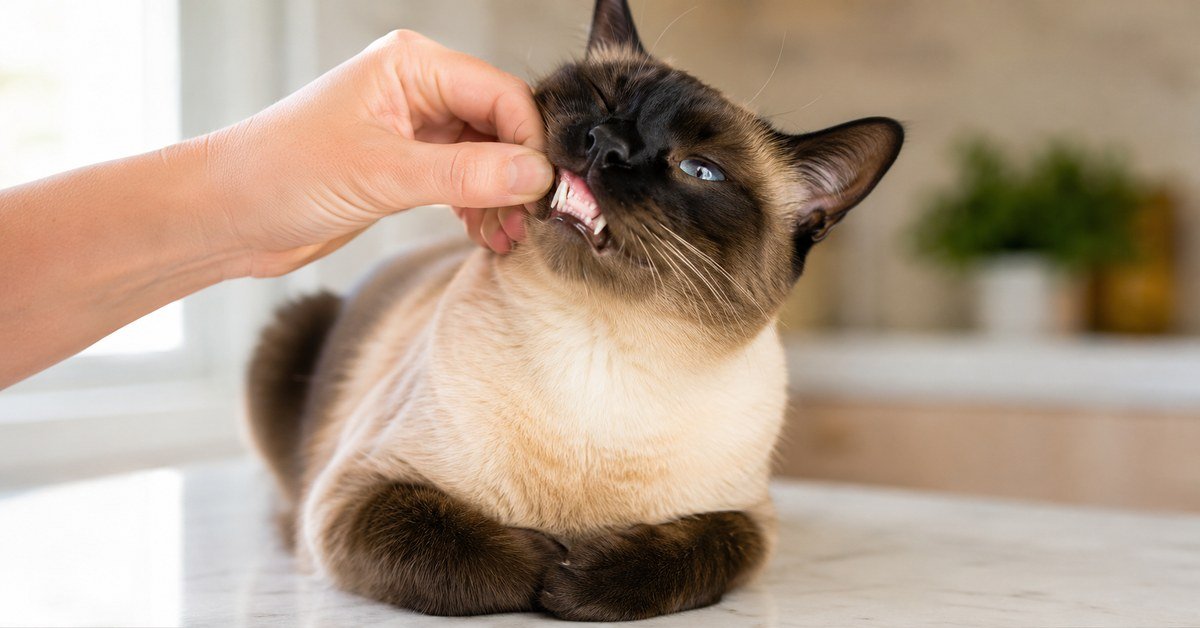
Dental Care For Cats: A Breeder’s Guide to Spotting and Preventing Tooth Problems
Dental care is an essential part of keeping your cat healthy. Poor dental hygiene can lead to serious health problems, including tooth loss, gum disease, and systemic infections. A comprehensive dental care program can help prevent these problems and keep your cat’s teeth and gums healthy.