Your stud cat is sat in his run at the bottom of the garden. He’s got a litter tray, a bowl of food, fresh water, and a bed.
He’s miserable.
And you probably don’t even know it — because he’s not showing it yet. But give it a few weeks. A few months. The gentle, affectionate boy you brought home will start to change. He’ll become distant. Then difficult. Then dangerous.
I’ve seen it happen more times than I’d like to admit. Not to my own studs — but to boys I’ve been asked to assess at shows, or boys whose owners have contacted me in desperation because their once-loving cat now takes a swipe at them every time they open the run door.
The cause is almost always the same. Loneliness.
Keeping a stud cat is a big undertaking. It’s not a decision to be taken lightly, and it’s not one you can half-commit to. But get it right — invest your time, your imagination, and a bit of effort into his daily life — and you’ll have a happy, healthy, affectionate boy who’s an absolute pleasure to work with.
Here’s how.
Quick Answer: A happy stud cat needs three things: a well-enriched environment with multiple levels and stimulation, regular female company (at least every six weeks), and — above everything else — your time. At least an hour a day of human interaction is the single most important factor. A bored, lonely stud deteriorates fast — behaviourally and physically. There’s a reason experienced breeders call stud pants the greatest invention in cat breeding, and it’s not because of the comedy value (although that helps).
👇 Skip to the 8 things every stud cat owner needs to get right
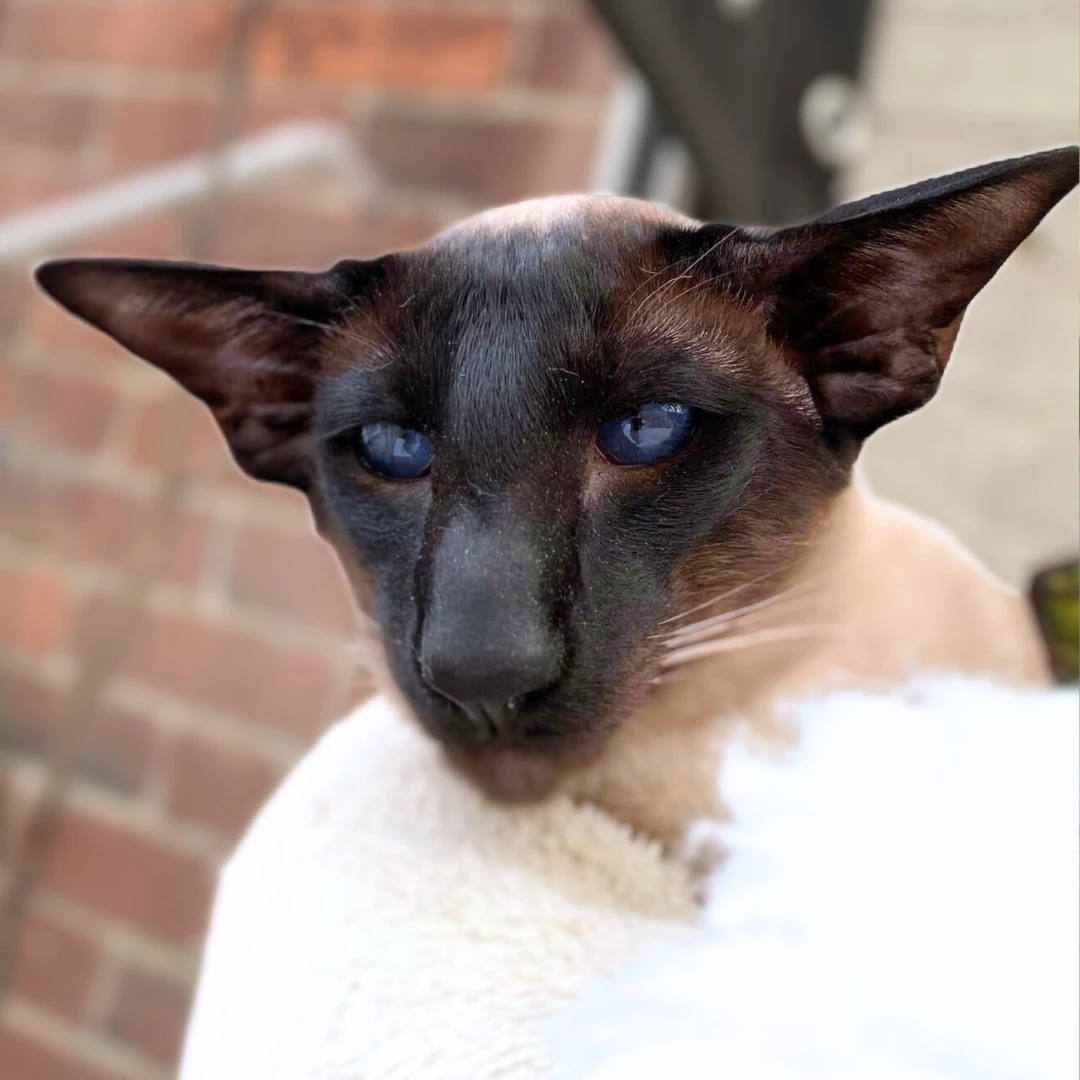
Three Ways to House a Stud — And Why Most Breeders Pick the Same One
Different breeders keep their studs differently, and there’s no single right answer. But there are three approaches that work, and the one you choose will shape everything else about how you manage his happiness.
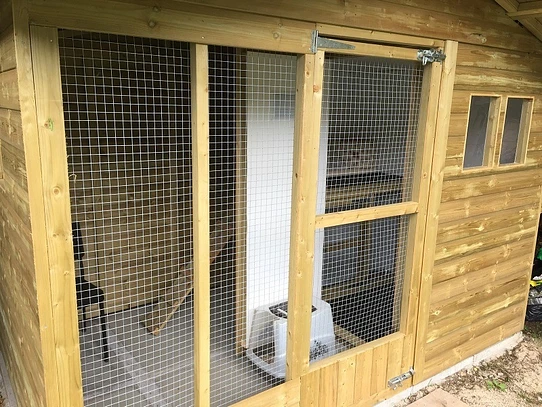
Outdoors (The Most Common Setup)
Most breeders — myself included for years — keep their stud cats in a purpose-built outdoor enclosure with an insulated, heated compartment. The reason is brutally practical: 99% of stud cats will spray urine around their territory, and unless you fancy your living room smelling like a public urinal on a hot day, an outdoor run is the sensible choice.
The run also prevents accidental matings with your queens in the house. Because where there’s a will — and trust me, there’s always a will — there’s a way.
The downside is obvious. He’s outside. He’s separated from you. He’s not part of daily life in the house. And that means you need to put in extra effort to make his life interesting and to give him the human contact he needs.
Minimum dimensions: 1.8m × 1.8m × 1.8m (6’ × 6’ × 6’) at absolute minimum, though considerably bigger is better. His sleeping area needs to be properly insulated, heated in winter, and ventilated in summer. If the temperature drops below 10°C in his house, you need heating. If it rises above 30°C, you need ventilation and shade.
Indoors (Rare But Possible)
A small number of breeders do successfully keep their stud cats in the house with them. And these aren’t just the lucky ones whose stud boy never figured out how to spray.
Many of these breeders have purchased stud pants for their cats and have a spare room where the stud can live without the risk of mating any queens who come into call. He still needs his own territory — an entire male having the run of the house at all times is not responsible breeding. But having him under the same roof, hearing the family, smelling dinner being cooked — that proximity to normal life makes a genuine difference to his wellbeing.
Half and Half (The Best of Both Worlds)
This is the approach I’d recommend to any breeder who can make it work. Your stud lives in his outdoor enclosure but gets supervised time inside the house as part of your daily routine.
He comes in. He sits on the sofa with you. He watches telly (mine was particularly fond of Countryfile — make of that what you will). He gets fussed over by the family. Then he goes back to his run for the night.
He’ll need to wear his stud pants for indoor time, of course — unless, like one of my boys, you have that rare breed of working stud cat who’s never felt the need to mark his territory indoors. Those boys are about as common as a sunny bank holiday in Hampshire.
Stud Pants — The Greatest Invention in Cat Breeding
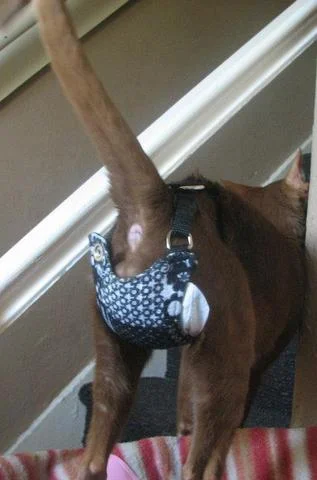
I’m going to take a moment to talk about stud pants, because they genuinely changed how I manage my boys.
They’re exactly what they sound like — little fabric pants for cats. Almost like boxers. They cover the relevant bits to prevent spraying and (theoretically) accidental matings, though they are absolutely no substitute for vigilance. Where there’s a willy, there’s a way.
(I’ll never not find that funny. Sorry.)
The best types are the ones that don’t cover the whole of the cat’s behind — that way he can still use the litter tray without you needing to play cat-butler every hour. They strap around his belly with the tail strap looping through a D-ring, holding the whole thing in place.
Most stud cats accept them surprisingly quickly. The first time you put them on, there’ll be approximately thirty seconds of dignity-offended walking-backwards-into-furniture, followed by reluctant acceptance, followed by completely forgetting they’re wearing them. Siamese in particular seem to adapt within a day or two — possibly because they’re too busy telling you about it to waste time fighting the pants.
The comedy value is a bonus. The practical value is enormous. Stud pants are the difference between a boy who spends his whole life in an outdoor run and a boy who gets daily house time with his family.
Enriching His Enclosure (Because Boredom Kills Happiness)
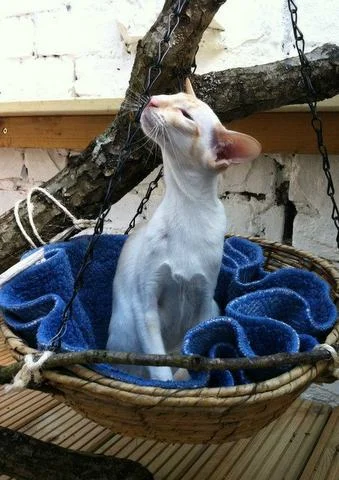
If your stud boy lives outdoors — or spends most of his time there — his enclosure needs to be more than a litter tray and a food bowl. A boring run equals a bored cat. A bored cat equals an unhappy cat. And an unhappy stud cat is a problem that gets worse, not better.
Be imaginative. Be creative. Think of his run as a living space, not a holding pen.
Shelving and levels. This is the easiest, cheapest starting point. Cats love being high up — it’s instinctive, it makes them feel safe, and it effectively doubles or triples the usable space in his enclosure. Good quality decking offcuts from any hardware store make sturdy shelves. Stagger them at different heights so he can climb and jump between them.
Greenery. There are plenty of cat-safe plants, herbs, and shrubs you can pot up inside his run. Cat mint is the obvious one — he’ll love chewing it. But any cat-safe herbs in pots add interest, smell, and texture. On a windy day, shrubs in pots rustle and move — and that’s instant entertainment for a cat whose hunting instincts are still very much intact. Something to pounce on that isn’t your hand.
Hanging baskets. Fill a sturdy hanging basket with blankets and hang it securely in his run. Make absolutely sure it’ll take the weight of a large stud cat — because he will find it, he will climb into it, and he will use it as both a sunbathing spot and a swing. Watching a 5kg stud boy try to gracefully enter a hanging basket is one of the genuine pleasures of cat breeding.
Weatherproofing. Let’s be realistic about the British climate. Cover at least part of his outdoor run with clear corrugated plastic roofing so he can be outside and dry at the same time. How many genuinely sunny days do we get a year? Exactly.
Toys and rotation. All cats love toys, but stud cats get bored of them fast. The trick is rotation — swap his toys every few days so there’s always something that feels new. Puzzle feeders are excellent for keeping him mentally occupied. Hide small portions of his food around the enclosure so he has to use his foraging instincts to find his dinner.
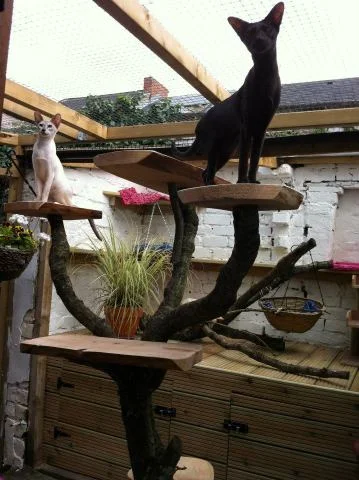
A climbing frame. Your indoor cats probably have elaborate activity centres. Your stud boy deserves the same. You can build one from scratch if you’re handy, or buy outdoor-rated cat climbing frames designed for enclosures. They’re worth every penny.
Feline company. This doesn’t work for every stud — some prefer having their space to themselves. But many stud boys thrive when paired with a spayed queen as a permanent companion. They cuddle up together at night, play together during the day, and the companionship genuinely reduces the loneliness of enclosure life. If you’re going to try this, introduce them gradually and watch for any territorial behaviour.
The One Thing That Matters More Than Anything Else
I’ve talked about enclosures, enrichment, plants, toys, hanging baskets, and stud pants.
None of it matters as much as this.
Your time.
Your stud cat needs you. Not just clean litter, not just food and water, not just a warm bed. He needs you — your presence, your voice, your hands, your attention. He needs at least an hour a day of genuine, focused interaction. Playing fetch. Talking to him. Grooming him. Just sitting with him while you have a cup of tea.
I want to say this again because it is probably the single most important factor in keeping a stud cat happy: he needs your time more than he needs anything else.
Allowing him supervised indoor time makes this easier. But if that’s not possible, you’re going to have to spend that time in his enclosure with him. If you haven’t got an hour a day — genuinely, reliably, every single day — then a stud cat isn’t for you.
I’m not being dramatic. I’m being honest.
A stud cat who receives daily human interaction, who is played with, talked to, groomed, and loved, will be a gentle, affectionate, cooperative boy for years. A stud cat who is left alone at the bottom of the garden — even in a beautifully enriched enclosure — will gradually fall apart.
What Happens When You Get It Wrong
I debated whether to include this section. But if it stops one breeder from making the mistake, it’s worth writing.
A stud cat that is left for hours on end without company, in a dull, boring run at the bottom of the garden, will become unhappy. Gradually. Quietly at first. Then not so quietly.
His temperament will deteriorate as the weeks and months of frustration and loneliness take their toll. Your once gentle, happy boy will become difficult to handle. He may flinch when you approach. He may swipe at you when you open the door. He may become so unmanageable that he needs to be neutered because he’s become a danger to you and anyone else who goes near him.
And what becomes of an ill-tempered ex-stud cat?
These cats are not easy to find homes for. Neutering doesn’t always undo the behavioural damage. Some spend the rest of their lives as problem cats that nobody wants — not because they’re bad cats, but because someone failed them.
Some unhappy studs don’t become aggressive. They go the other way — withdrawn, depressed, physically ill. They stop eating properly. They stop grooming. Their coat deteriorates. They sit in the corner of their run and stare at nothing.
There is no need for your stud cat to end up like this. None. The solutions are all in this article, and none of them cost a fortune. They cost time.
Keeping Him Healthy — The Physical Side
For the official angle on registering a stud cat and GCCF’s rules on breeding, the GCCF breeding information pages are the starting point, and International Cat Care’s welfare guidance on keeping cats happy covers the general principles that apply double to an entire male.
A happy stud is a healthy stud, and health management for entire males has some specific considerations.
Stud tail. Overactive sebaceous glands near the base of the tail — driven by testosterone — cause a greasy, blackhead-covered patch of skin. It’s common in entire males and closely related to feline acne on the chin. Regular cleaning with a degreasing shampoo keeps it under control. Left untreated, it can become infected and painful.
Weight management. An outdoor stud with limited space is at risk of weight gain. Monitor his diet carefully — don’t just leave dry food down all day. Puzzle feeders that make him work for his food serve double duty: mental enrichment and portion control.
Urinary health. Male cats have a longer, narrower urethra than females, making them more prone to urinary blockages. Ensure multiple fresh water sources, consider a water fountain (cats drink more from moving water), and watch for any signs of straining, frequent litter tray visits, or blood in the urine. Urinary blockage in a male cat is a veterinary emergency.
Regular health screening. Your stud should be tested annually for FeLV and FIV, kept up to date with vaccinations (enteritis, cat flu, ideally feline leukaemia), and checked for parasites. If you’re breeding Siamese, discuss HCM (hypertrophic cardiomyopathy) screening with your vet — echocardiography is non-invasive and well-tolerated.
Grooming. Your daily time with him should include grooming. It’s not just about coat maintenance — it’s a health check. You’ll spot lumps, skin changes, dental issues, and weight changes long before they become serious problems. And for the cat, grooming is bonding. It’s trust-building. It’s proof that you care enough to show up every day and pay attention.
Female Company — The Bit Nobody Talks About
Studs need female company. There’s no polite way around this — he’s an entire male with intact hormones, and leaving him without access to breeding or female companionship for extended periods creates genuine frustration and stress.
Most stud cats need female company at least every six weeks or so. If he’s going longer than that without a visiting queen or without his spayed companion, you’ll start to see the effects — increased spraying, vocalisation, restlessness, and sometimes aggression.
If you don’t have enough queens in your programme to keep him occupied, and you’re not offering him at public stud, then you need to ask yourself honestly whether keeping a stud is right for your breeding programme. A stud with no purpose is a cat living a restricted life for no reason.
If you want the wider picture on breeding — mating logistics, queen care, the legal and ethical considerations — have a browse through the Siamese breeding pillar for everything I’ve written on the breeding side of cat fancy.
When It’s Time to Retire Him
Every stud boy deserves a second act. A life after breeding where he’s neutered, free from the hormones that drove his behaviour, and allowed to live as a beloved pet — either in your home or in a carefully chosen pet home.
Most breeders retire their studs somewhere between age 4 and 6. Fertility declines after 6 — you’ll generally get smaller litters regardless of the queen — and the longer an entire male lives under the restrictions of stud life, the harder the transition to retirement.
The best breeders plan for retirement from day one. They keep their boys socialised, affectionate, and adaptable so that when the time comes, the transition to neutered pet life is smooth.
A retired stud who’s been well-managed — who’s had daily human contact, enrichment, and love throughout his breeding career — is a cat who’ll settle into retirement like he was born for it. Because in many ways, he was. He just had a job to do first.
⚡ Key Takeaways
- Human interaction is the single most important factor. At least one hour a day of focused time — playing, talking, grooming, just being there. Nothing else comes close.
- A boring enclosure creates a miserable cat. Shelving, greenery, toys (rotated regularly), climbing frames, and weatherproofing transform an outdoor run from a prison to a home.
- Stud pants are a game-changer. They allow supervised indoor time with the family, which dramatically improves quality of life for an outdoor stud.
- He needs female company at least every six weeks. A spayed companion in his enclosure or regular visiting queens — without this, frustration and stress build up.
- Neglect happens gradually and the damage is hard to undo. A lonely stud becomes aggressive or depressed. Neutering doesn’t always fix the behavioural damage.
- Health management matters. Watch for stud tail, weight gain, urinary issues. Daily grooming is both bonding and a health check.
- Plan for retirement from day one. A well-socialised stud transitions to pet life smoothly. Most retire between age 4-6.
- If you haven’t got the time, don’t get a stud. This isn’t a hobby you can do halfway. Either commit fully or don’t start.
Frequently Asked Questions
How much time should I spend with my stud cat each day?
At least one hour of focused interaction every day — playing, grooming, talking, and just sitting with him. This is the single most important factor in keeping a stud cat happy. If he also gets supervised indoor time with the family, even better. Consistency matters more than duration — a reliable daily routine is better than occasional long visits.
Do stud cats really need to wear stud pants?
If you want to give your stud cat supervised time in the house — and you should — then yes, stud pants are essential for the 99% of studs that spray. They prevent urine marking indoors and reduce the risk of accidental matings, though they’re not foolproof on the mating front. Most cats accept them within a day or two. Look for designs that leave the rear partially open so he can still use the litter tray.
Can a stud cat live indoors full-time?
Some breeders manage it successfully with a dedicated room and stud pants. He still needs his own territory — an entire male shouldn’t have unrestricted access to the whole house or to queens in call. Indoor studs still need enrichment, vertical space, and daily human interaction just like outdoor studs. It’s more work than most people expect, but it can work well for the right cat and the right breeder.
How big should a stud cat enclosure be?
Absolute minimum is 1.8m × 1.8m × 1.8m (6’ × 6’ × 6’), but bigger is always better. Include an insulated, heated sleeping compartment, multiple levels of shelving, weatherproofed outdoor space, and room for toys, a climbing frame, and enrichment. The more space and complexity, the happier he’ll be.
What is stud tail and how do I treat it?
Stud tail is overactivity of the sebaceous glands at the base of the tail, caused by testosterone. It looks like a greasy, blackhead-covered patch of skin — essentially the same process as feline acne on the chin. Regular cleaning with a degreasing shampoo keeps it manageable. If the area becomes infected or inflamed, see your vet. Neutering resolves it in most cases, so it clears up after retirement.
How often does a stud cat need female company?
Most stud cats need female company at least every six weeks. This can be visiting queens for mating, or a permanent spayed companion in his enclosure. Without regular female contact, entire males become increasingly frustrated, vocal, and stressed. If your breeding programme can’t provide this frequency, reconsider whether keeping a stud is right for you.
At what age should a stud cat be retired?
Most breeders retire studs between age 4 and 6. Fertility typically declines after 6, with smaller litter sizes regardless of the queen. The key is planning for retirement from day one — keeping him socialised, affectionate, and well-handled so the transition to neutered pet life is smooth. After retirement, he’s neutered and either stays as a pet in your home or is placed in a carefully vetted pet home.
Can I keep a spayed female cat with my stud cat?
Yes — and many breeders find it makes a huge difference to their stud’s happiness. Not every stud tolerates a companion (some prefer their space), but many enjoy having a spayed girlfriend to cuddle up with at night and play with during the day. Introduce them gradually and watch for any territorial aggression. If they bond, it’s one of the best things you can do for his quality of life.