Few cats carry their history as visibly as the Siamese. Those deep blue eyes, the dark points against a pale coat, the loud and opinionated voice — all of it traces back centuries, to the temples and palaces of ancient Siam. The breed I judge and live with today is the product of a remarkable journey: from a closely guarded royal cat of South-East Asia to one of the most recognisable and best-loved breeds in the world.
As a GCCF Full Judge for Siamese with more than twenty years in the breed, I’m often asked where these cats really come from — and how much of what people “know” is true. In this guide I’ll walk you through the genuine history of the Siamese: its origins in Siam, the legends that grew up around it, its dramatic arrival in the West, and how it developed into the breed we show and adore today. You can read more about my background with the breed here.
Where Do Siamese Cats Come From?
The Siamese is one of the oldest and most recognisable cat breeds in the world, yet its exact origins are not precisely documented. The breed is believed to have come from Siam — the country now known as Thailand — where pointed cats of this type were recorded for centuries. The earliest evidence we have appears in the Tamra Maew, or “Cat-Book Poems”, a collection of Thai manuscripts thought to date back several hundred years, which describe and illustrate pale-bodied cats with dark points remarkably like the Siamese we know today.
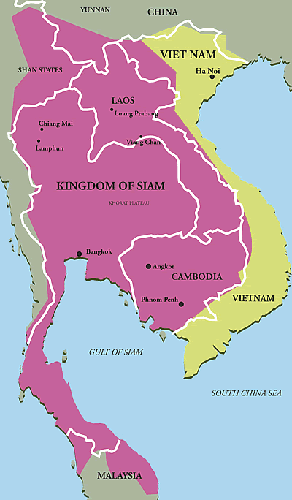
It is widely believed that these cats belonged to the Royal Family of Siam and were kept in the temples, where they were held in high esteem and even credited with guarding sacred places. Whether or not every story is literally true, there is no doubt the Siamese was a prized and protected cat in its homeland long before the Western world ever set eyes on one.
The Legends and Myths of the Siamese
Part of the charm of the Siamese is the folklore that surrounds it. Two physical quirks in particular — crossed eyes and a kinked tail — gave rise to some wonderful legends. Both are now considered show faults that responsible breeders have worked hard to eliminate, but it’s worth being clear: neither is a health problem, and you’ll rarely see either in a well-bred modern Siamese.
The best-known legend tells of two temple cats charged with guarding a precious goblet belonging to the King. When the goblet was found, one cat returned to the palace to report it while the other stayed behind to keep watch. So determined was the guarding cat not to lose sight of its treasure that it stared at the goblet without blinking and wrapped its tail tightly around the base — and from that day on, the story goes, the cat was left cross-eyed and kink-tailed, passing both traits to its descendants.
Another charming tale holds that the Royal Princesses would slip their rings onto the kinked tails of their Siamese cats for safekeeping, and that the kink developed to stop the rings sliding off. Lovely stories, both — and a reminder of just how closely these cats were bound up with royal and temple life in old Siam.
The First Siamese Cats in the West
The Siamese arrived in Britain in 1884, when Mr Owen Gould, the British Consul-General in Bangkok, brought a breeding pair back to England as a gift for his sister, Lilian Veley. This pair — named Pho and Mia — went on to produce a litter of three kittens: Kalahom, Karomata and Duen Ngai.

Pho, Mia and their kittens were exhibited at the Crystal Palace cat show in 1885, where they caused a genuine sensation. Visitors had simply never seen anything like them — these slender, pale cats with their startling blue eyes and dark masks were unlike any cat then known in Britain. Sadly, the original imports did not survive long after the show, but the impression they made was lasting, and more Siamese were soon imported to meet the surge of interest.
The breed’s popularity grew quickly, and in 1901 the Siamese Cat Club was founded — a club that still exists and supports the breed to this day. From that point on, the Siamese was firmly established in Britain, and careful breeding began to refine the type, temperament and range of colours we recognise now.
How the Breed Developed
The original Siamese were seal points — the dark, seal-brown pointed cats that remain, to many people, the classic Siamese. As breeding progressed, other colours and patterns gradually appeared and were recognised: blue, chocolate and lilac points joined the seal, and later came the more unusual cinnamon, fawn, caramel, red, cream, tortie, apricot and tabby (lynx) points.

Today the breed encompasses more than thirty recognised colours and patterns. Rather than cover each one here, I’ve given every colour its own detailed page — you can explore the full range, with photographs and breed-standard notes, in our Siamese Cat Breed Profile.
Traditional vs Modern Siamese Cats
Anyone researching the breed quickly runs into a question that still divides cat lovers: the difference between the traditional Siamese and the modern Siamese. Both are genuinely Siamese — the distinction is one of type, shaped by decades of selective breeding.
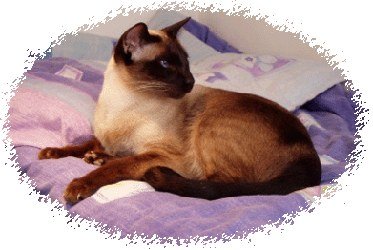
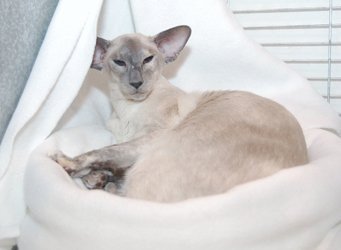
The traditional Siamese — sometimes called the “applehead” — is the rounder, sturdier cat closer in build to those early imports: a fuller face, a more robust body and a less extreme outline. The modern Siamese, by contrast, is the elegant, fine-boned cat of today’s show bench: a long wedge-shaped head, large flaring ears, a slender tubular body and a fine whippy tail. The move towards the modern type was a deliberate refinement by show breeders over the second half of the twentieth century, and it’s the modern Siamese that meets the current GCCF breed standard.
Neither is “more authentic” than the other — they simply represent different points along the breed’s continuing story. Whichever you prefer, the temperament that made the Siamese famous endures in both: affectionate, intelligent, talkative and utterly devoted to their people.
A Breed That Shaped Others
One thing people often miss about the Siamese is just how much of the modern cat fancy it helped create. This is not a breed that kept itself to itself.
The Siamese is the direct foundation of the Oriental Shorthair and Oriental Longhair (the same elegant cat in solid colours and patterns rather than points), and of the Balinese — essentially a longhaired Siamese. Its pointed pattern and slender type also fed into the development of breeds such as the Tonkinese (a Burmese–Siamese cross), the Colourpoint varieties, and several others. When you admire a Siamese, you are looking at one of the most influential cats in pedigree history.
A Breed Still Being Written
From temple cat to royal gift, from a Crystal Palace curiosity to one of the most popular pedigree breeds in the country, the Siamese has travelled a very long way. What strikes me, after twenty years with them, is how little their essential character has changed. The cats I judge today would still recognise themselves in those old stories — vocal, devoted, and quietly convinced they are the most important member of any household.
If this history has whetted your appetite for the breed, the best next step is to explore the colours and the breed standard in our Siamese Cat Breed Profile, or read about responsibly breeding Siamese cats if you’re thinking of taking that step yourself.
Key Takeaways
- The Siamese originates in Siam (now Thailand), where pointed cats were recorded for centuries and kept by royalty and temples.
- Crossed eyes and kinked tails inspired charming legends but are show faults, not health problems, and have been largely bred out.
- The first Siamese reached Britain in 1884 (Pho and Mia, brought by Owen Gould) and caused a sensation at the 1885 Crystal Palace show.
- The Siamese Cat Club was founded in 1901 and still supports the breed today.
- The original seal point was joined over time by many colours — explore them all in the Breed Profile.
- Traditional (“applehead”) and modern Siamese are both genuine Siamese, differing in type rather than breed.
Frequently Asked Questions
Where do Siamese cats originally come from?
Siamese cats originate from Siam, the country now known as Thailand, where pointed cats of this type were recorded and prized for centuries before reaching the West.
When did Siamese cats arrive in the UK?
The first Siamese arrived in Britain in 1884, when Owen Gould brought a breeding pair, Pho and Mia, back from Bangkok. They were shown at the Crystal Palace in 1885.
Why do some Siamese cats have crossed eyes or kinked tails?
These traits gave rise to old temple legends but are considered show faults rather than health issues. Careful breeding has largely eliminated them, so they’re rarely seen in well-bred Siamese today.
What is the difference between a traditional and a modern Siamese?
The traditional (“applehead”) Siamese is rounder and sturdier, closer to the early imports; the modern Siamese is the slender, fine-boned show type with a wedge-shaped head. Both are genuinely Siamese — the difference is one of type.
Want to Know More About the Breed?
From all thirty-plus colours to temperament, health, kittens and the show world — explore the complete guide to the Siamese.