There’s something about a blue point Siamese that stops you in your tracks. That cool, glacial white coat against those slate-grey points — it’s quieter than a seal point, less dramatic, but somehow just as striking. Maybe more so, because it sneaks up on you.
I’ve been breeding and judging Siamese for over twenty years, and blue points have always held a special place. They were one of the first colours I handled on the show bench, and I still remember the judge at my first championship show running her hands down a blue point’s flanks and saying “now that’s what glacial white should look like.” It stuck with me.
Whether you’re thinking about buying a blue point kitten, trying to work out if your cat is a blue or a lilac, or you’re a breeder wanting to understand the genetics behind that gorgeous dilute colour — this page covers all of it. The breed standard, the history, the genetics, what they actually look like at different ages, and how they compare to the other Siamese colours.
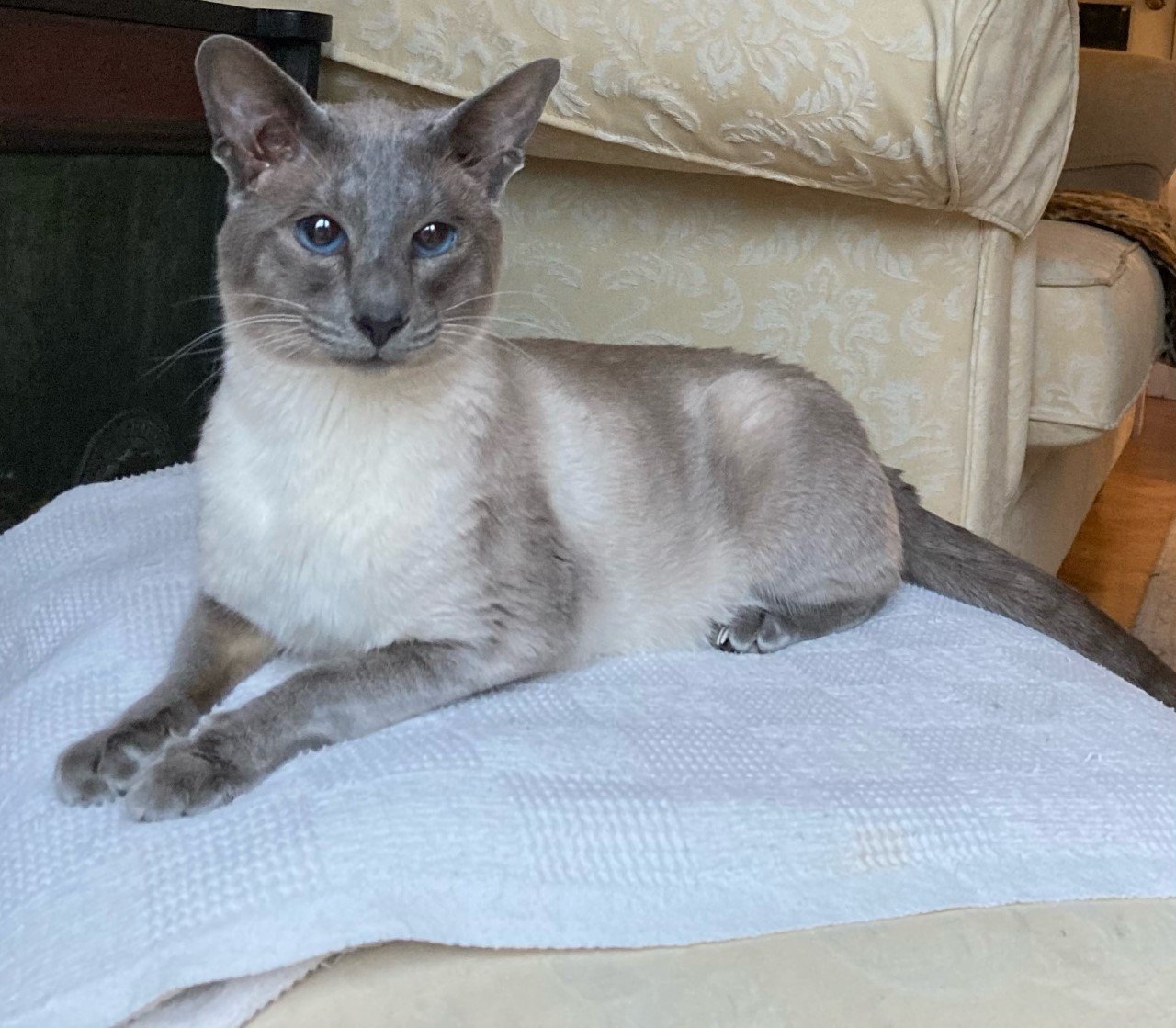
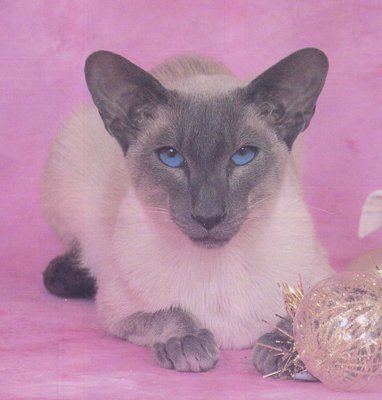
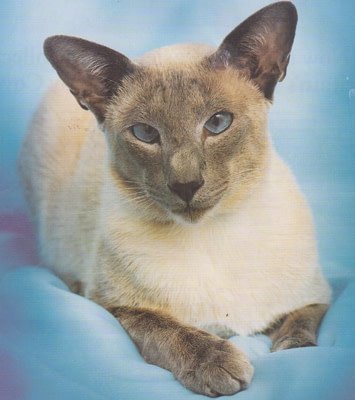
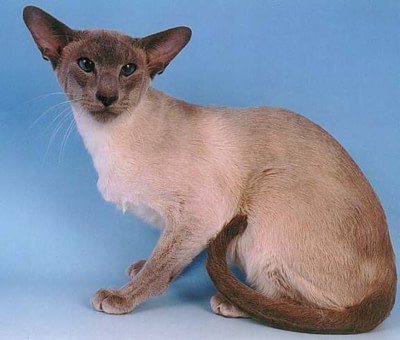
What is a Blue Point Siamese? Blue point Siamese cats have slate-grey (blue) points on their ears, face mask, paws and tail, with a glacial white body that may show blue-grey shading. They are one of the four original GCCF-recognised Siamese colours, with blue being the dilute form of seal. Their vivid blue eyes and cool-toned colouring make them one of the most popular Siamese varieties in the UK.
The GCCF Breed Standard for Blue Points
If you’ve ever shown a blue point Siamese, or judged one at a championship show, you’ll know that the GCCF breed standard is quite specific about what constitutes a correct blue point. The breed number is 24a under the old system, or SIA a under the new EMS coding — that little ‘a’ tells you straight away that you’re looking at the dilute colour.
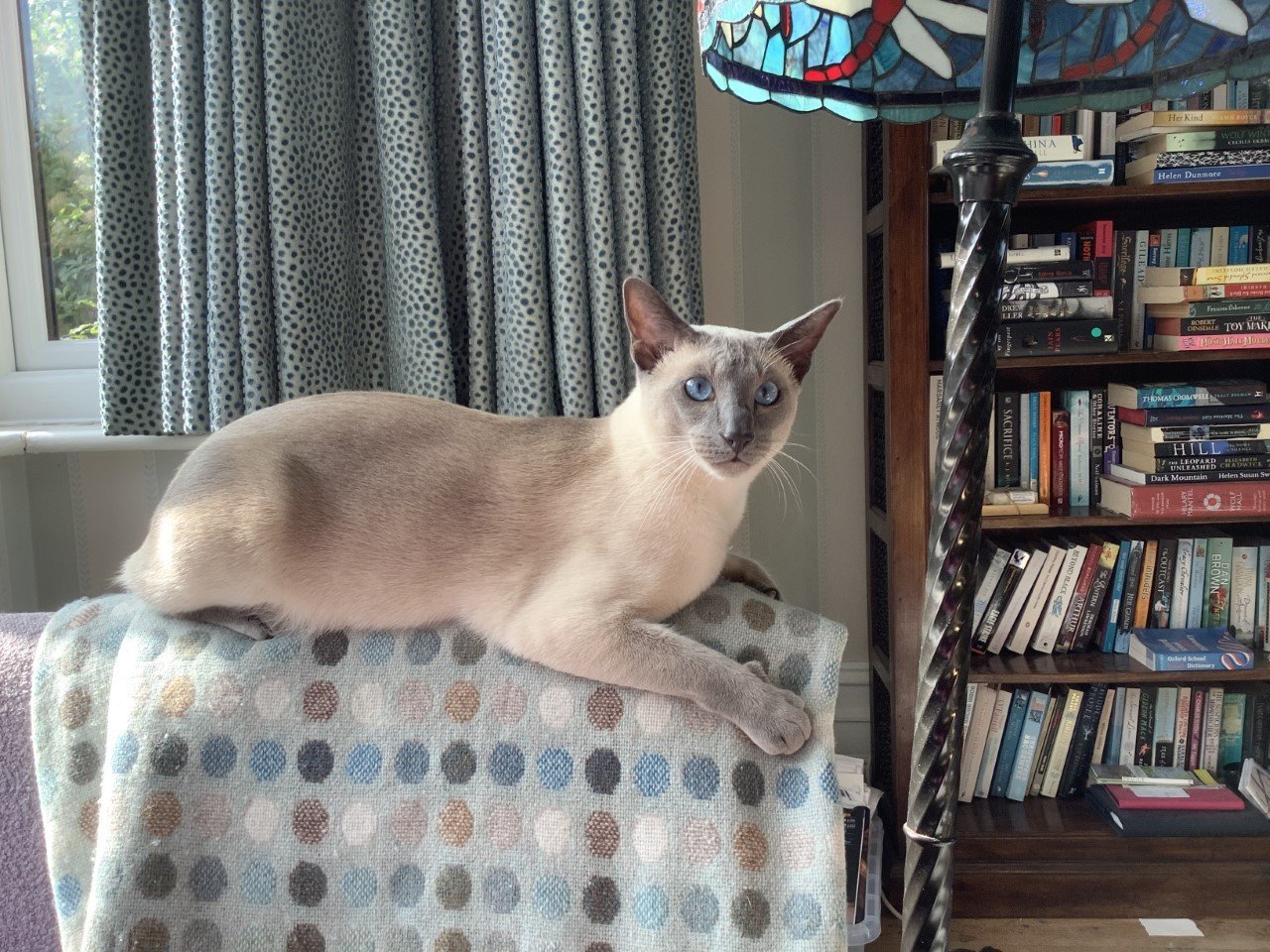
The standard calls for points that are a light blue in colour — and this is where precision matters. Not grey, not slate-grey that’s too dark or harsh, and definitely not that wishy-washy pale blue you sometimes see on cats that haven’t developed their colour properly. The points should be distinctly blue, with a clear depth to them. The body itself must be glacial white, that crisp cool white that sets off the blue points beautifully. The eyes — and this is non-negotiable — must be clear, bright, and vivid blue. Nose leather and paw pads should be blue, though in reality I’ve seen many with those deep pinky-blue paw pads that still conform perfectly well to type.
What the standard specifically withholds are faults like a cream or fawn-toned body, a self-blue body (which would make it a Korat, not a Siamese), or a body so pale it lacks proper colour definition. You also want to see those characteristic facial markings — the “M” on the forehead, the lines from the eyes — tracings that are present and clear. A blue point without those distinctive mask tracings isn’t meeting standard, though thankfully this is rare in well-bred lines. In my experience judging, the most common colour faults in blue points involve either body colour that’s too warm or points that lack sufficient depth of colour.
History of the Blue Point Siamese
The blue point Siamese is one of the oldest recognised colour variants, and the story of its acceptance into the fancy is genuinely interesting. Breeders in the East were producing blue points from their seal point breeding programmes as early as 1894, recognising them as a distinct dilute colour. The GCCF formally recognised the blue point in 1936 — making it one of the first two recognised Siamese colours after the original seal point.
There’s a rather amusing historical anecdote here. Louis Wain, the famous cat illustrator and early Siamese enthusiast, was asked to judge a blue point Siamese at the Holland House Show back in 1896. He declined. Whether that was because the colour wasn’t yet standardised, or because he simply wasn’t convinced of its merit, history doesn’t quite tell us — but it’s a reminder that even within the early fancy, the blue point was something of a talking point.
What’s clear is that by the early twentieth century, British breeders were already working with blue points seriously, establishing lines and developing the colour type we see today. The introduction of the blue point alongside the seal point gave breeders a second recognised dilute option and opened up the possibility of exploring yet further colour variations — which eventually led to the chocolate, lilac, and the full spectrum of modern Siamese colours.
Blue Point Genetics — The Dilution Gene
To understand what a blue point Siamese actually is, you need to understand the genetics of colour dilution. The blue point is the dilute form of the seal point — that’s the simple version. The more detailed version involves the cs gene and temperature-sensitive albinism.
Both seal and blue points carry the same Siamese colour restriction gene (cs), which creates pointed pattern colouration. The cs gene produces an enzyme that’s sensitive to temperature: at the cooler extremities of the body — the ears, face mask, paws, and tail — the enzyme is active and produces darker pigment. At the warmer core of the body, the enzyme is inhibited and produces little to no pigment, resulting in that characteristic pale body.
The difference between a seal point and a blue point comes down to a separate dilution gene. The blue point inherits two copies of the dilute (d) allele, which lightens the otherwise dark seal pigment into the softer blue-grey we recognise. A seal point, by contrast, has at least one copy of the dominant dense (D) allele, which keeps the pigment dark and rich.
Kittens don’t arrive with fully developed colour. A blue point kitten can be nearly white at birth, with barely visible pale grey points. Over the first few weeks and months, the colour develops gradually. By around 10-12 weeks, the points become distinctly blue. The body colour continues to deepen slightly with age, often starting along the spine line and gradually extending across the flanks. A young adult blue point will have darker points and slightly more body shading than a kitten, and an older cat may show even more extensive body colour. This is entirely normal and doesn’t indicate a fault — it’s just how the colour develops over time.
What Do Blue Points Actually Look Like?
I’ve found that people sometimes struggle to visualise the difference between a blue point Siamese and the other dilute colours, particularly if they’ve only seen photos. Let me try to paint the picture clearly.
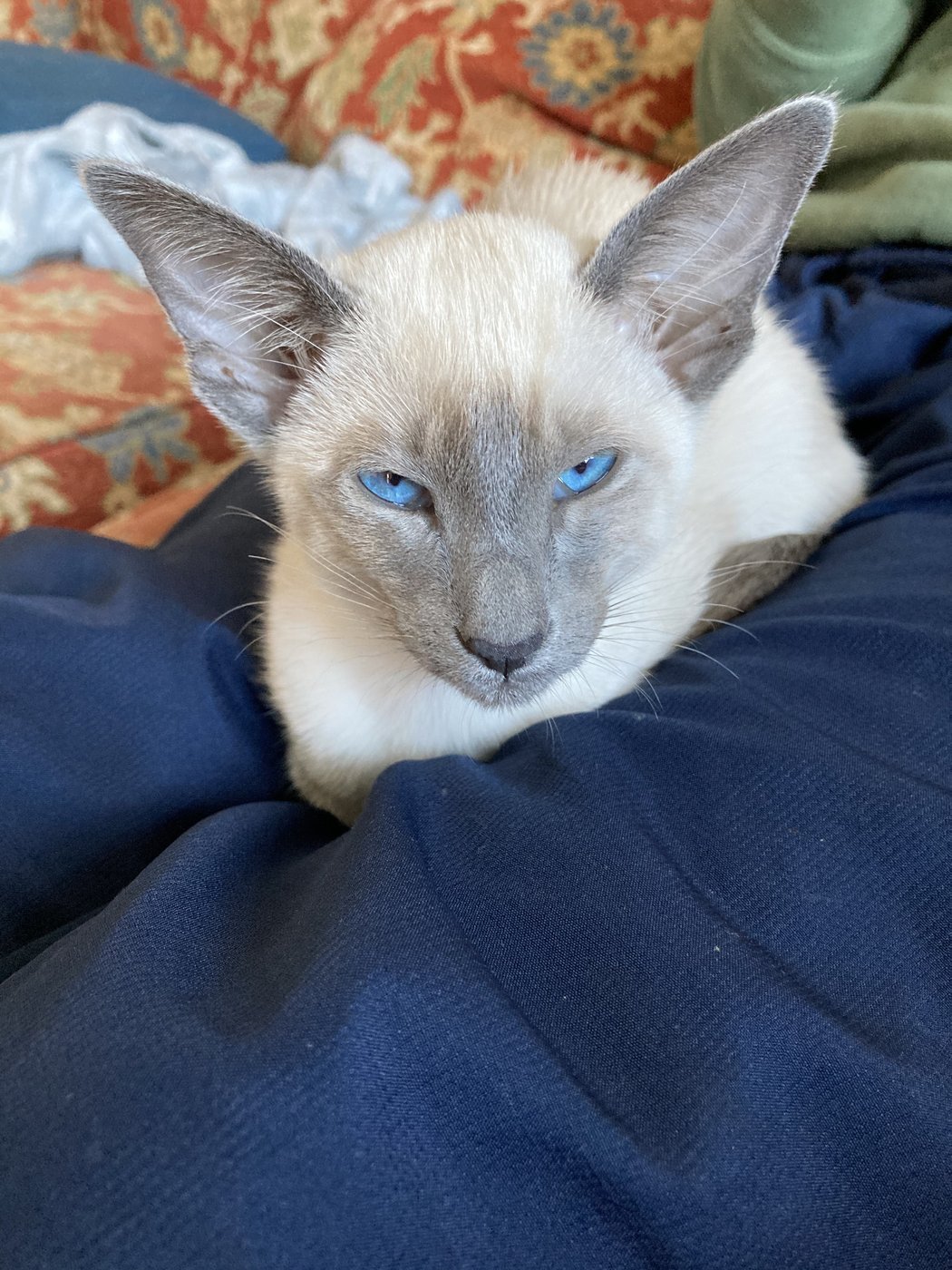
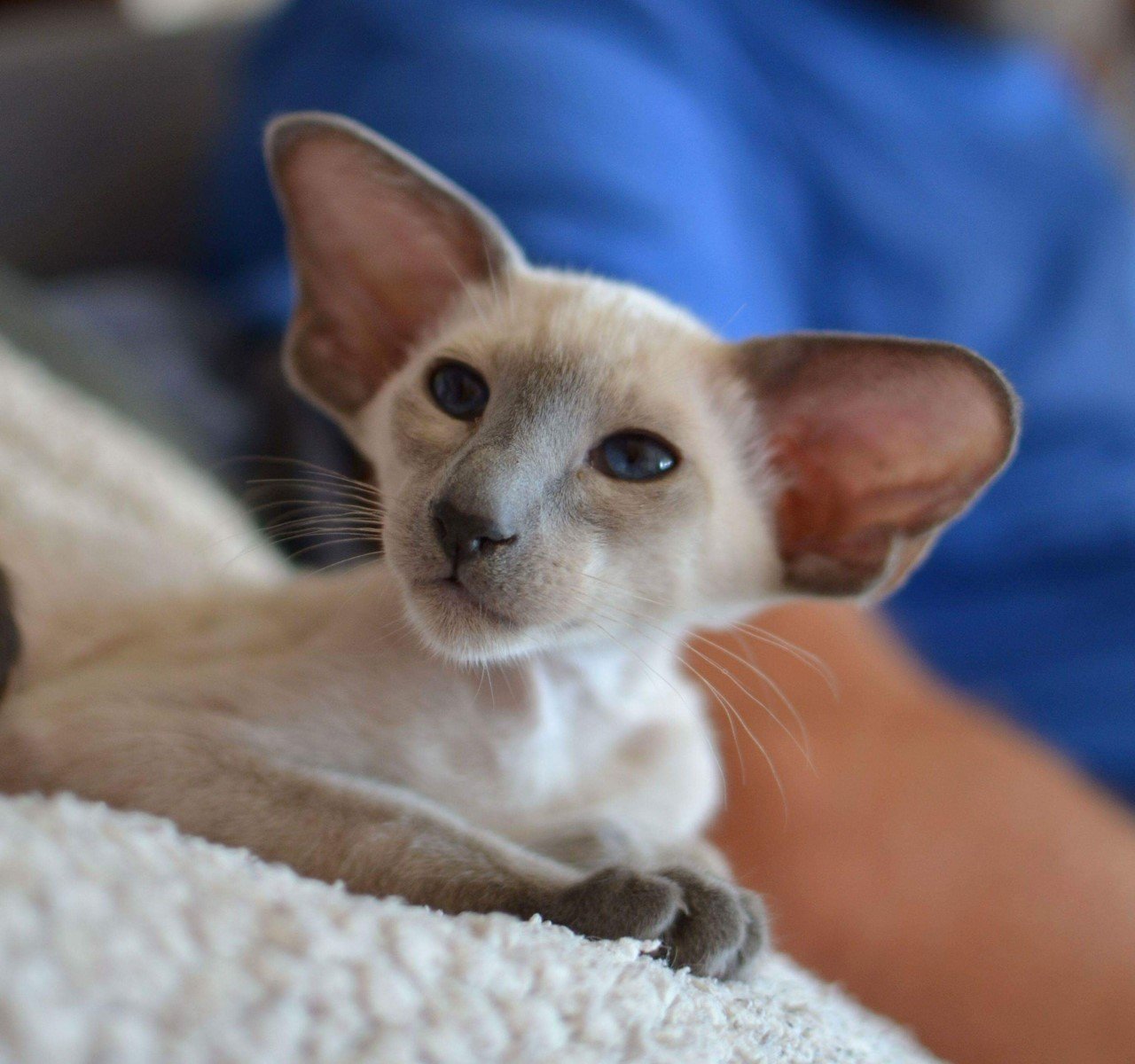
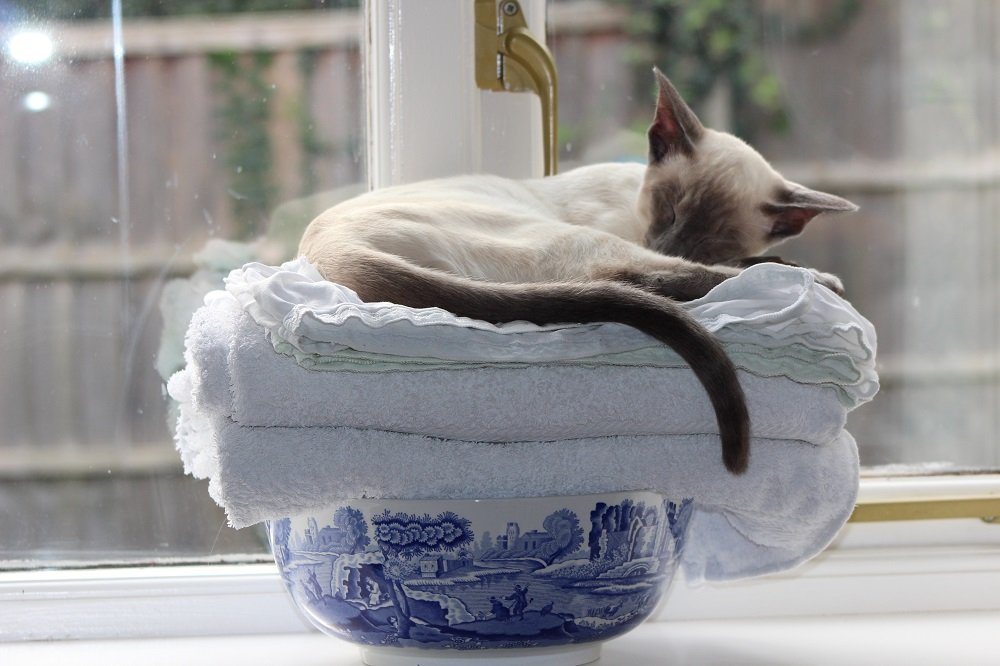
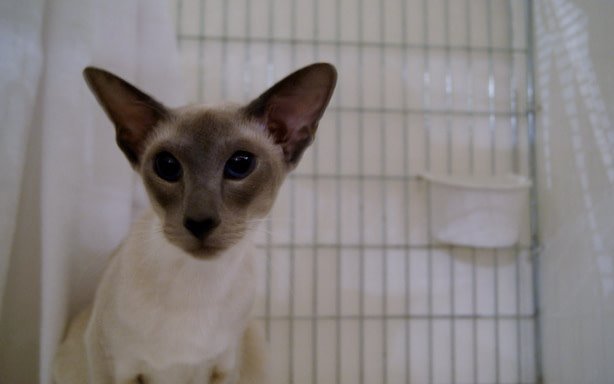
A young blue point kitten is a study in pastels. You’re looking at creamy-white fur with barely-visible pale grey points. The ears are pale grey, the nose leather is a soft grey, and the paws are soft pink-grey. Hold the kitten in good light and you can just about make out the facial mask — those characteristic Siamese markings — but it’s ghostly, not dramatic. The eyes are vivid blue, which sometimes seems almost incongruous against such pale colouring.
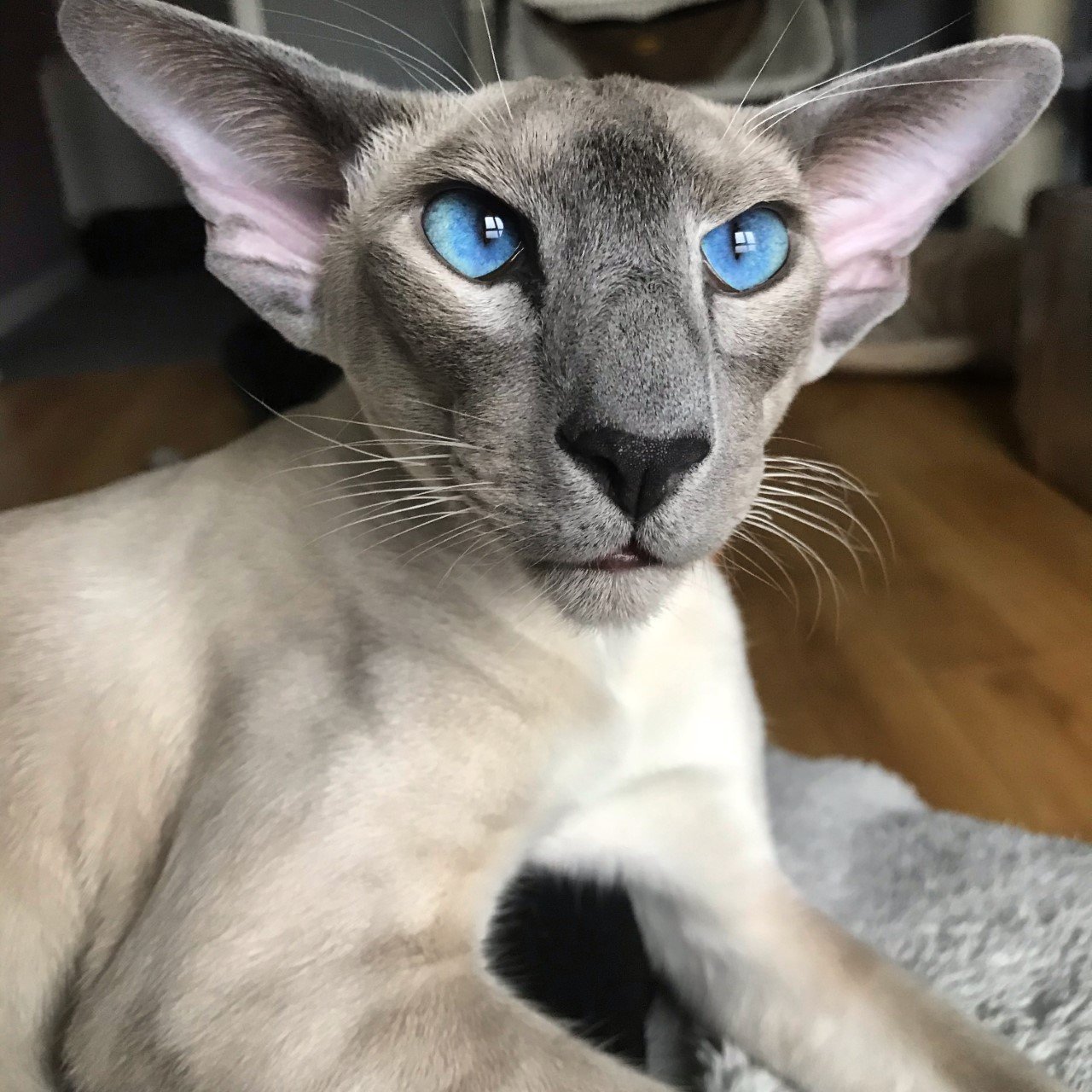
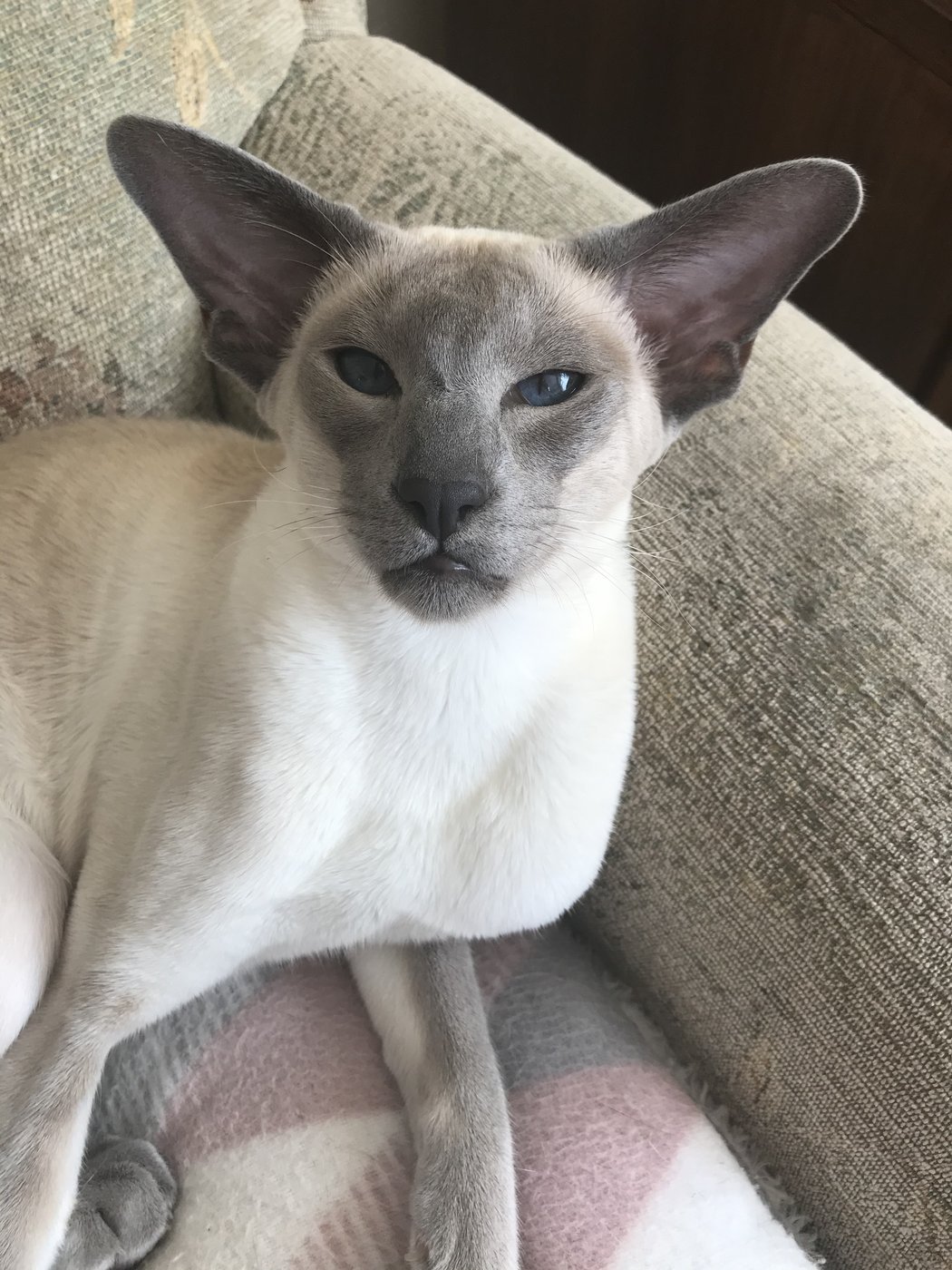
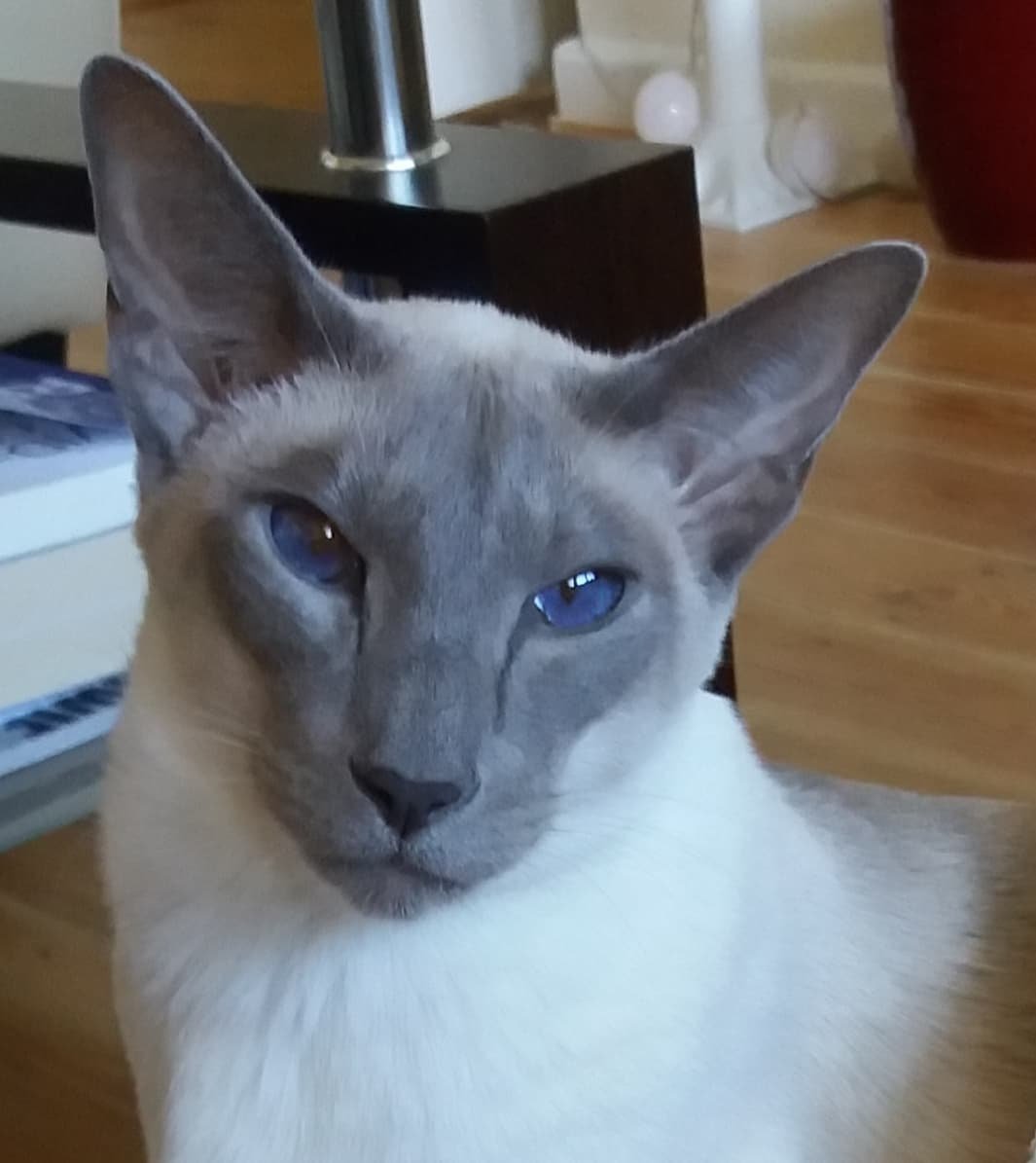
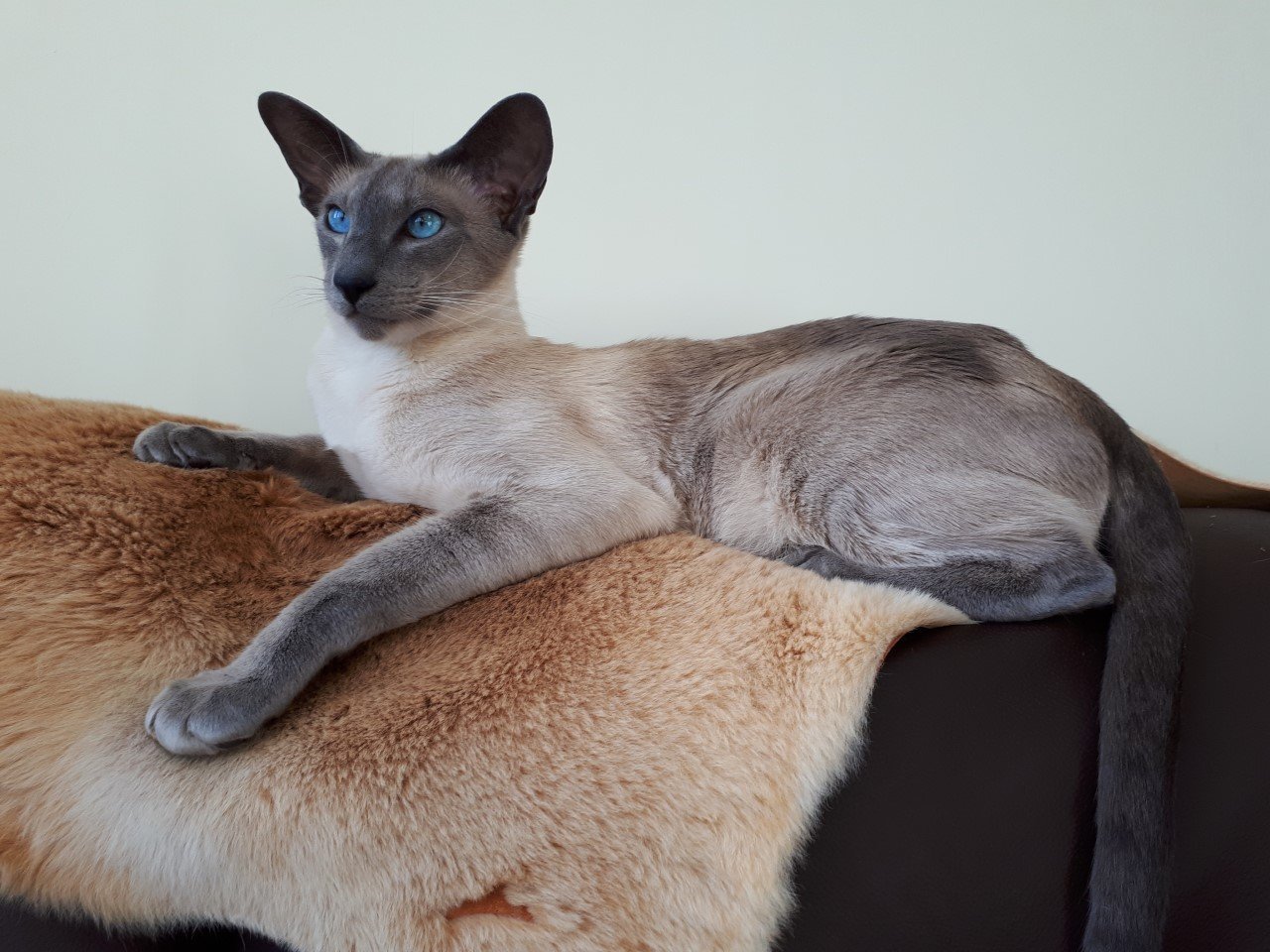
As the kitten develops — and this happens gradually through its first year — the blue deepens. By three months, the points are clearly blue. By six months, they’re a distinct slate-blue colour. An adult blue point has substantial colour contrast between the glacial white body and the slate-blue points. The mask is pronounced, the ears are a rich blue, the tail is dark blue, and the paws are distinctly blue. The body itself should remain that cool glacial white, though it may show some blue-grey shading, particularly along the spine and towards the rear quarters. This shading is normal and part of the breed’s character — you’re not looking for a stark two-tone contrast like you might see in some other pointed breeds.
The overall impression should be cool and elegant. Blue points don’t have the dramatic contrast of a seal point, but they’re far from washed out. When you see a really well-developed adult blue point in sunlight, the cold-toned colouring is quite striking — there’s something rather ethereal about the combination of glacial white and slate-blue.
A Gallery of Blue Point Siamese
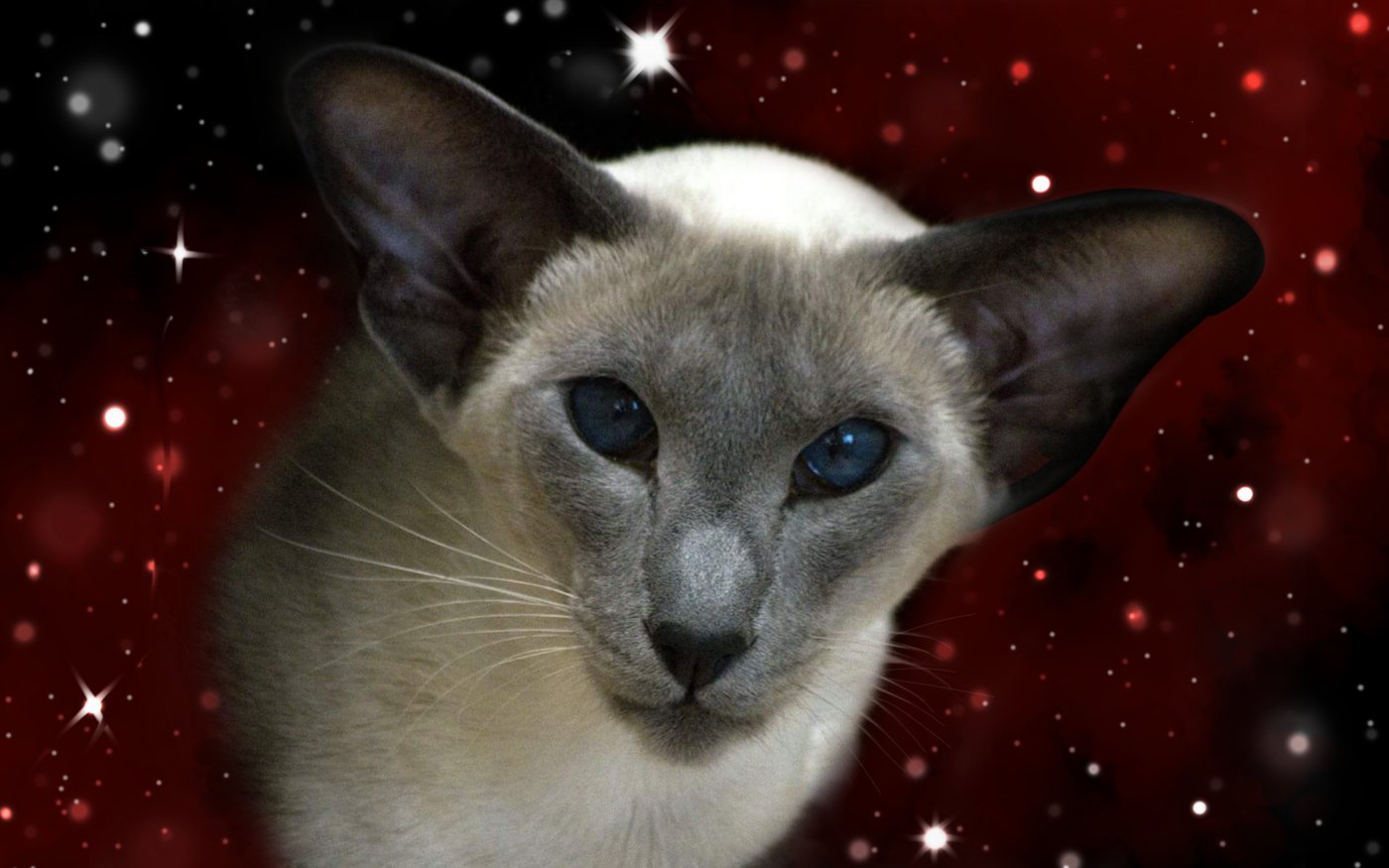
A selection of blue point Siamese — pet companions and pedigree show cats — showing the cool slate-grey points and clear blue eyes that define the colour. Click any photo to open the scrollable gallery.
📸 Got a Blue Point Siamese? Add your cat to this gallery
This gallery grows over time — pet or pedigree, every blue point is welcome. Enter our photo competition and your cat could feature here.
Notable Show Winners
Blue point Siamese that have made their mark in the show ring over the years.


Personality and Temperament
Here’s something that’s genuinely worth noting: in my experience, blue point Siamese tend to have a notably gentle, more laid-back temperament compared to some of the other colour varieties. This is anecdotal rather than scientifically established, but I’ve heard it from enough breeders over the years that there does seem to be something to it. Whether that’s inherent to the dilute genes or simply reflects the breeding history of the colour, I couldn’t say for certain.
That said, a blue point is still fundamentally a Siamese cat, and that means the core personality traits are all there. They are vocal — genuinely vocal, with a range of vocalisation that can be quite theatrical. They are intensely social and don’t tolerate being ignored. They’re highly intelligent and demand mental stimulation and interaction. A blue point will follow you around the house, supervise your activities, and have strong opinions about mealtimes and your schedule. They form deep bonds with their people and thrive on company.
The gentler temperament — if that’s a genuine breed characteristic — might manifest as a slightly more easygoing approach to change, perhaps a touch less intense in their neediness (though they’re still very much attention-seeking), and a generally calm demeanour. But don’t mistake calm for indifferent. A blue point will be in your business just as much as any seal point; they’re just a touch more philosophical about it.
Health Considerations
There are no colour-specific health issues associated with blue point Siamese cats. The dilute gene that creates the blue colouring doesn’t carry any inherent health burden. That said, if you’re considering a blue point kitten, you should be aware of the general health screening that any responsible Siamese breeder will undertake. This includes testing for hypertrophic cardiomyopathy (HCM), progressive retinal atrophy (PRA), and asthma, which can occur in the breed regardless of colour.
Blue points live just as long and healthily as any other Siamese colour, provided they come from well-screened parentage. Typically, you can expect 12-18 years of healthy, active life from a well-cared-for blue point. Some lines regularly produce cats living into their 20s. The colour itself is not a risk factor — good breeding practices and regular health screening are what matter.
Blue Point vs Other Colours
If you’re new to Siamese cats, understanding the differences between the various pointed colours can be tricky. Let me break down the most common comparisons.
Blue Point vs Seal Point: The seal point is the original Siamese colour and the parent colour of the blue point. A seal point has rich, dark brown points — deep chocolate-brown on the mask, ears, paws and tail — against a warm cream or fawn body. A blue point, by contrast, has slate-grey (blue) points against a cooler, glacial white body. The seal point has more dramatic colour contrast and a warmer overall tone. If you’ve seen both side by side, the seal point looks richer and more intense, whilst the blue point looks cooler and more ethereal. Both are equally valid and equally prized in modern breeding.
Blue Point vs Lilac Point: This is where confusion often arises. A lilac point is the dilute form of a chocolate point — so it’s a different genetic combination from the blue point. The lilac point has mauve-pink or pinkish-grey points, very pale and delicate. A blue point is more definitively blue-grey, with more depth and cool tone to it. A lilac point looks almost like it’s been dusted with lavender; a blue point looks like slate. In kittens, the difference is harder to spot, but in adults, a blue point should have noticeably more colour depth than a lilac.
Blue Point vs Caramel Point: The caramel point is another dilute colour that’s sometimes confused with the blue point, particularly by those less familiar with Siamese colours. Caramel points have warm, brownish-grey points with a distinctly warm tone to them. Blue points, by contrast, have cool-toned slate-grey points. I’ve seen the two mistaken for one another more times than I can count, but they are genetically distinct. A caramel point should never have the cool, icy tone of a true blue point.
Frequently Asked Questions
Are blue point Siamese cats rare?
Not particularly. The blue point is one of the four GCCF-recognised Siamese colours and has been established in breeding programmes for nearly a century. You’ll find blue point breeders throughout the UK, and they’re regularly shown at championship shows. They’re less common than seal points, simply because seal is the original and most popular colour, but they’re absolutely standard and readily available from reputable breeders. If anything, they’re somewhat more accessible than some of the newer colour variants.
How long do blue point Siamese cats live?
A healthy, well-cared-for blue point typically lives 12-18 years, with many living into their 20s. Their lifespan is no different from any other Siamese colour. The key factors affecting longevity are genetics, health screening in the breeding lines, and the quality of care they receive — not the colour itself.
What is a blue point Siamese?
A blue point Siamese is a Siamese cat with slate-grey (blue) coloured points — the ears, face mask, paws and tail — and a pale, glacial white body. The blue colouring is caused by a dilution gene that lightens the darker seal point pigment. They have vivid blue eyes and are one of the four original GCCF-recognised Siamese colour variants. The colour is also known as the dilute form of seal.
Are blue point Siamese cats hypoallergenic?
No cat is truly hypoallergenic, and this applies equally to blue point Siamese cats. However, Siamese cats do produce lower levels of the Fel d 1 protein, which is the primary allergen in cat saliva and skin secretions. Some people with mild cat allergies find they can tolerate Siamese better than other breeds, but this varies significantly from person to person. If you have cat allergies, spending time with a blue point before committing to ownership is a sensible precaution.
Is my Siamese a blue or lilac point?
This is a common question, particularly for those judging or evaluating kittens. The key difference is tone and depth of colour. A blue point has distinctly blue-grey, cool-toned points with noticeable colour depth — they should look slate-grey. A lilac point has mauve-pink, much paler points with a distinctly warm, pinkish cast to the colouring. In kittens, the distinction can be subtle, but in adults, a blue point should be considerably darker and cooler-toned than a lilac. If you’re uncertain about an individual cat, consulting a GCCF judge with experience in both colours is the safest approach.
What does a blue point Siamese cat look like?
A blue point Siamese has a sleek, elegant build typical of the breed, with a distinctively pointed pattern. The points — ears, mask, paws and tail — are slate-blue or grey-blue in colour. The body is pale glacial white, often with subtle blue-grey shading along the spine and rear quarters. The eyes are large, almond-shaped, and vivid blue. The nose leather and paw pads are blue. The overall impression is cool-toned and elegant, with less dramatic contrast than a seal point but considerably more colour depth than a lilac point.
Browse More Colour Profiles
The blue point is just one facet of Siamese colour diversity. If you’d like to explore other recognised colour variants, head back to our Siamese cat breed profile hub. We’ve detailed colour profiles for seal point Siamese cats and lilac point Siamese cats, and you’ll find detailed information about Siamese cat genetics, colour development, and how to find a responsible breeder.
Bringing home a kitten? Don’t wing it.

I wrote an eBook for new kitten owners that covers everything you actually need to know — how to prepare your home, what to feed, litter training that actually works, stopping the biting and scratching, reading your kitten’s body language, and what’s normal versus what’s not. It comes with printable checklists, a vaccination record and a first-week diary.
It’s called Kitten Care for New Cat Owners, it’s an instant download, and it will save you a lot of late-night Googling at 4am.