When I first started judging Siamese at shows in the early 1990s, I’ll admit I was initially skeptical about lilac point Siamese as a genuine colour. Not because they weren’t beautiful — they’re ethereal — but because I’d seen too many breeders present mediocre blues and call them lilacs. Yet having spent over twenty years as a GCCF Full Judge and breeder of the Burnthwaites prefix, I can tell you with absolute certainty: a truly excellent lilac point Siamese is one of the most exquisite cats you’ll ever lay eyes on. The colour is delicate, the temperament is exceptional, and the genetics are genuinely fascinating.
If you’re researching lilac point Siamese cats — whether you’re thinking about buying a kitten, showing your own lilac, or simply captivated by this softest and most ethereal of all Siamese colours — this guide will walk you through everything you need to know about the breed standard, the genetics, and what makes lilac pointed Siamese so special.
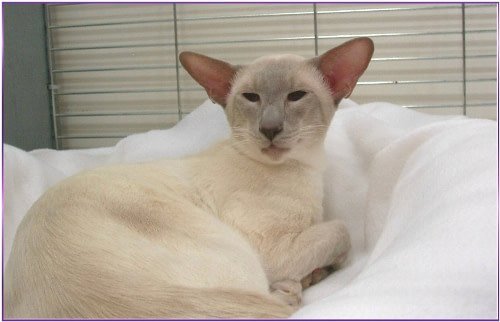
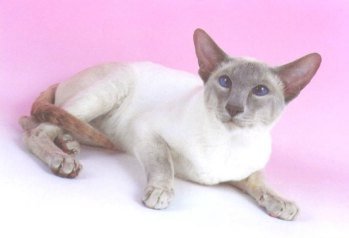
What is a Lilac Point Siamese? Lilac Point Siamese cats have frosty grey points with a delicate pinkish tone on their ears, face mask, paws and tail, paired with a warm magnolia body and sapphire blue eyes. They are the dilute form of chocolate points — created by combining the blue and chocolate dilution genes — and were first recognised as a distinct colour by the GCCF in the 1960s. Lilac Points are known for having the clearest coat and sweetest temperament of all Siamese colours.
The GCCF Breed Standard for Lilac Points
The Governing Council of the Cat Fancy (GCCF) is the UK’s official cat registry, and the breed standard for lilac point Siamese cats is rigorous. The breed number under the old system is 24c, and under the newer EMS (European Maine code system) it’s listed as SIA c — the ‘c’ denoting the lilac (caramelle) dilution.
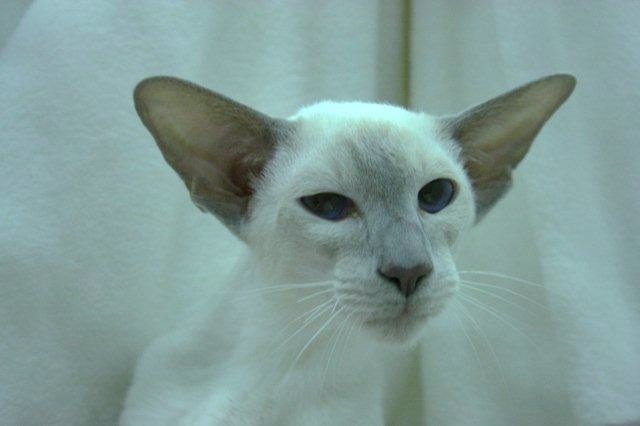
Here’s what the GCCF standard specifies for a lilac point Siamese:
Eyes: Clear vivid blue. The eyes must be brilliant — not pale, not dull, but truly striking sapphire blue. This is non-negotiable.
Points (ears, face mask, paws, tail): Pinkish grey. This is where many lilac point Siamese fail. The points must have a warm, pinkish tone — never blue-toned (which would indicate a poorly expressed blue), never brownish (which would suggest chocolate or caramel influence). That pinkish grey is the hallmark of a truly correct lilac.
Body: Magnolia. Not stark white — not cold white — but a warm, creamy magnolia tone that complements those pinkish-grey points. When you see a lilac point with proper colour contrast between body and points, combined with that warm magnolia background, it’s unmistakable.
Nose leather and paw pads: Pinkish grey, matching the points. Consistency across the colour points is essential.
Coat texture: Fine, glossy, and short. Lilac point Siamese famously have the softest, clearest coat of all Siamese colours — minimal shading, little to no darker tipping.
Withholding faults (reasons a cat would not be awarded in a show): pale or dull eye colour, cold white body, absence of pinkish tone in the points, points that don’t match each other, or heavy shading across the body. A tail with some rings is undesirable but not a withholding fault.
History of the Lilac Point Siamese
One of my favourite pieces of Siamese colour history is the story of how lilac point Siamese were “discovered.” It’s a tale that says a lot about how slowly the fancy sometimes catches up with genetics.
For decades, breeders were producing what they thought were poorly expressed blue point Siamese. The points weren’t quite right — too warm, too subtle, lacking the intensity of a proper blue. Rather than recognising these as a distinct colour, they were dismissed as sub-standard blues or genetic flukes. It wasn’t until the 1960s that the GCCF officially recognised what had been there all along: lilac point Siamese cats as a genuine, distinct colour in their own right.
The realisation came as breeders and judges began to understand the genetics properly. These “poor blues” weren’t poor at all — they were something entirely different. They were the result of combining two dilution genes (the blue gene and the chocolate gene) to create what we now call lilac point Siamese. Once the breed standard was formalised, breeders could select for it deliberately, and the colour began to stabilise and improve.
Lilac Point Genetics — The Double-Dilute Gene
This is where lilac point Siamese genetics gets really interesting. To understand what you’re looking at, you need to understand the genes.
In Siamese cats, the pointed pattern is created by a temperature-sensitive gene (the cs gene — Siamese colour gene). But the actual colour of the points is determined by other genes. Seal points carry the dominant pigment gene. Chocolate points carry a recessive dilution gene that removes some pigment. Blue point Siamese — also called grey point — carry the blue dilution gene, which dilutes seal into blue. And lilac point Siamese cats? They carry both the chocolate dilution gene and the blue dilution gene.
Think of it this way: if chocolate point Siamese is seal pigment diluted once, a lilac pointed Siamese is seal pigment diluted twice — first by the chocolate gene, then by the blue gene. The result is a much softer, paler colour: frosty grey with a pinkish undertone rather than the cool grey of a blue or the warm brown of a chocolate.
This double dilution also explains why lilac point Siamese have that famously clear, soft coat texture. The pigment is simply less intense, distributed more subtly across the hair shaft. You’ll rarely see the darker tipping and shading you might see in other Siamese colours.
What Do Lilac Points Actually Look Like?
Describing lilac point Siamese in words is genuinely difficult because the colour is so delicate. But let me try.
When a lilac point Siamese kitten is born, the points are barely visible — just the faintest grey tinges on the ears and face. Over the first few weeks and months, the colour develops as the kitten’s body temperature drops slightly (the temperature-sensitive gene kicks in). By around 12 weeks, you’ll see clear pinkish-grey points emerging. By adulthood, a well-bred lilac point will have rich, warm pinkish-grey points in sharp contrast with a creamy, warm magnolia body.
The pinkish tone is absolutely crucial. It’s what separates a true lilac from a poorly expressed blue or caramel. Under good lighting, you’ll see that dusty, frosty quality — almost luminous. Combined with those sapphire blue eyes, a really excellent lilac point siamese cat has an almost ethereal appearance. It’s not harsh or bold like some seal points can be; it’s soft, almost vulnerable-looking.
The softest coat is another defining feature. Where you might feel some texture in a blue or chocolate point, a lilac’s coat is like touching the finest suede. This ties back to the genetics — that double dilution just creates softer pigmentation overall.
A Gallery of Lilac Point Siamese
A selection of lilac point Siamese — pet companions and pedigree show cats. Click any photo to open the scrollable gallery.
📸 Got a Lilac Point Siamese? Add your cat to this gallery
This gallery grows over time — pet or pedigree, every lilac point is welcome. Enter our photo competition and your cat could feature here.
Notable Show Winners
Lilac point Siamese that have made their mark in the show ring over the years.



Personality and Temperament
Here’s something every lilac point breeder I’ve ever spoken to agrees on: lilac point Siamese have the sweetest and gentlest temperament of all Siamese colours. I’ve never been able to pin down scientifically why this should be true — perhaps it’s just what the best breeders have selected for — but anecdotally, it holds up.
Don’t misunderstand me: all Siamese cats are vocal, intelligent, and intensely social. They demand attention. They’re not the cat breed to ignore in a corner. But lilac points seem to have a particular softness about them. They’re chatty rather than demanding, affectionate without being overwhelming, intelligent and engaged without being mischievous.
Perhaps it’s the colour itself that influences perception — that ethereal, delicate appearance makes people expect gentleness and get that in return. Or perhaps breeders breeding for that perfect soft pinkish-grey colour have inadvertently selected for a gentler temperament as well. Either way, if you’re looking for a Siamese cat with a bit less attitude and a bit more sweetness, a lilac point siamese cat might be exactly what you’re after.
Health Considerations
The softer coat texture of lilac point Siamese cats doesn’t translate to different health requirements. You’re still caring for a Siamese cat, which means the breed-specific health considerations remain the same: progressive retinal atrophy (PRA) screening, hypertrophic cardiomyopathy (HCM) testing, and general attentiveness to the breed’s tendency toward certain conditions.
The key difference is grooming. That finer, softer coat benefits from regular gentle brushing — perhaps 2-3 times weekly — to prevent matting and to keep it in peak condition. The softer texture means it shows mats more readily than a coarser coat might.
For more detailed information on Siamese health screening and what to expect as a breed owner, I’d recommend reading our full guide to Siamese cat health and our information on finding a good cat breeder — both ensure you’re sourcing your lilac point kitten from health-tested parentage.
Lilac Point vs Other Colours
This is where things get tricky, because lilac point Siamese cats are frequently confused with other colours — even by experienced breeders. Let me break down the key distinctions.
Lilac vs Blue Point Siamese: This is the most common confusion. Blue point Siamese have a cooler, more silvery-grey appearance. The points are distinctly blue-toned. Lilac points have a warmer, pinkish-grey tone — softer, less silvery, more subtle. If the points look distinctly grey-blue, it’s a blue. If they look dusty, warm, and pinkish, it’s lilac. Under good lighting, the difference is clear; under poor lighting, it’s genuinely easy to mix them up.
Lilac vs Chocolate Point Siamese: Chocolate points are warm brown, sometimes quite rich. Lilac points are frosty grey with pink undertones — much cooler, much paler. A chocolate point will look distinctly brown-tinged; a lilac will look silvery-grey. The body of a chocolate is often noticeably warmer (cream to light brown) compared to the cool magnolia of a lilac.
Lilac vs Caramel Point Siamese: And here’s the genuinely tricky one. Caramel points — produced by combining the chocolate and a different type of dilution — can look very similar to lilac points to the untrained eye. Both are soft, warm tones. Both are dilute colours. The critical difference is in the specific tone: caramel tends to have more brown/taupe in it, while lilac is distinctly grey with pink. A caramel point will look slightly warmer, slightly more brownish. A lilac point looks distinctly cool and pinkish-grey. Even experienced breeders occasionally confuse these, which is why understanding the genetics (and seeing both colours in person) is so valuable.
Frequently Asked Questions About Lilac Point Siamese
Are lilac point Siamese rare?
Not rare in the way a Bengal or an Abyssinian might be rare, but they’re certainly less common than seal or blue points. Most casual cat enthusiasts will never see a truly good lilac point in person. If you’re buying a kitten, you might have to search harder and travel further to find a lilac point siamese breeder producing quality cats. But among Siamese enthusiasts and show breeders, they’re well-established and readily available from reputable breeders.
What is the difference between a blue and lilac point Siamese?
Blue point Siamese carry the blue dilution gene only. Lilac point Siamese carry both the blue and chocolate dilution genes. This creates a different point colour: blue points look cool silvery-grey; lilac points look warm pinkish-grey. Blue points are more common and often more intense in colour. Lilac points are softer, paler, and subtler. Genetically, the lilac is a double-dilute of the seal, while the blue is a single dilute.
How much is a lilac point Siamese?
A GCCF-registered lilac point Siamese kitten from a responsible, health-testing breeder in the UK typically costs between £1,000 and £1,200. Show-quality kittens with exceptional pedigrees may cost more. Prices reflect the cost of responsible breeding — health screening (PRA-Rdac, PKDef), veterinary care, socialisation, and GCCF registration.
What colour are lilac point Siamese eyes?
Sapphire blue — vivid, brilliant, clear blue. Not pale, not icy, but rich sapphire. The GCCF breed standard insists on this. If you see a lilac pointed Siamese with pale or dull blue eyes, it’s a serious fault. Combined with the frosty pinkish-grey points and magnolia body, those sapphire eyes create that ethereal appearance lilac points are famous for.
Is my Siamese a lilac or a caramel point?
The best way to tell is to look at the point colour in good natural light. Lilac points look frosty grey with a pink undertone — cool and silvery. Caramel points look warmer, slightly more brownish or taupe. A lilac point’s body is cool magnolia; a caramel point’s body is often warmer cream or pale tan. If you’re still unsure, ask a GCCF judge or your breeder — they should be able to tell you definitively. Genetically, if you know the parents’ colour genetics, you can work backwards, but visually, it comes down to that warm versus cool tone.
Do lilac point Siamese shed a lot?
Siamese cats in general shed moderately year-round. Lilac points, with their softer coat texture, don’t necessarily shed more than other Siamese colours, but their finer coat means regular brushing is essential to manage loose hair and prevent matting. Brush 2-3 times weekly and you’ll keep shedding well under control. During seasonal changes (spring and autumn), you might notice slightly more shedding, but nothing extreme.
Browse More Colour Profiles
Lilac point Siamese cats are just one of the stunning colour variations within the breed. If you’re exploring which Siamese colour might be right for you, I’d recommend browsing our complete Siamese colour chart, or dive deeper into specific colours:
Explore the rich warmth of chocolate point Siamese cats, the cool elegance of blue point Siamese cats, or return to our full Siamese cat breed profile for a comprehensive overview of the breed itself.
Whether you’re captivated by the ethereal beauty of a lilac point, or you’re on a journey to understand the full spectrum of Siamese colours, I hope this guide has shed some light on what makes lilac point siamese cats — and their delicate, pinkish-grey points and sweetest temperament — so genuinely special.
Seeking a lilac point Siamese breeder you can trust? Our guide to finding a good cat breeder walks you through the key questions to ask, the health testing you should expect, and the red flags to watch for.
Bringing home a kitten? Don’t wing it.

I wrote an eBook for new kitten owners that covers everything you actually need to know — how to prepare your home, what to feed, litter training that actually works, stopping the biting and scratching, reading your kitten’s body language, and what’s normal versus what’s not. It comes with printable checklists, a vaccination record and a first-week diary.
It’s called Kitten Care for New Cat Owners, it’s an instant download, and it will save you a lot of late-night Googling at 4am.