Tabby point Siamese cats have striped, patterned points on their ears, face mask, paws and tail — the distinctive tabby markings overlaid onto the Siamese pointed pattern. They are sometimes called lynx point Siamese (particularly in the United States), and they come in every recognised Siamese colour: seal tabby, blue tabby, chocolate tabby, lilac tabby, red tabby, cream tabby, cinnamon tabby, fawn tabby, and caramel tabby. Tabby point Siamese are among the most visually striking of all Siamese varieties.
If I’m completely honest, tabby point Siamese didn’t get the respect they deserved for a long time on the show bench. When I first started judging Siamese in the early 1990s, there was a lingering snobbery among some judges that “proper” Siamese were the four traditional colours — seal, blue, chocolate, lilac — and everything else was somehow lesser. Tabby points, with their complex markings and variety of colours, were sometimes dismissed as too busy, too complicated, too much going on.
Having spent over twenty years as a GCCF Full Judge and breeder of the Burnthwaites prefix, I can tell you that view was completely wrong. A well-bred tabby point Siamese — with crisp, clear tabby markings, the classic “M” on the forehead, and that distinctive pencil-lined face — is absolutely breathtaking. The pattern adds depth and character that solid-pointed Siamese simply don’t have. And the variety within the tabby points — from the dramatic dark stripes of a seal tabby to the soft, misty markings of a lilac tabby — gives this group a range that’s genuinely fascinating to study.
Whether you’re researching tabby point Siamese cats because you’re thinking about buying a kitten, showing your own tabby pointed Siamese, or simply captivated by the most patterned variety in the breed — this guide covers everything from the GCCF breed standard to the genetics of the tabby pattern, every colour variant, and what makes tabby point Siamese cats so distinctive.
The GCCF Breed Standard for Tabby Point Siamese
The Governing Council of the Cat Fancy (GCCF) recognises tabby point Siamese across all colour varieties. The breed numbers depend on the underlying colour — seal tabby point is 32b 1, blue tabby point is 32b 2, and so on through the full colour range. The fundamental requirement is the same across all tabby point varieties: the classic Siamese body type combined with clearly defined tabby markings restricted to the points.
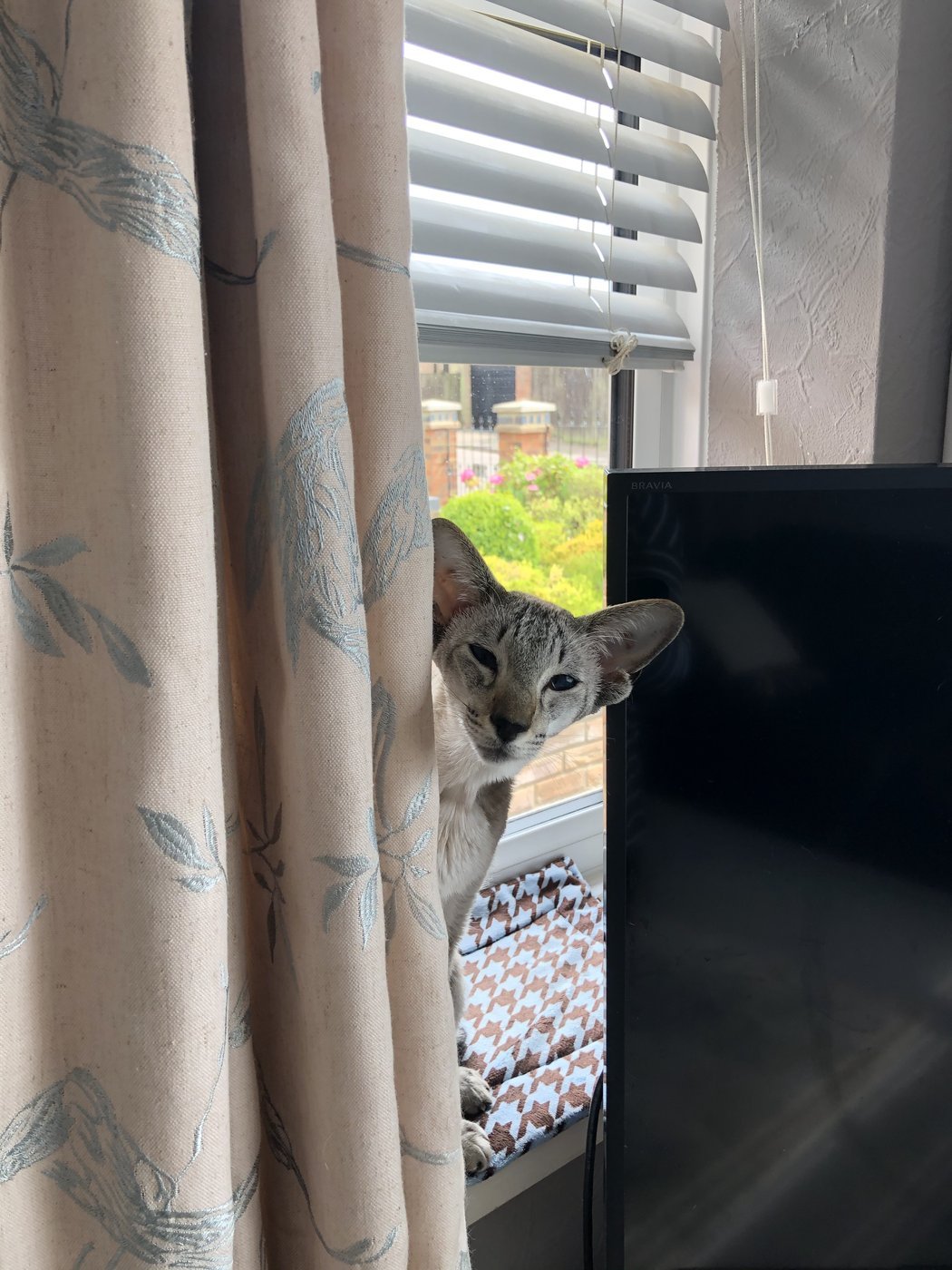
Here’s what the GCCF standard specifies for tabby point Siamese cats:
Eyes: Clear, vivid blue. The same brilliant sapphire required in all Siamese varieties — there is no exemption for tabby points. The tabby markings can sometimes create an optical illusion that makes the eyes appear less vivid, so truly excellent eye colour is especially valued in this variety.
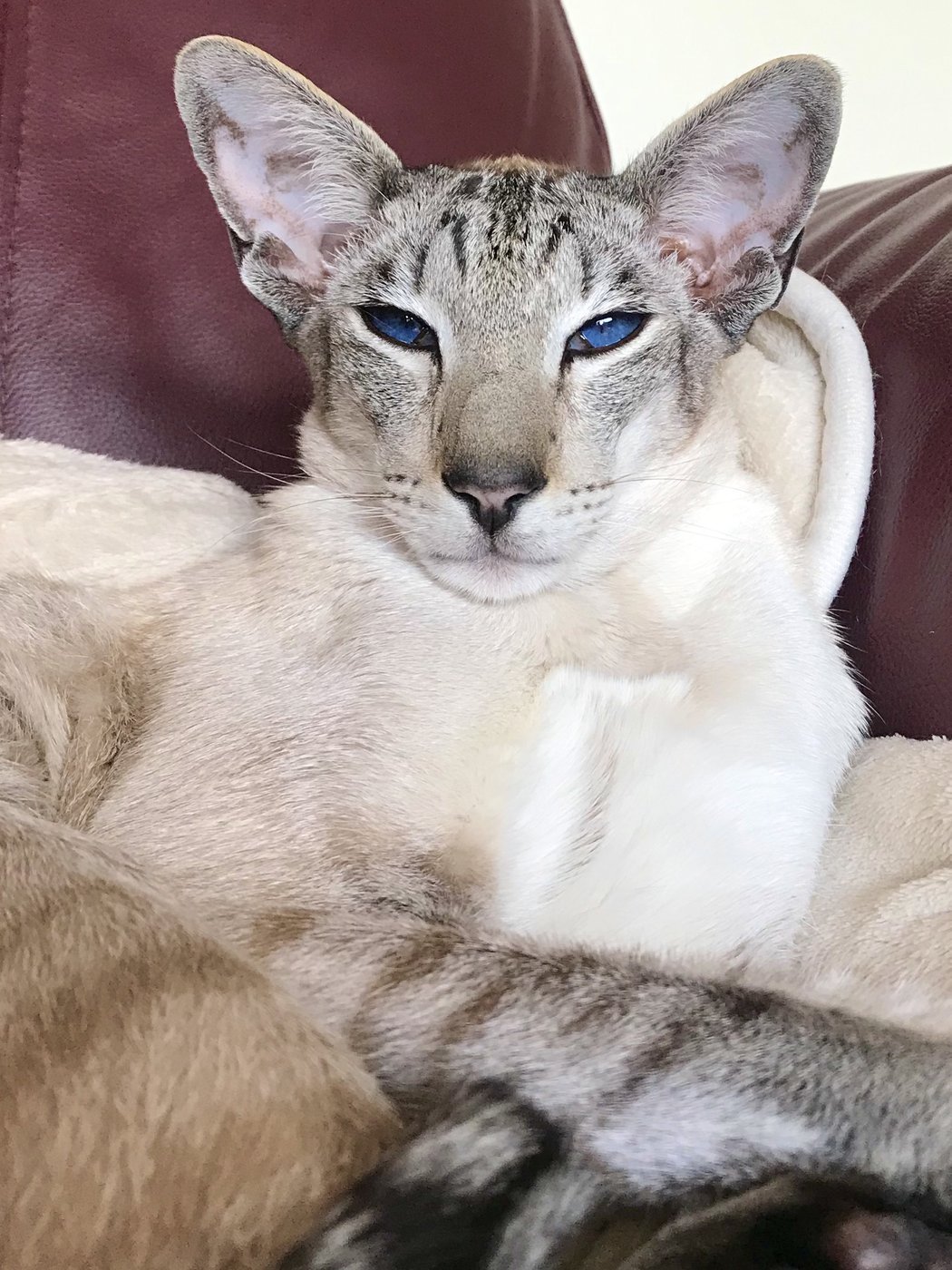
Points (ears, face mask, paws, tail): The points must show clearly defined tabby markings appropriate to the underlying colour. The key features the standard demands are: a clear “M” marking on the forehead, “spectacle” markings around the eyes (thin lines radiating from the outer corners), “thumb prints” on the backs of the ears (a paler area surrounded by the darker ear colour), spotted whisker pads, and striped legs with solid-coloured paw pads. The tail should be ringed with clearly defined bands.
Body: The body colour follows the same rules as the solid-pointed equivalent — pale, with colour appropriate to the specific variety. Body shading, when present, may show a faint tabby pattern (ghost tabby markings), which is acceptable provided it doesn’t dominate.
Nose leather: Pink or matching the point colour, outlined in the appropriate colour. This outlining is a distinctive feature of tabby points that you won’t see in solid-pointed Siamese.
Coat texture: Fine, glossy, and short — the same as all Siamese. The tabby pattern does not alter the coat texture requirements.
Withholding faults: Absent or poorly defined tabby markings (solid-looking points with no visible pattern), lack of the forehead “M”, absence of spectacle markings, and general lack of contrast between the tabby stripes and the ground colour within the points.
What Is a Tabby Point Siamese? The Lynx Point Question
Before we go further, let’s address something that causes enormous confusion online: the difference between “tabby point” and “lynx point” Siamese. The short answer is that they’re the same thing. In the UK, under the GCCF, they are officially called tabby point Siamese. In the United States, under the CFA and TICA, the same pattern is called lynx point — and sometimes “lynx colorpoint” or “lynx colorpoint shorthair” depending on the registry.
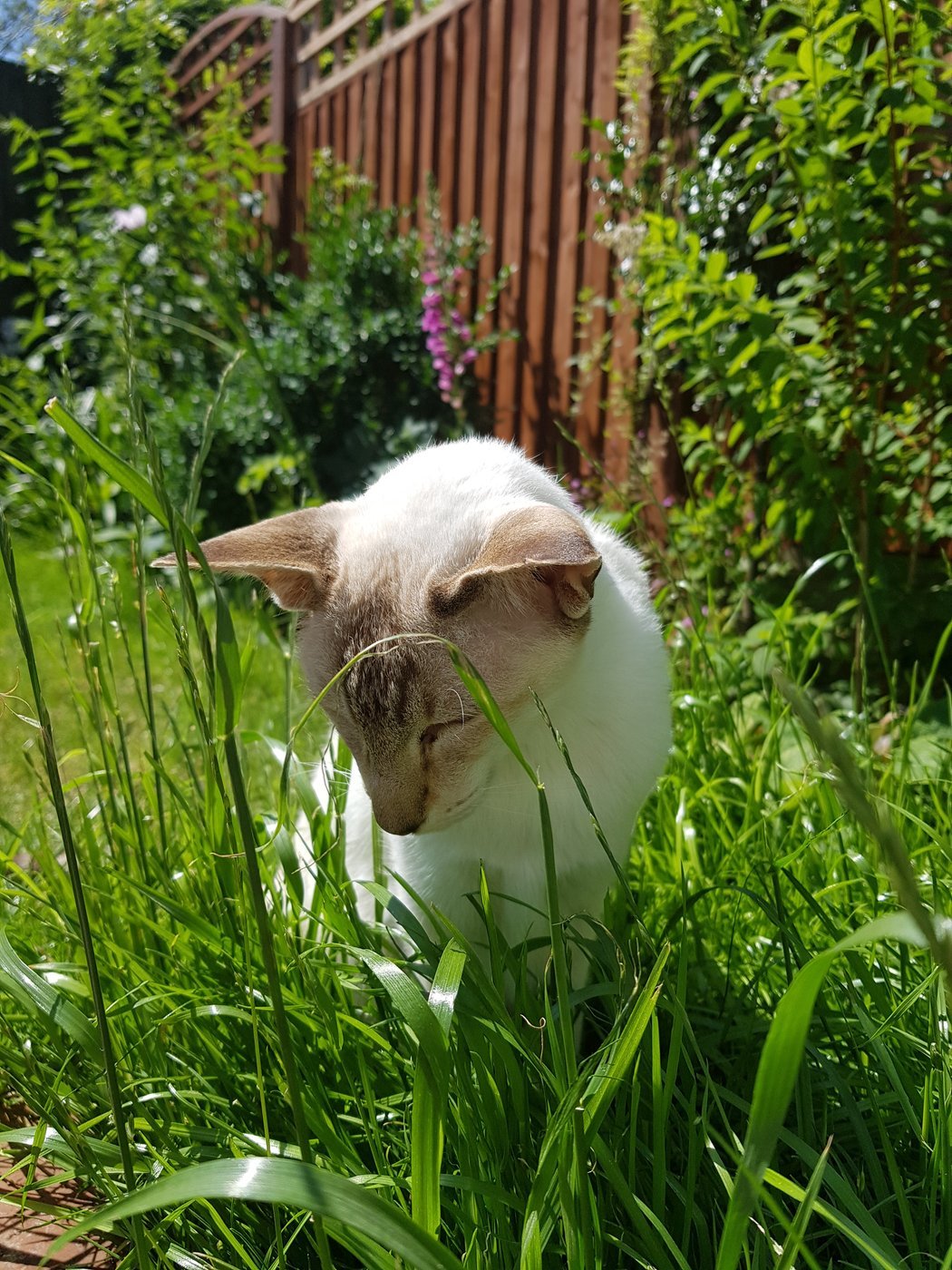
The genetics are identical. The pattern is identical. The only difference is the name used by different registries in different countries. If you’ve been searching for “lynx point Siamese” and ended up here, you’re in the right place — everything in this guide applies equally to what Americans call a lynx point.
It’s also worth clarifying what a tabby point Siamese is not. A tabby point Siamese is not a cross between a tabby cat and a Siamese. It’s not a “Siamese tabby mix.” It is a fully pedigree Siamese cat that carries the tabby gene in addition to the Siamese colour-restriction gene. The tabby pattern is expressed only on the points — the face, ears, legs, and tail — just as solid colour is restricted to those areas in a regular pointed Siamese.
History of Tabby Point Siamese
Tabby point Siamese have a more recent history than the four traditional colours. While seal, blue, chocolate, and lilac points were all recognised by the mid-twentieth century, tabby points didn’t gain GCCF recognition until the 1960s. The development was deliberate — breeders crossed Siamese with tabbies (initially domestic tabbies, later with careful selection) to introduce the agouti gene that creates the tabby pattern.
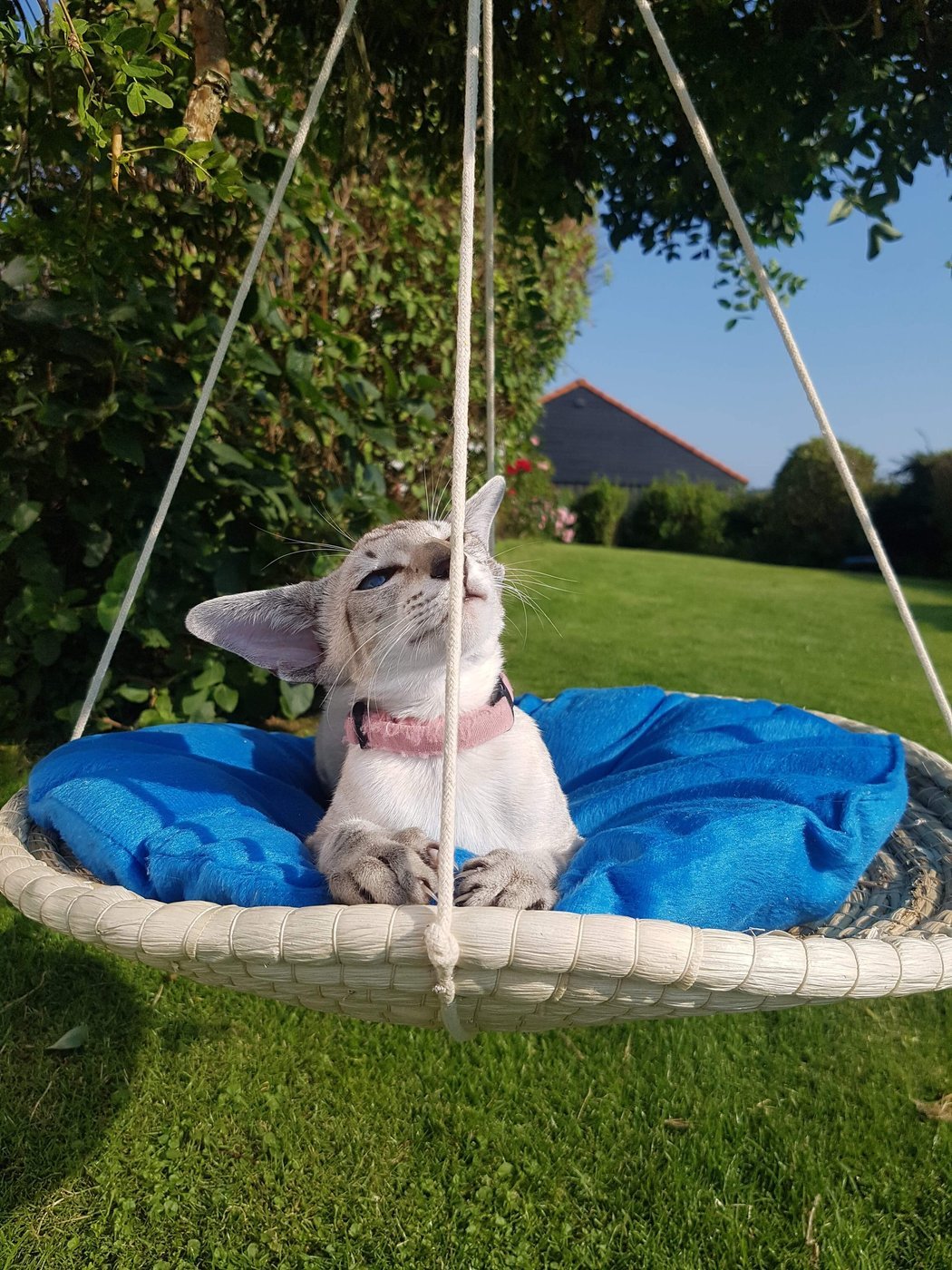
The early tabby points were almost exclusively seal tabby — the darkest and most dramatic of the tabby varieties. As breeders refined the variety and the genetics became better understood, the full range of tabby colours followed: blue tabby, chocolate tabby, lilac tabby, and eventually the newer colours — red tabby, cream tabby, cinnamon tabby, fawn tabby, and caramel tabby.
The Tabby Pointed Siamese Cat Society (TPSCS) was formed to promote and protect the variety, and has been instrumental in establishing breed standards and supporting breeders working with tabby points. Their influence on the show bench has helped elevate the tabby point from a curiosity to a serious competitor — and today, a really excellent tabby pointed Siamese can hold its own against any solid-pointed cat in the show hall.
Tabby Point Genetics — The Agouti Gene
Understanding tabby point Siamese genetics requires grasping one key concept: the agouti gene. In all cats, the tabby pattern is actually the “default” — every cat carries a tabby pattern, but in most solid-coloured cats, the non-agouti gene (aa) suppresses the pattern so you can’t see it. In tabby point Siamese, the agouti gene (A-) is present, which allows the tabby pattern to show through.
Here’s how it works in a tabby point Siamese:
The cs gene (the Siamese colour-restriction gene) restricts pigment to the cooler extremities — the face, ears, paws, and tail. The agouti gene then allows the tabby pattern to be visible within those pigmented areas. The result is striped, banded, and patterned points rather than the solid colour you see in a regular pointed Siamese.
The specific tabby pattern in Siamese is typically mackerel tabby — narrow stripes running vertically down the body. However, because the pattern is only expressed on the small area of the points, what you actually see is: striped legs, a ringed tail, the “M” on the forehead, pencil lines on the face, and spotted or broken-striped whisker pads.
The underlying colour gene determines which colour the tabby pattern appears in. A cat that carries seal point genetics plus the agouti gene will be a seal tabby point. A cat carrying blue point genetics plus agouti will be a blue tabby point. And so on through every Siamese colour. This is why tabby points come in such a wide range — every solid colour has a tabby equivalent.
The Complete Range of Tabby Point Colours
Tabby point Siamese come in every GCCF-recognised Siamese colour. Here’s a guide to each variety and what distinguishes them:
Seal Tabby Point Siamese
The most dramatic of all tabby points. The tabby markings are dark seal brown on a warm cream or fawn ground colour within the points. The “M” on the forehead is bold and clearly defined, the leg stripes are broad and dark, and the tail rings are rich seal brown. The body is cream to pale fawn, and may show faint ghost tabby markings. Seal tabby points have the strongest contrast of any tabby variety and are often the most immediately striking on the show bench. Nose leather is pink, outlined in seal brown. Paw pads are seal brown.
Blue Tabby Point Siamese
The dilute version of seal tabby. The tabby markings are blue-grey on a cool, pale bluish-white ground within the points. The effect is softer and more subtle than seal tabby — elegant rather than dramatic. The body is glacial white to pale blue-white. Blue tabby points have a distinctive cool-toned beauty that photographs particularly well. Nose leather is pink, outlined in blue-grey. Paw pads are blue-grey.
Chocolate Tabby Point Siamese
Warm milk-chocolate tabby markings on a lighter bronze or warm ivory ground within the points. Chocolate tabby points have a warmth and richness that distinguishes them from the cooler blue tabby or the darker seal tabby. The body is ivory. The contrast is moderate — less dramatic than seal tabby but warmer and more inviting. Nose leather is pink, outlined in chocolate brown. Paw pads are chocolate brown or pinkish chocolate.
Lilac Tabby Point Siamese
The most delicate tabby variety. Frosty pinkish-grey tabby markings on a very pale, almost white ground within the points. Lilac tabby points are the double dilute of the tabby world — carrying both chocolate and blue dilution plus agouti. The effect is ethereal and subtle; the tabby markings are visible but soft, almost whispered rather than stated. The body is magnolia. Nose leather is pink, outlined in pinkish grey. Paw pads are pinkish grey.
Red Tabby Point Siamese
Rich reddish-orange tabby markings on a warm apricot ground within the points. Red tabby points are visually similar to red (solid) points, but with visible striping — which can make the distinction tricky, since the sex-linked red gene often shows some tabby pattern even in solid reds. A true red tabby point will have clearly defined “M” marking, distinct leg stripes, and clearly ringed tail. The body is warm white to pale apricot. Nose leather is pink. Paw pads are pink.
Cream Tabby Point Siamese
The dilute of red tabby. Pale cream tabby markings on an almost-white ground within the points. Cream tabby points are extremely subtle — the tabby pattern is present but very muted, and distinguishing a cream tabby from a solid cream point requires careful examination in good light. Look for the “M” on the forehead and the leg striping. The body is warm creamy white. Nose leather is pink. Paw pads are pink.
Cinnamon Tabby Point Siamese
Warm cinnamon-brown tabby markings — lighter and more reddish than chocolate — on a warm ivory ground within the points. Cinnamon tabby points are relatively uncommon and have a distinctive warmth that’s quite different from the cooler chocolate tabby. The body is ivory to pale warm cream. Nose leather is pink, outlined in cinnamon. Paw pads are cinnamon to pinkish brown.
Fawn Tabby Point Siamese
The dilute of cinnamon tabby. Warm mushroom or rosy-fawn tabby markings on a very pale magnolia ground within the points. Fawn tabby points are rare and extremely subtle — among the palest of all tabby varieties. The body is pale magnolia. Nose leather is pink, outlined in fawn. Paw pads are pinkish fawn.
Caramel Tabby Point Siamese
A distinctive brownish-grey with a warm metallic sheen. Caramel tabby markings have that characteristic metallic, slightly bronzed quality created by the Dm (dilute modifier) gene acting on blue, lilac, or fawn. The tabby pattern adds complexity to an already complex colour, making caramel tabby points among the most visually interesting — and hardest to judge — of all Siamese varieties. The body is warm off-white. Nose leather is pink, outlined in caramel. Paw pads are caramel to pinkish.
What Do Tabby Point Siamese Actually Look Like?
The defining visual features of a tabby point Siamese — regardless of the underlying colour — are consistent across all varieties. The first thing you’ll notice is the “M” on the forehead. Every tabby point has this characteristic marking — dark lines forming a clear “M” shape between the ears and above the eyes. It’s the single most recognisable feature of the variety.
Next, look at the face. Tabby points have “pencil lines” — thin dark lines running from the outer corners of the eyes towards the ears, and often additional fine lines running along the bridge of the nose. The whisker pads show spotted or broken-stripe markings rather than the solid colour of a regular pointed Siamese. Around the eyes, you’ll see the “spectacle” markings — pale areas outlined in the darker point colour, giving the face an expressive, detailed quality.
The ears have “thumb prints” — pale areas on the back of each ear surrounded by the darker colour. This is a charming and distinctive feature of tabby points that’s worth looking for in kittens.
The legs show clear striping — vertical bands of alternating dark and light colour running from the shoulder or hip down to the paw. The paw pads themselves are solid-coloured. The tail is ringed with clearly defined bands of alternating dark and light colour, ending in a solid dark tip.
As tabby point Siamese kittens develop, the tabby markings emerge gradually. At birth, the points are barely visible — just faint shadows. Over the first weeks, the markings begin to appear, with the “M” on the forehead usually being the first clearly visible tabby feature. By 12 weeks, the pattern should be reasonably clear, though it continues to develop and deepen through the first year.
Ross: Add your tabby point Siamese photo gallery here — seal tabby, blue tabby, and other colour variants showing the distinctive “M” marking, leg stripes, and tail rings.
A Gallery of Tabby Point Siamese
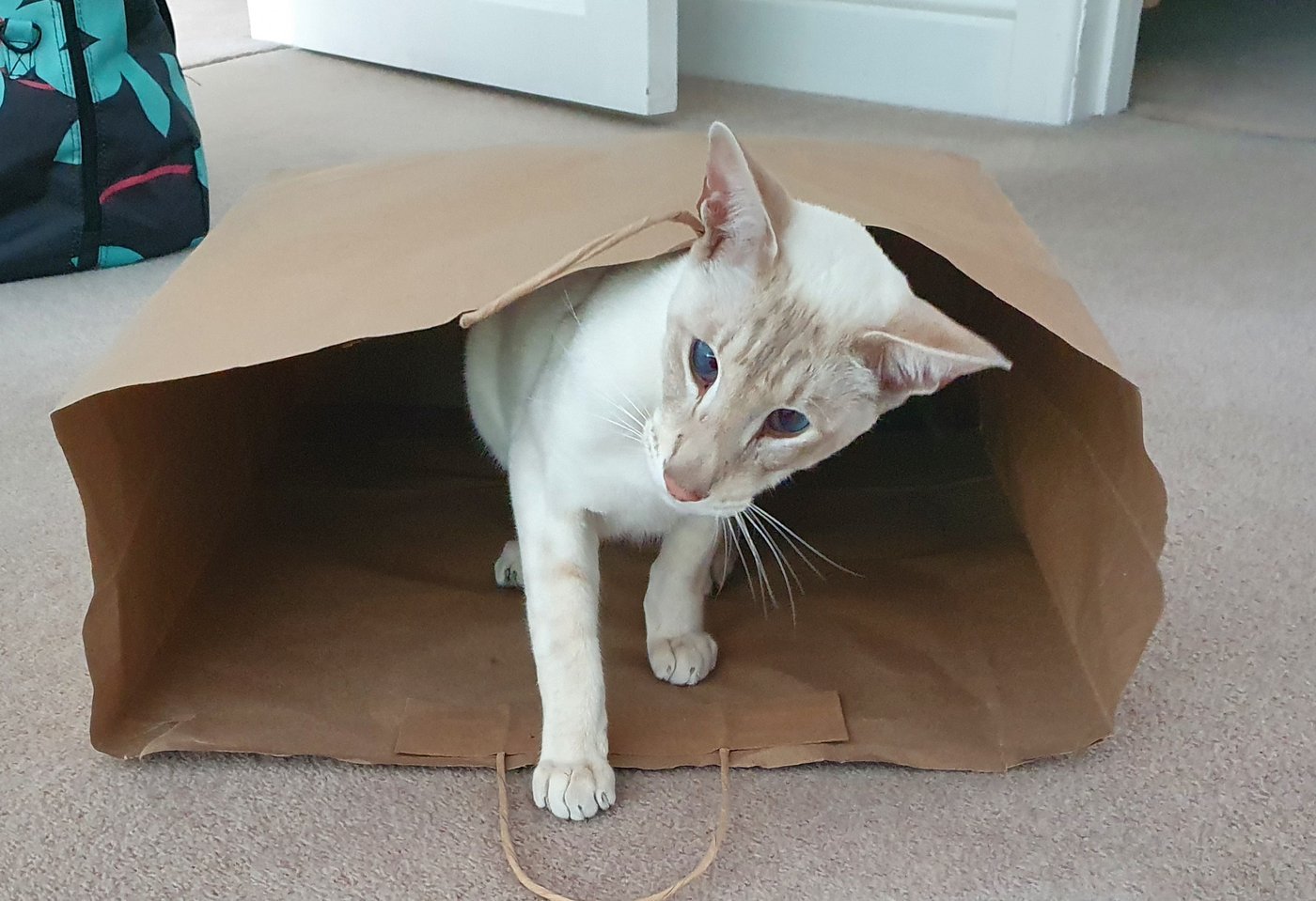
A selection of tabby point Siamese — pet companions and pedigree show cats. Click any photo to open the scrollable gallery.
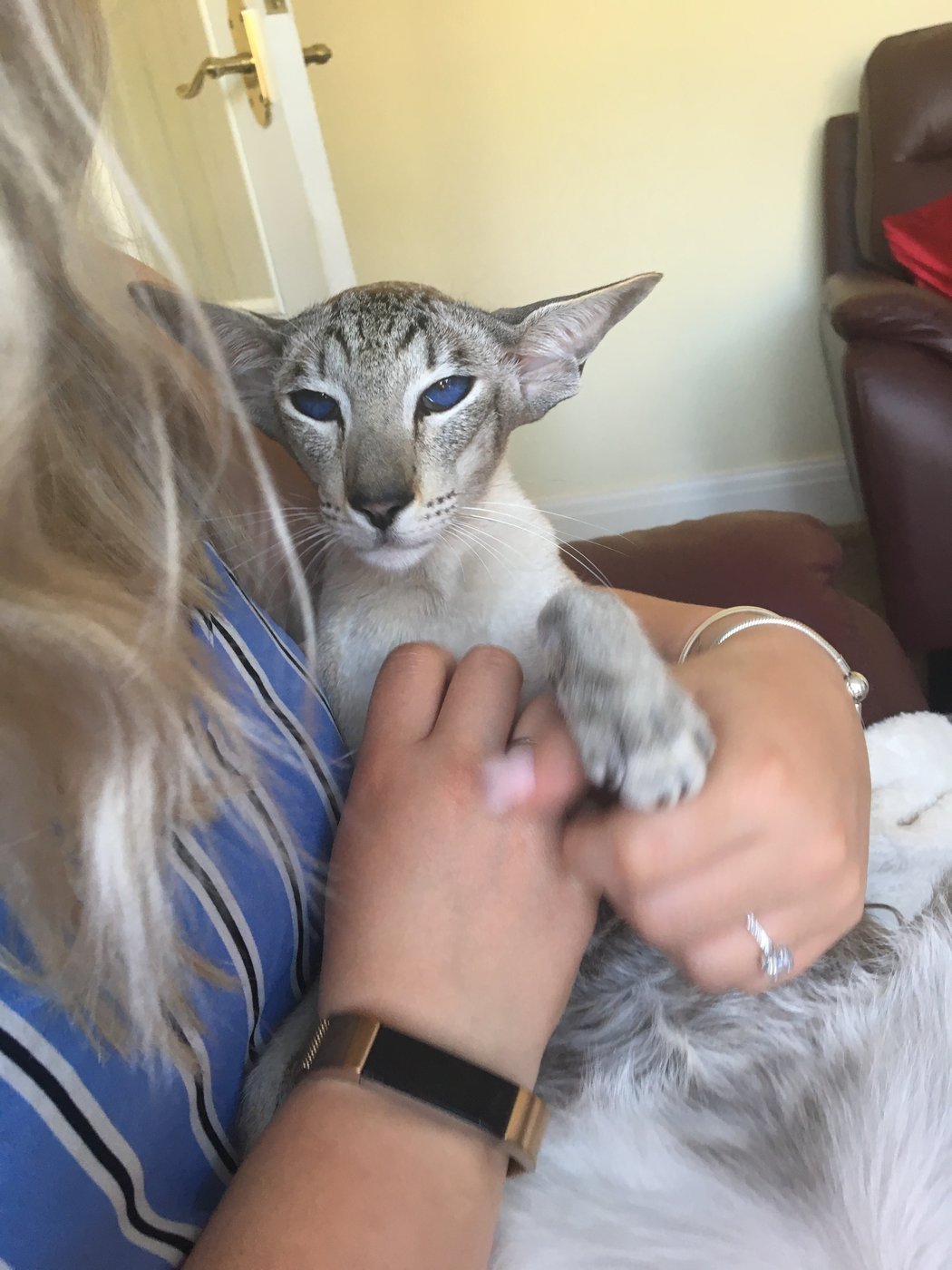
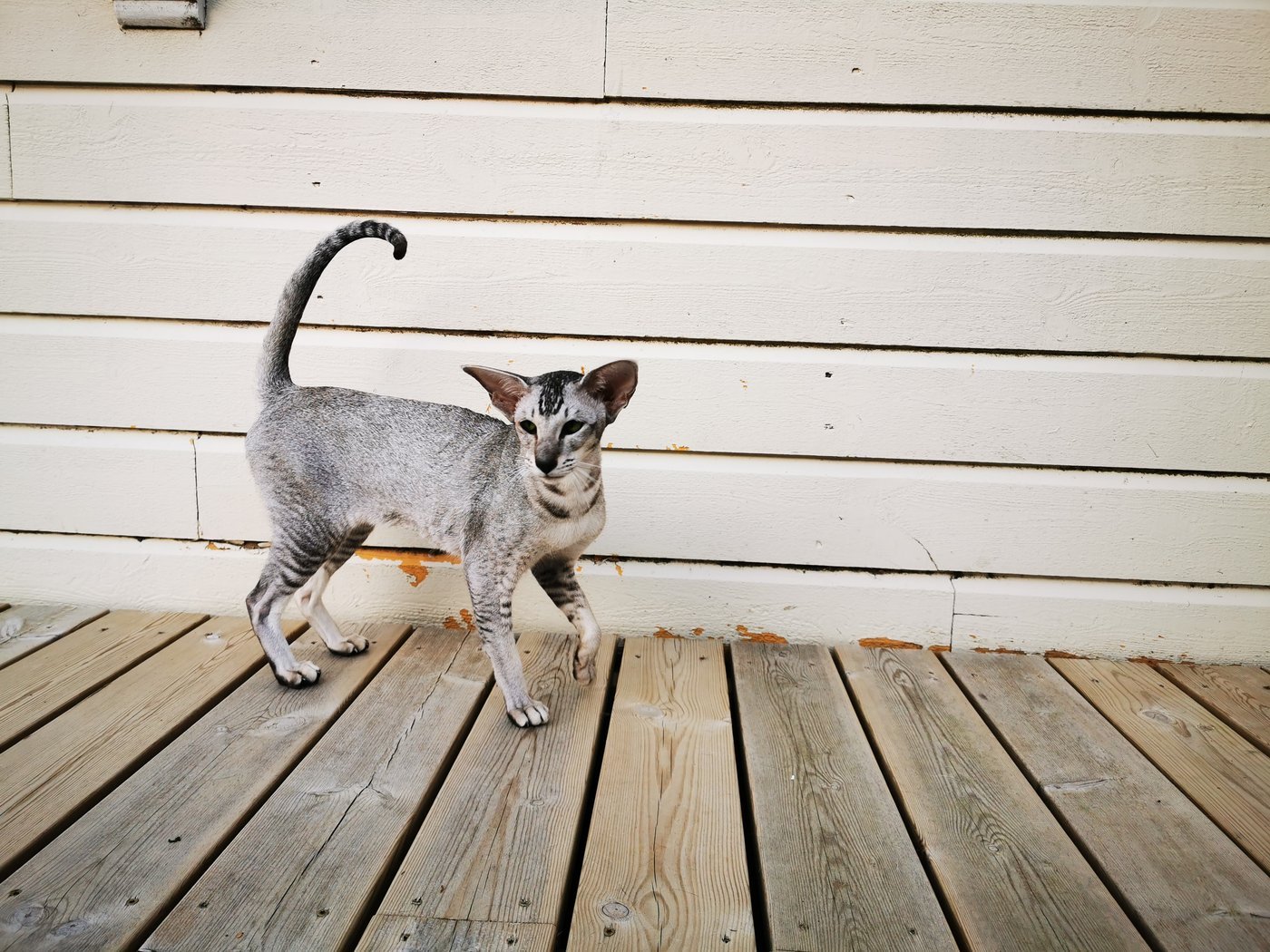
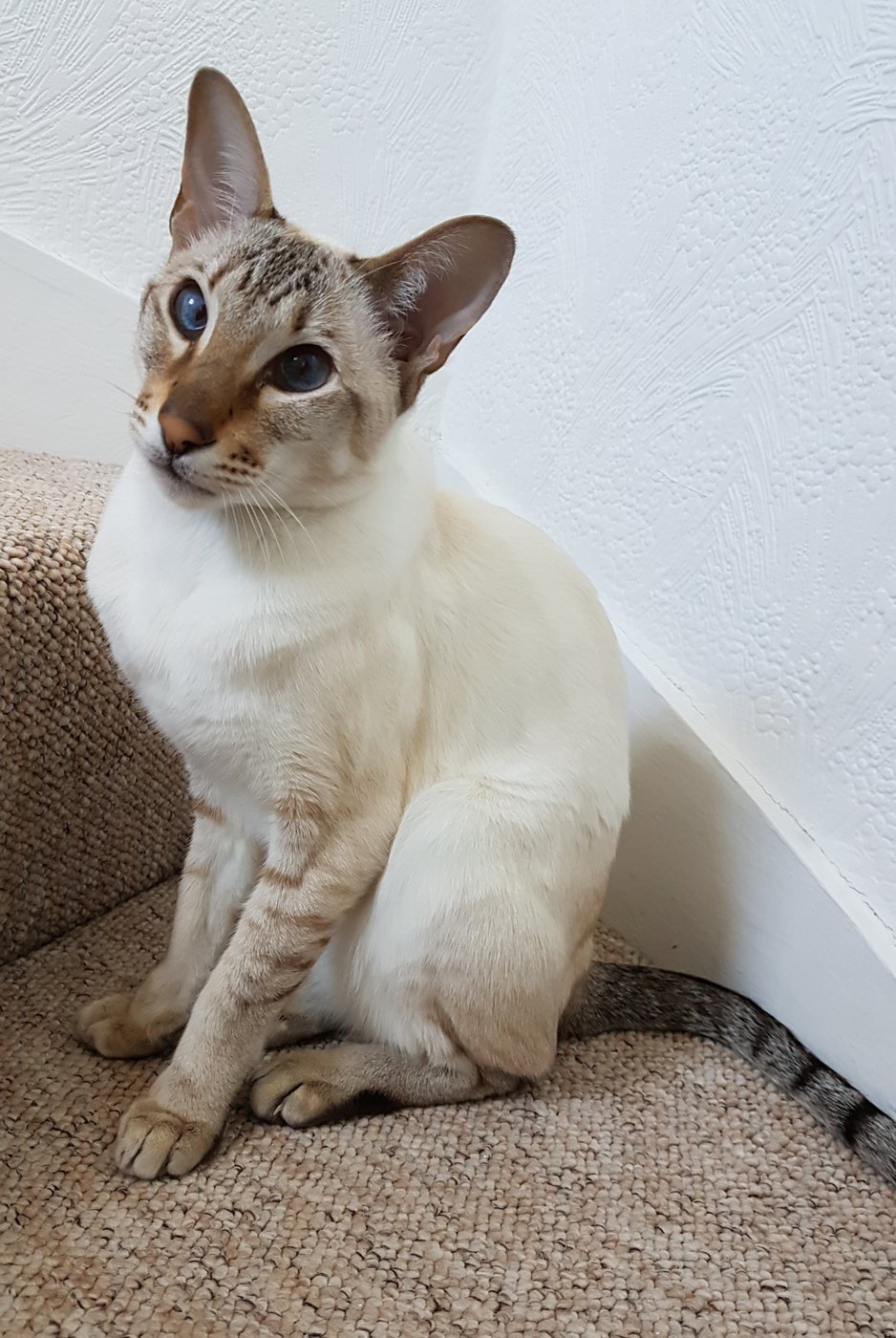
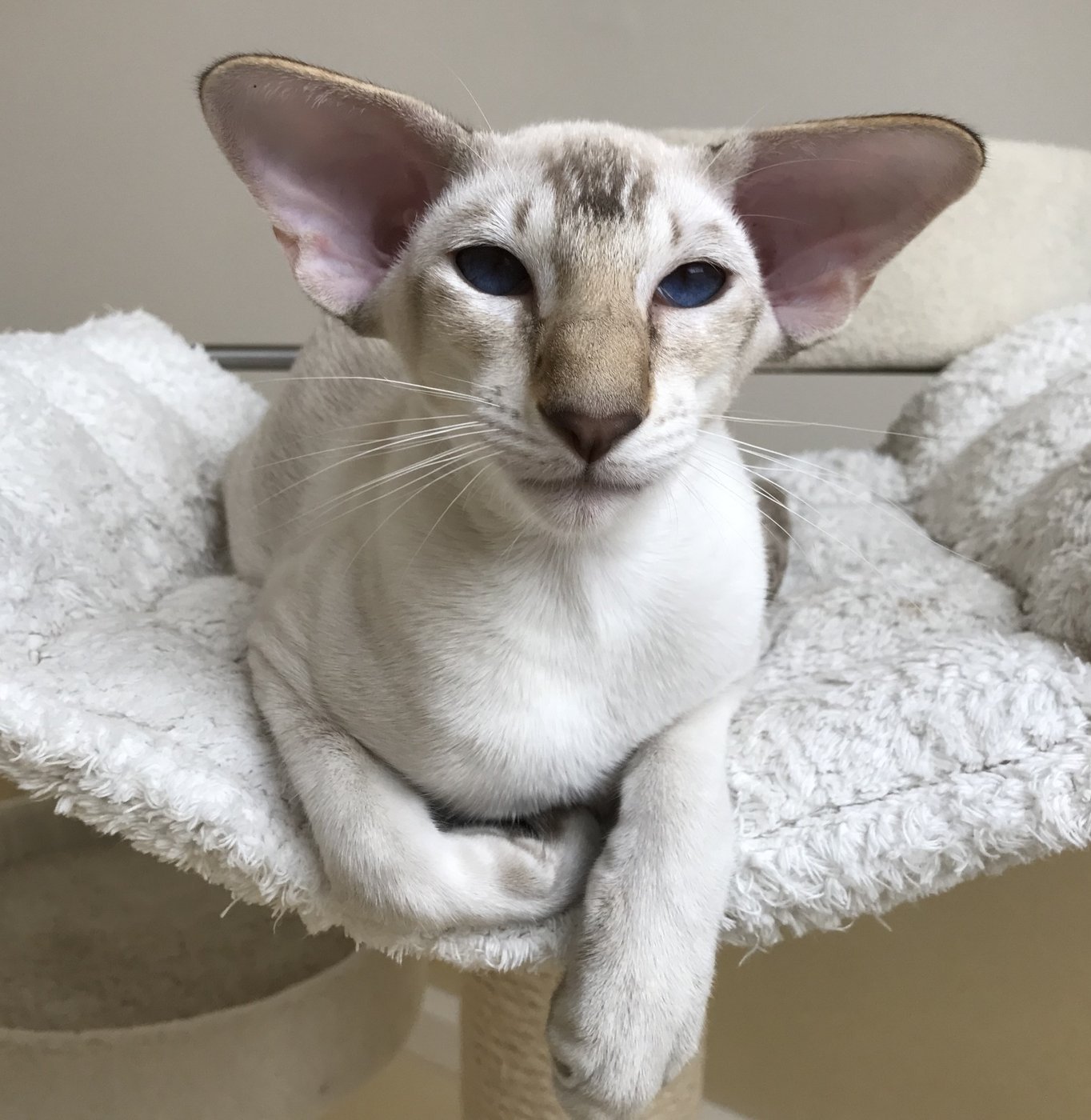
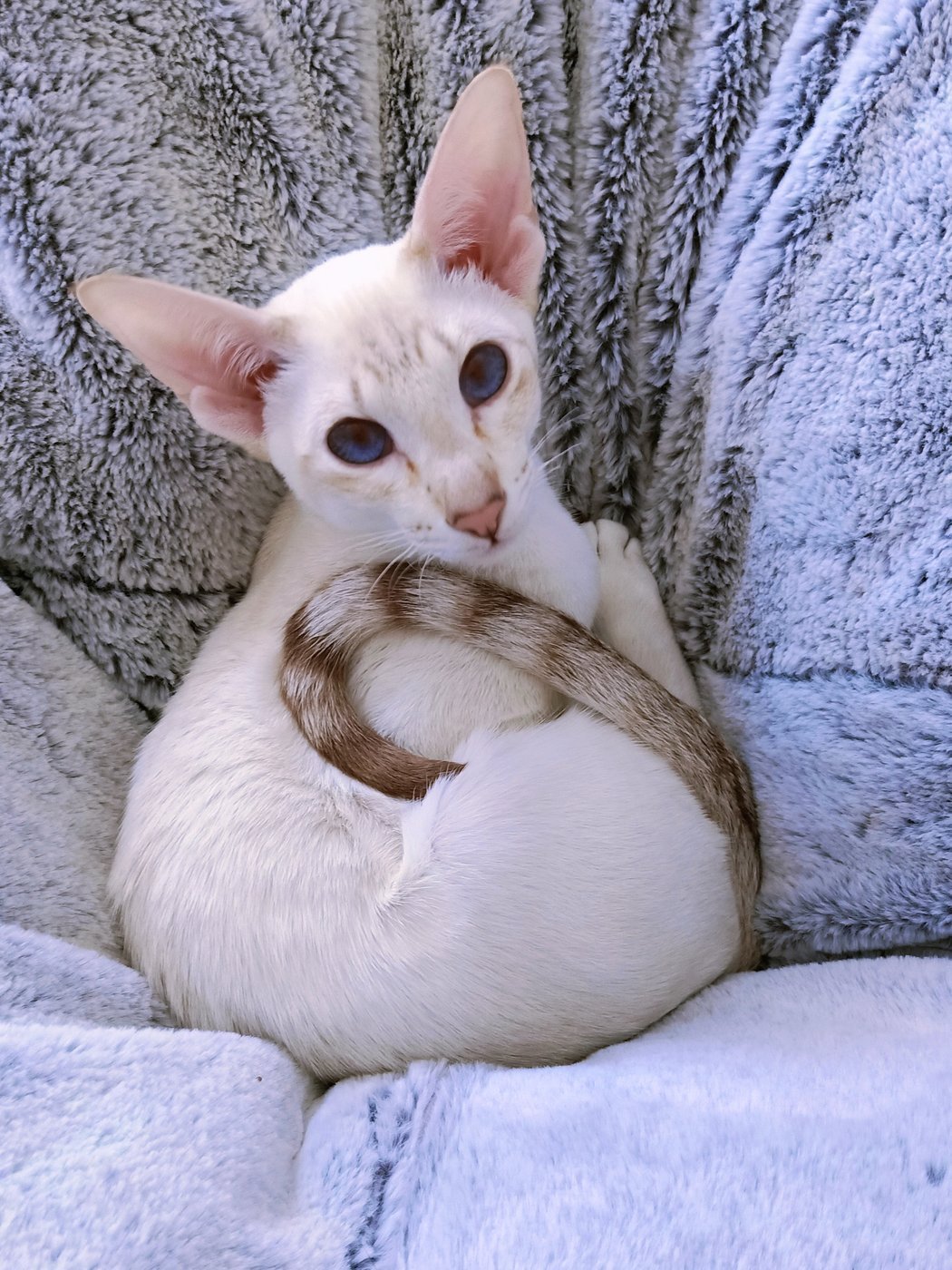
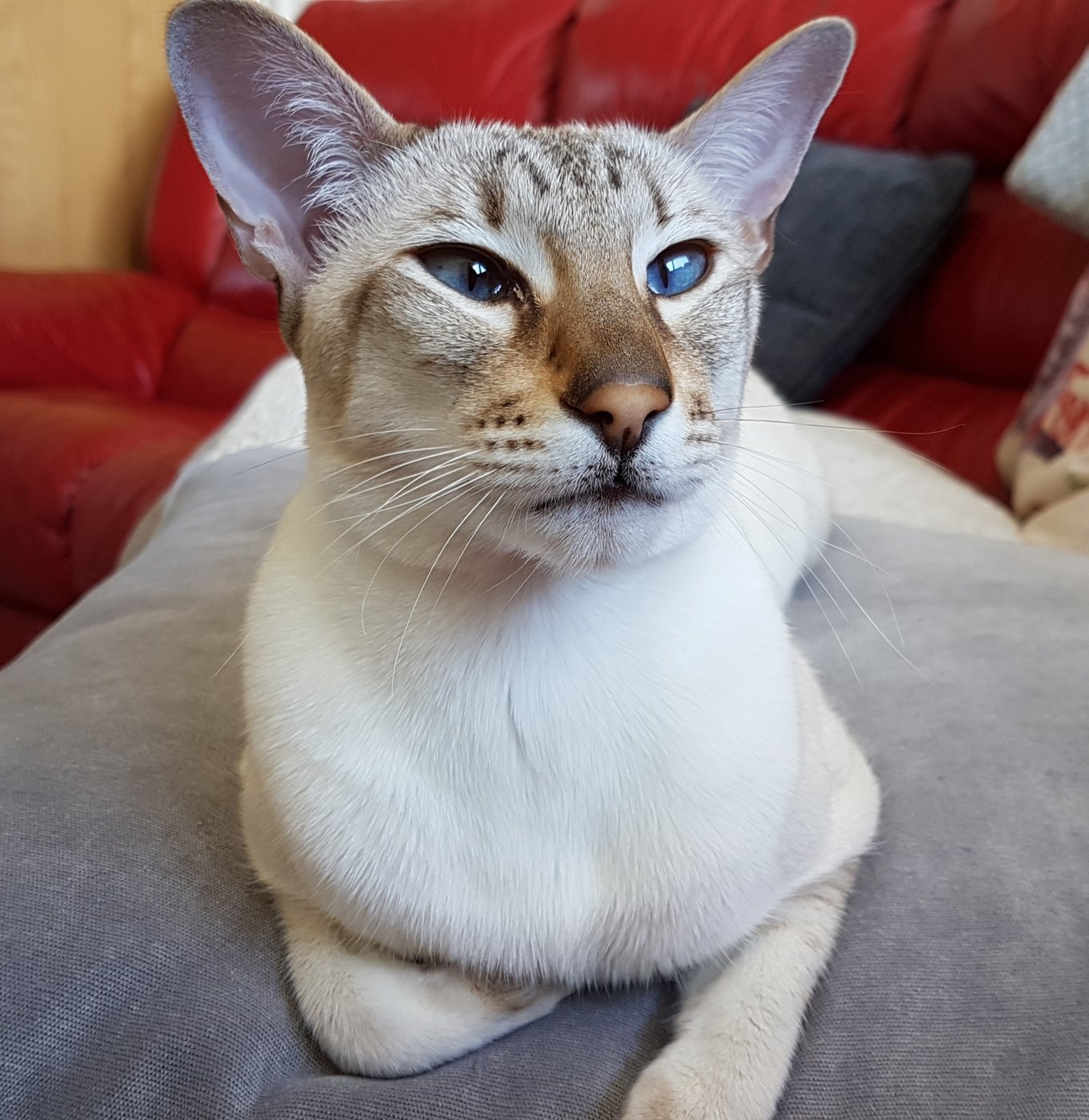
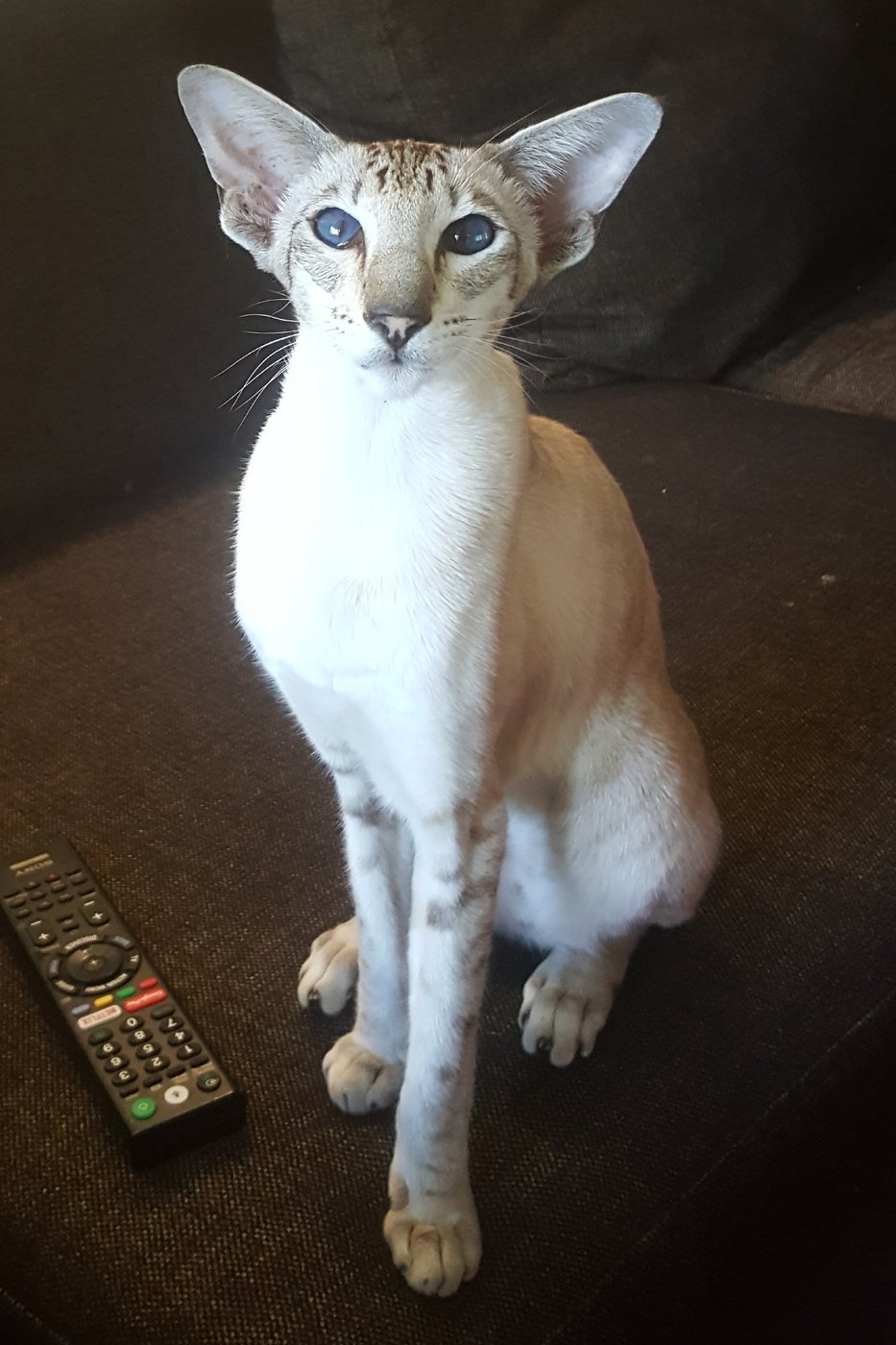
📸 Got a Tabby Point Siamese? Add your cat to this gallery
This gallery grows over time — pet or pedigree, every tabby point is welcome. Enter our photo competition and your cat could feature here.
Notable Show Winners
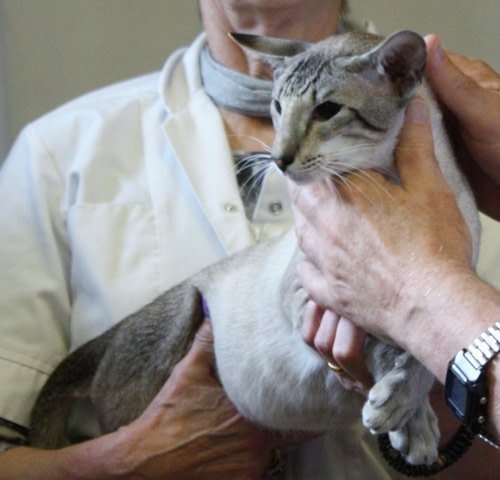
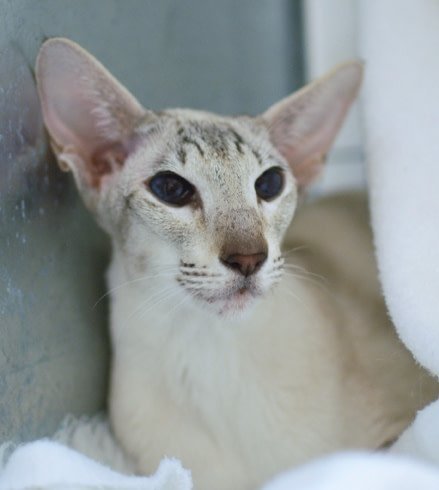
Tabby point Siamese that have made their mark in the show ring over the years.
Personality and Temperament
Are tabby point Siamese different in temperament from solid-pointed Siamese? This is one of those questions that divides opinion among breeders. My honest view, after decades of judging every Siamese variety, is that any temperament differences are subtle at best and anecdotal at worst — but I’ll share what the consensus seems to be.
Many tabby point breeders will tell you that their cats tend to be slightly more laid-back and adaptable than the more intense seal or chocolate points. There’s a widespread belief that the introduction of the tabby gene — which historically came from domestic cats or other breeds — brought a slightly mellower temperament along with the tabby pattern. Whether this is genetic fact or breeder selection or simple perception, it’s a view you’ll hear repeatedly in the Siamese world.
What’s beyond question is that tabby point Siamese share all the core Siamese personality traits: they’re highly vocal, extremely social, intelligent, demanding of attention, and deeply bonded to their people. They’re not a quiet cat. They’re not a low-maintenance cat. They’re a Siamese through and through, with all the intensity, loyalty, and character that implies.
Health Considerations
Tabby point Siamese share the same health profile as all Siamese varieties. The tabby pattern does not introduce any additional health concerns. The key breed-specific health considerations remain: progressive retinal atrophy (PRA) screening, hypertrophic cardiomyopathy (HCM) testing, and awareness of the breed’s general predisposition to certain conditions including amyloidosis and some respiratory sensitivities.
Grooming requirements are identical to other Siamese — that fine, short coat needs minimal maintenance. A weekly brush to remove loose hair and keep the coat in good condition is usually sufficient. The tabby pattern doesn’t affect coat texture or grooming needs.
For more detailed information on Siamese health screening and what to expect as a breed owner, I’d recommend reading our full guide to Siamese cat health and our information on finding a good cat breeder — both ensure you’re sourcing your tabby point kitten from health-tested parentage.
Tabby Point vs Solid Point Siamese — Telling the Difference
For most Siamese colours, the distinction between a tabby point and a solid point is obvious — the tabby markings are clearly visible. But there are a few scenarios where it gets genuinely confusing:
Red and cream points: Because the sex-linked red gene often shows some tabby pattern even in cats that are genetically solid (non-agouti), red and cream points frequently display faint tabby markings. This is sometimes called “ghost tabby” and doesn’t make the cat a true tabby point. A genuine red tabby point will have crisp, clearly defined markings — the “M” should be bold, the leg stripes distinct, the tail clearly ringed. In a solid red point showing ghost tabby, the markings are blurred, indistinct, and lack definition.
Kittens: Young kittens can be difficult to assess because the tabby markings are still developing. In solid-pointed kittens, the points develop as even, uniform colour. In tabby point kittens, you’ll see the beginnings of pattern — the “M” on the forehead is usually the giveaway, along with early signs of leg striping.
Tabby point vs “Siamese tabby mix”: This is a completely different question. A pedigree tabby point Siamese is a registered, GCCF-recognised Siamese cat with the tabby gene. A “Siamese tabby mix” or “Siamese tabby cross” is a moggie — a non-pedigree cat that may have Siamese ancestry and tabby markings. The two are not the same, and the distinction matters if you’re looking for a pedigree kitten from health-tested parents.
Frequently Asked Questions About Tabby Point Siamese
What is a tabby point Siamese?
A tabby point Siamese is a pedigree Siamese cat that carries the agouti (tabby) gene, which causes the colour on the points (face, ears, legs, tail) to appear as striped, banded tabby markings rather than solid colour. They display a characteristic “M” on the forehead, striped legs, ringed tail, and spectacle markings around the eyes. They are recognised by the GCCF across all Siamese colour varieties and are sometimes called “lynx point Siamese” in the United States.
What’s the difference between a tabby point and a lynx point Siamese?
Nothing — they’re the same cat. “Tabby point” is the UK and GCCF terminology. “Lynx point” is the American terminology used by CFA and TICA. The genetics, pattern, and appearance are identical. The only difference is the name used by different registries.
Are tabby point Siamese cats rare?
Not rare, but less commonly bred than the four traditional colours (seal, blue, chocolate, lilac). Among Siamese breeders who specialise in tabby points, they’re readily available — but you may need to seek out a breeder who specifically works with the tabby variety rather than expecting every Siamese breeder to produce them. Certain tabby point colours — such as cinnamon tabby, fawn tabby, and caramel tabby — are genuinely uncommon.
What colours do tabby point Siamese come in?
Every GCCF-recognised Siamese colour has a tabby equivalent: seal tabby, blue tabby, chocolate tabby, lilac tabby, red tabby, cream tabby, cinnamon tabby, fawn tabby, and caramel tabby. There are also tortie tabby points (combining the tortoiseshell and tabby patterns), though these are a separate variety.
Do tabby point Siamese have stripes?
Yes — that’s their defining characteristic. The points show tabby striping: an “M” on the forehead, pencil lines on the face, striped legs, and a ringed tail. The body may also show faint “ghost tabby” markings, though this is more acceptable in tabby points than it would be in solid-pointed Siamese.
What is a seal tabby point Siamese?
A seal tabby point Siamese has dark seal-brown tabby markings on a warm cream or fawn ground colour within the points. It’s the tabby equivalent of a seal point — the darkest and most dramatic tabby variety, with the strongest contrast between the tabby stripes and the ground colour.
Is a tabby point Siamese a cross-breed?
No. While the tabby gene was originally introduced through outcrossing decades ago, tabby point Siamese are fully pedigree Siamese cats, recognised by the GCCF for championship competition. They are not “Siamese crosses” or “Siamese tabby mixes” — they are registered Siamese with the agouti gene as part of their genetic makeup.
Browse More Colour Profiles
Tabby point Siamese cats represent the patterned side of the Siamese colour spectrum — but there’s a whole world of solid-pointed colours to explore too. If you’re comparing colours, start with our comprehensive Siamese colour chart for a visual overview of every recognised variety.
Explore the individual solid-pointed colours: the dramatic depth of seal point Siamese, the cool elegance of blue point Siamese, the warm richness of chocolate point Siamese, or the ethereal softness of lilac point Siamese. Or return to our full Siamese cat breed profile for a comprehensive overview of the breed itself.
Whether you’re drawn to the bold stripes of a seal tabby or the delicate patterning of a lilac tabby, tabby pointed Siamese cats bring something unique to the breed — a visual complexity and variety that makes every individual cat genuinely distinctive.
Finding a Tabby Point Siamese Breeder
Seeking a tabby point Siamese breeder you can trust? Our guide to finding a good cat breeder walks you through the key questions to ask, the health testing you should expect, and the red flags to watch for. The Tabby Pointed Siamese Cat Society can also point you towards specialist breeders working with the variety.
Bringing home a kitten? Don’t wing it. I wrote an eBook for new kitten owners that covers everything you actually need to know — how to prepare your home, what to feed, litter training that actually works, stopping the biting and scratching, reading your kitten’s body language, and what’s normal versus what’s not. It comes with printable checklists, a vaccination record and a first-week diary. It’s called Kitten Care for New Cat Owners, it’s an instant download, and it will save you a lot of late-night Googling at 4am. Get the eBook — £12.99