Fawn point Siamese cats are among the most ethereal and captivating colours in the entire Siamese breed. With their soft, pale rosy mushroom points contrasting against a pristine off-white body, these cats possess a delicate beauty that sets them apart from their seal, chocolate, and blue-pointed cousins. Yet despite their striking appearance and championship status since 2013, fawn points remain relatively uncommon in the UK breeding community—making them a true treasure for those fortunate enough to own one.
As a GCCF Full Judge for Siamese with more than twenty years’ experience, I’ve watched fawn point Siamese evolve from a theoretical possibility to a recognised championship colour, and I’ve bred and judged many exceptional examples. In this guide, I’ll walk you through everything you need to know about fawn point Siamese cats — from their genetics and appearance to temperament, health, and where to find responsible breeders.
What Does a Fawn Point Siamese Look Like?
The visual defining characteristic of a fawn point Siamese is the warm, pale rosy mushroom colour of their points. This soft, peachy-beige hue is instantly recognisable—distinctly warmer than a lilac point, yet far more delicate than a cinnamon point (its non-dilute counterpart).
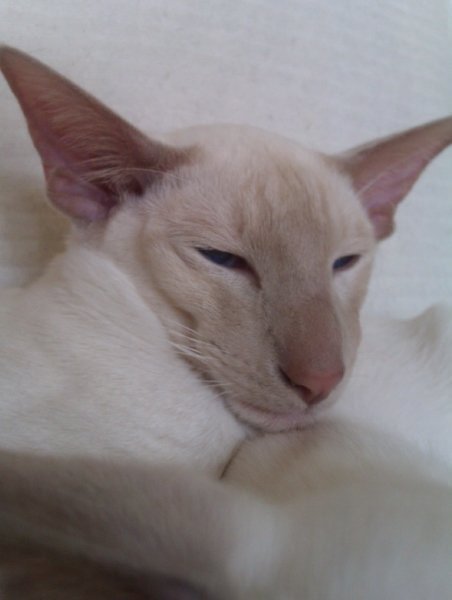
According to the GCCF breed standard, the fawn point should display:
- Points: Warm pale rosy mushroom, with the legs possibly appearing slightly paler than the face, ears, and tail
- Body: Off-white (magnolia) with minimal shading—any shading present should tone gently with the points
- Eyes: Brilliant, intense blue—the deeper blue the better, unchanged by the fawn colouring
- Nose leather, eye rims, and paw pads: Pinkish fawn, harmonising perfectly with the overall colour scheme
The overall impression is one of ethereal grace. A well-bred fawn point Siamese has a luminous quality that photographers and judges find captivating. The soft points create gentle contrast without the stark boldness of a seal point, making them ideal for those who appreciate subtlety and refinement in feline colouring.
Fawn Point vs Lilac Point Siamese—What’s the Difference?
Fawn and lilac points can appear superficially similar, particularly to those unfamiliar with the breed, yet they are genetically distinct colours with noticeably different visual characteristics. This distinction is crucial for breeders and anyone considering which colour to seek in a kitten.
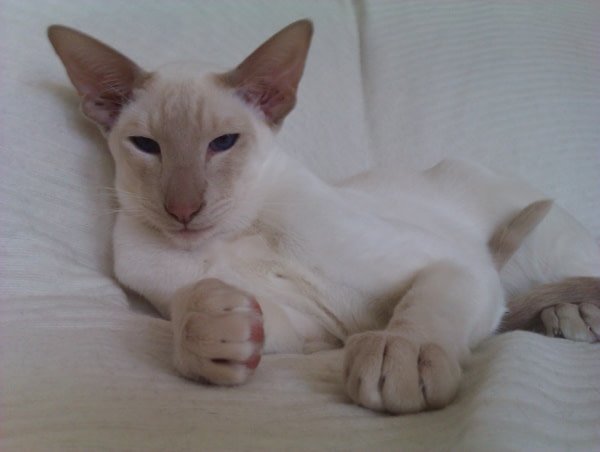
Fawn point Siamese display warm, rosy, mushroom-toned points—a peachy-beige with visible warmth and depth. The paw pads and nose leather are pinkish fawn, and the overall impression is gentle and warm, almost dusty in tone.
Lilac point Siamese, by contrast, show cooler, more pinkish-grey or lavender points. The paw pads and nose leather are lavender-pink rather than pinkish fawn, and the overall colour palette reads cooler and more silvery.
The genetic basis differs as well. Fawn is the dilute version of cinnamon (both carry the same recessive allele at the B-locus), whereas lilac is the dilute version of chocolate. In practical terms, this means a fawn point cannot be produced by breeding two lilac points together, nor vice versa. Understanding this distinction is essential for any breeder working with these colours.
If you’re drawn to a particular kitten online, observe the nose leather and paw pads closely in natural light. Fawn will have a warmer, more peachy tone, whilst lilac will appear cooler and more silvery-pink. This simple rule separates the two reliably.
The Genetics Behind Fawn Point Siamese
To understand fawn point Siamese genetics, it helps to grasp the inheritance patterns of both the base colour and the dilution gene that creates the distinctive pale appearance.
The B-locus (Base Colour): Siamese cats carry recessive alleles at the B-locus that determine base colour. Three main colours exist:
- Black (B): The dominant allele—produces seal points (BB or Bb)
- Brown/Chocolate (b): A recessive allele—produces chocolate and lilac points (bb)
- Brown/Cinnamon (bl): A recessive allele at a separate B-locus position—produces cinnamon and fawn points (bl/bl)
The Dilution Gene (D-locus): A separate gene controls colour dilution. The dilute allele (d) is recessive to the full-colour allele (D). When a cat is homozygous recessive at the d-locus (dd), their colour becomes diluted—appearing lighter and softer.
The Fawn Point Formula: A fawn point Siamese carries:
- Cinnamon at the B-locus (bl/bl)
- Dilution at the D-locus (dd)
- The Siamese colour-point gene (cs/cs)
This combination—recessive cinnamon plus dilution—produces the distinctive warm pale rosy mushroom points we see in fawn points.
The Dilution Relationship Chain: Understanding the relationship between colours helps predict breeding outcomes:
- Seal (full black, undiluted) → Blue (diluted seal)
- Chocolate (full brown, undiluted) → Lilac (diluted chocolate)
- Cinnamon (full brown variant, undiluted) → Fawn (diluted cinnamon)