Red point Siamese cats are one of the most striking colour varieties of this ancient breed, featuring a warm cream body contrasted with rich reddish-gold points on the mask, ears, legs and tail. Often called “flame point” Siamese in America, red point is actually a separate genetic colour caused by the sex-linked orange gene, not a dilute variation. With their brilliant blue eyes, distinctive colouration and the spirited temperament Siamese are renowned for, red point cats make compelling companions for owners who appreciate both beauty and personality.
As a GCCF Full Judge for Siamese with more than twenty years’ experience, I find red point Siamese hold a special place in my work — they’re genetically fascinating, visually stunning, and often misunderstood outside the UK show world. In this profile, I’ll share the breed standard details, genetic mechanics and practical information every red point enthusiast should know.
What Does a Red Point Siamese Look Like?
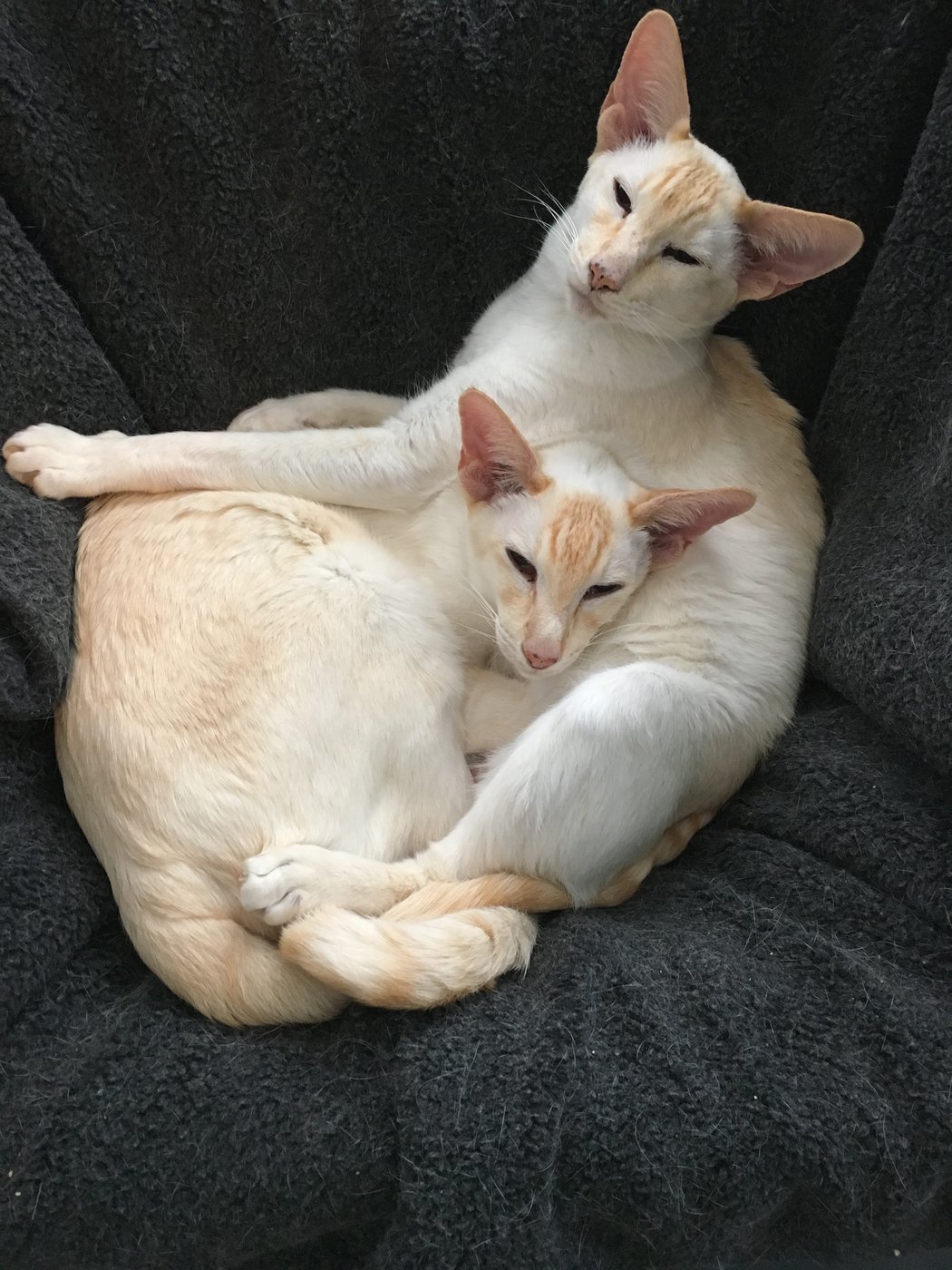
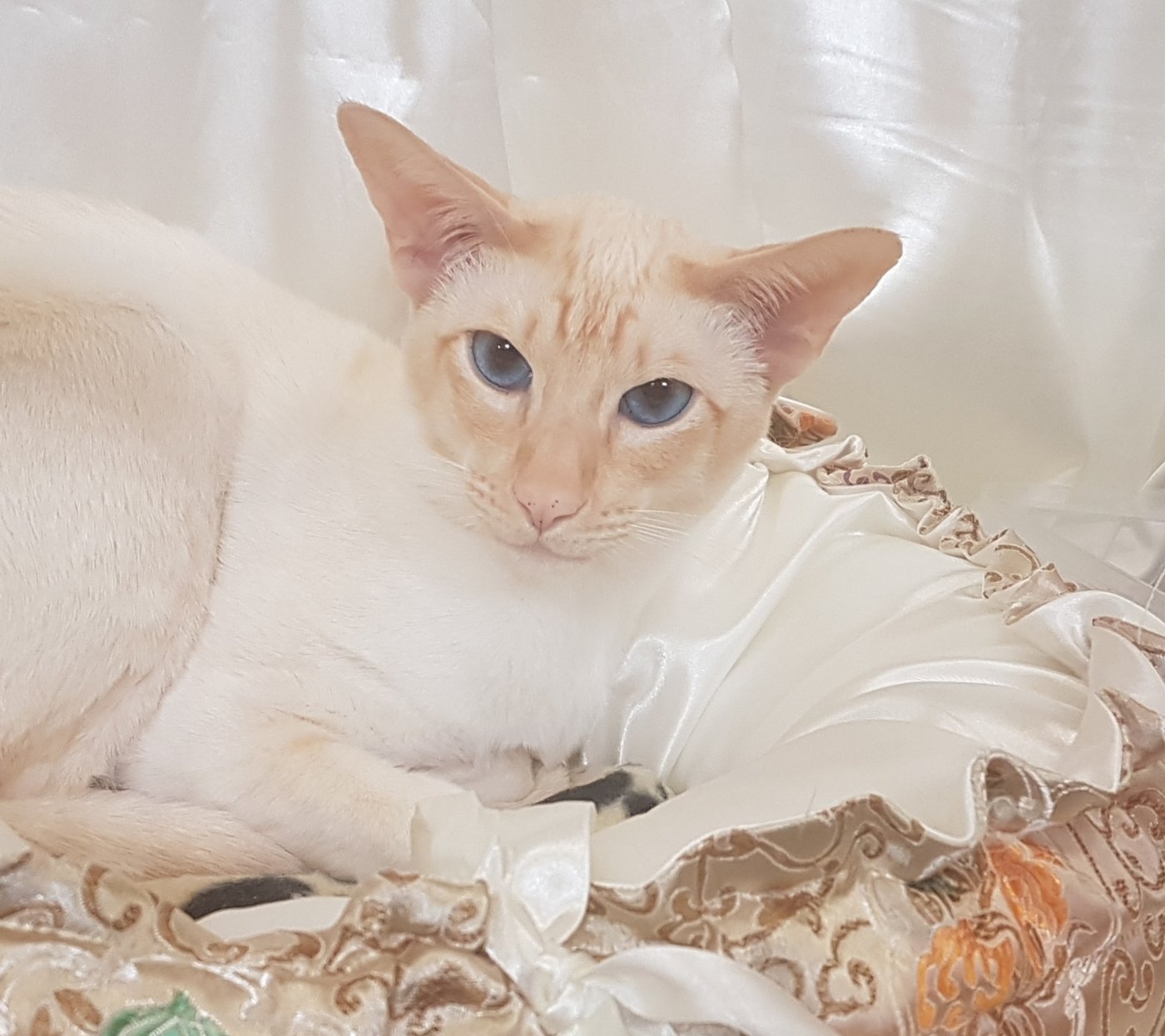
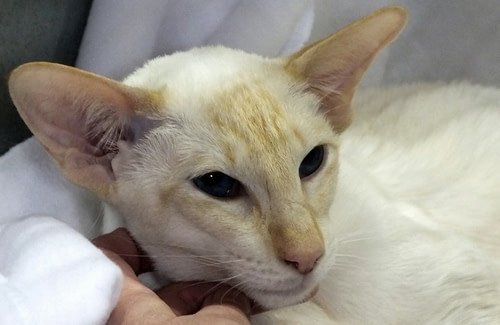
A true red point Siamese presents a striking contrast between a warm, creamy white body and intensely coloured points. The mask covers the face and should extend from the whisker pads to the ears, framing the eyes in a distinct “goggles” pattern. The ears are deeply coloured—a rich reddish-gold that appears almost orange in good light—and the tail is uniformly coloured to match the mask and ears.
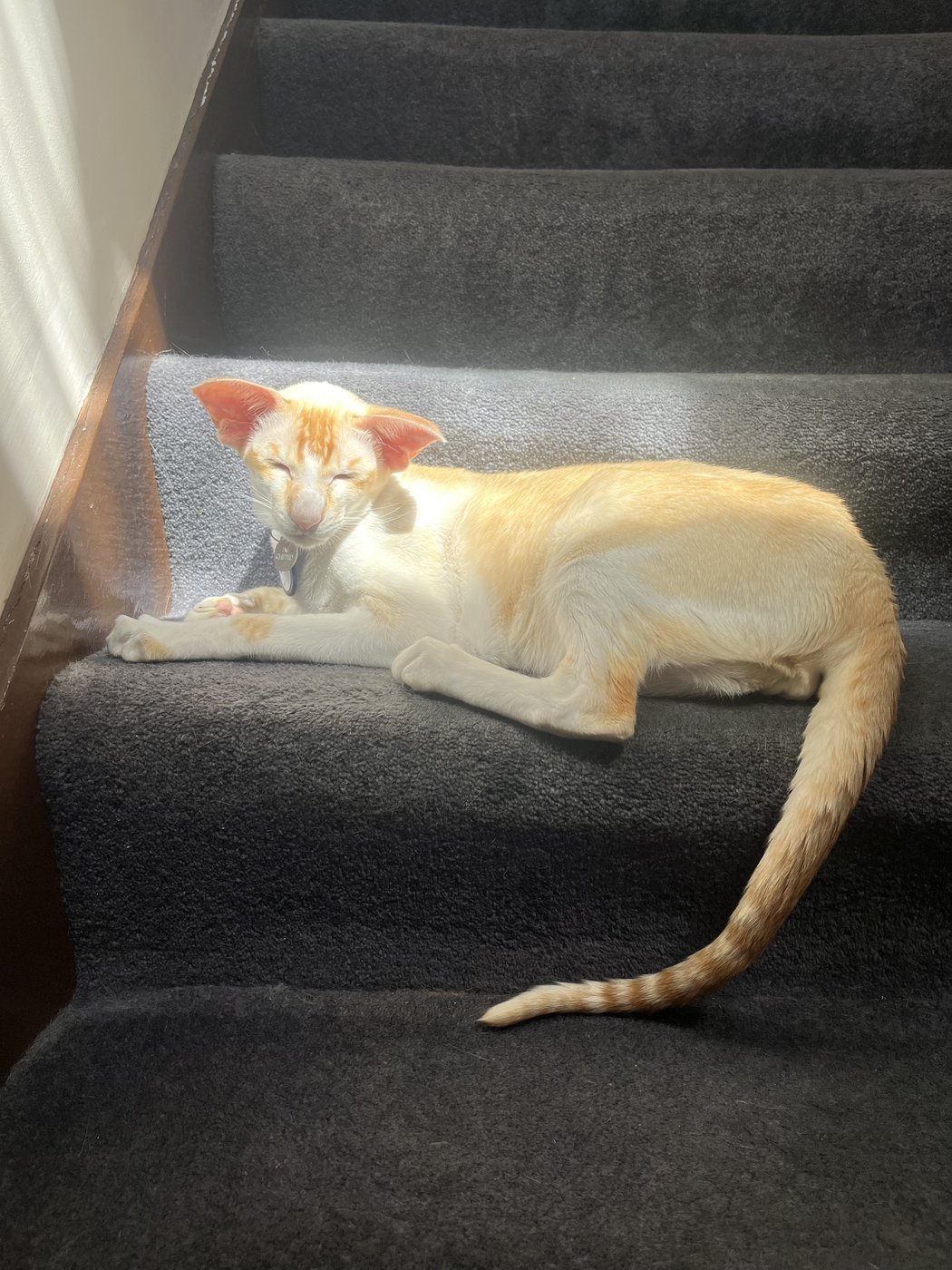
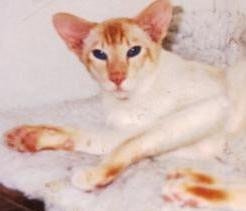
The legs and feet are slightly paler than the mask and ears, a feature that distinguishes well-bred red points from carelessly bred examples. According to the GCCF breed standard, barring and striping on the mask, legs and tail is actually permissible in red point, which reflects their genetic connection to tabby patterns. Freckles—small pigmented spots—may appear on the nose, paw pads, lips, eyelids and ears, and are considered a normal, acceptable feature of the variety.
The nose leather, eye rims and paw pads should all be pink, complementing rather than contrasting with the red colouration. The eyes are a defining feature: brilliant, intense blue—the deeper the better. This eye colour is consistent across all Siamese colour varieties and is one of the breed’s most recognisable traits.
Red Point vs Cream Point Siamese — What’s the Difference?
Red point and cream point Siamese are closely related genetically, but they are distinct colours with different genetic bases. This distinction is crucial for breeders and for understanding Siamese genetics.
Red point Siamese carry the sex-linked orange gene (O). This gene produces the intense reddish-gold colouration of the points without any dilution. Red point males are relatively common in breeding programmes; red point females are always heterozygous for the orange gene (they inherit it from both parents or carry it from a mother who is orange/red).
Cream point Siamese, by contrast, are the dilute equivalent of red point. A cream point carries the sex-linked orange gene (O) and the dilution gene (d). The dilution gene “softens” the red pigment into a pale, pastel cream. Cream points have a cooler, more delicate appearance than red points, though both varieties share the same blue eyes and warm body tone.
In practical terms: red point is bold and vibrant; cream point is subtle and refined. Both are equally valid and equally valued in the show ring.
About the term “flame point”: You may encounter “flame point” Siamese in American breed documentation and casual discussion. This is simply the American equivalent term for red point. There is no breed distinction—flame point and red point are identical cats, just called by different names in different regions. If you’re researching Siamese online and come across “flame point,” you’re reading about red point Siamese. The UK and most international breed standards use “red point”; the US tends to use “flame point.”
The Genetics Behind Red Point Siamese
Understanding the genetics of red point Siamese requires understanding the sex-linked orange gene and how it works—it’s one of the most interesting examples of feline genetics.
The orange gene (O) is located on the X chromosome and is sex-linked, meaning it behaves differently in males and females. A male red point Siamese has the genotype XOY (one orange gene on his single X chromosome). A female red point is either homozygous (XOXO, carrying orange on both X chromosomes) or heterozygous (XOX, carrying orange on one X chromosome and a non-orange allele on the other).
The key distinction between red point and cream point is the dilution gene (d). Red point cats do not carry the dilution allele—they are either D/D or D/d for dilution. Cream point cats, however, are homozygous recessive (d/d) for dilution, which softens the orange pigment to cream.
This means:
- Red point: Sex-linked orange (O), no dilution (D_)
- Cream point: Sex-linked orange (O), homozygous dilution (d/d)
From a breeding perspective, a red point Siamese cat carries the same colour gene as a cream point cat—the difference is dilution. This is why a red point cat with the right genotype can produce cream point offspring, and vice versa. It’s a beautiful example of how a single genetic modifier can shift an entire colour’s appearance.
Red tabby point and red tortie point Siamese (covered in more detail later) are variations that combine the orange gene with pattern genes, creating visually distinct but genetically related varieties.
Are Red Point Siamese Cats Rare?
Red point Siamese are not rare in the absolute sense—they’re produced regularly by ethical breeders who maintain Siamese breeding programmes—but they are less commonly seen than traditional colours like seal point and blue point.
Why? Several factors contribute to this distribution:
- Breeding focus: Many breeders prioritise traditional colours (seal, chocolate, blue, lilac) because they are more immediately recognisable and historically have been the “face” of the breed.
- Sex-linked inheritance: The orange gene’s sex-linked nature means that breeding for red point requires more deliberate planning than breeding for non-sex-linked colours. Male red points are straightforward; female red points require more specific crosses.
- Show culture variation: In some regions, red point and cream point have historically received less attention in breeding standards, though this has been changing.
That said, red point Siamese are produced by responsible GCCF-registered breeders and do appear regularly in the show ring. They are not exceptionally difficult to find if you know where to look—specifically, breeders who specifically breed red point or maintain the full spectrum of Siamese colours. They may command slightly higher prices than some traditional colours due to their visual impact and perceived scarcity, but they are available to serious cat owners and show enthusiasts.
A Gallery of Red Point Siamese
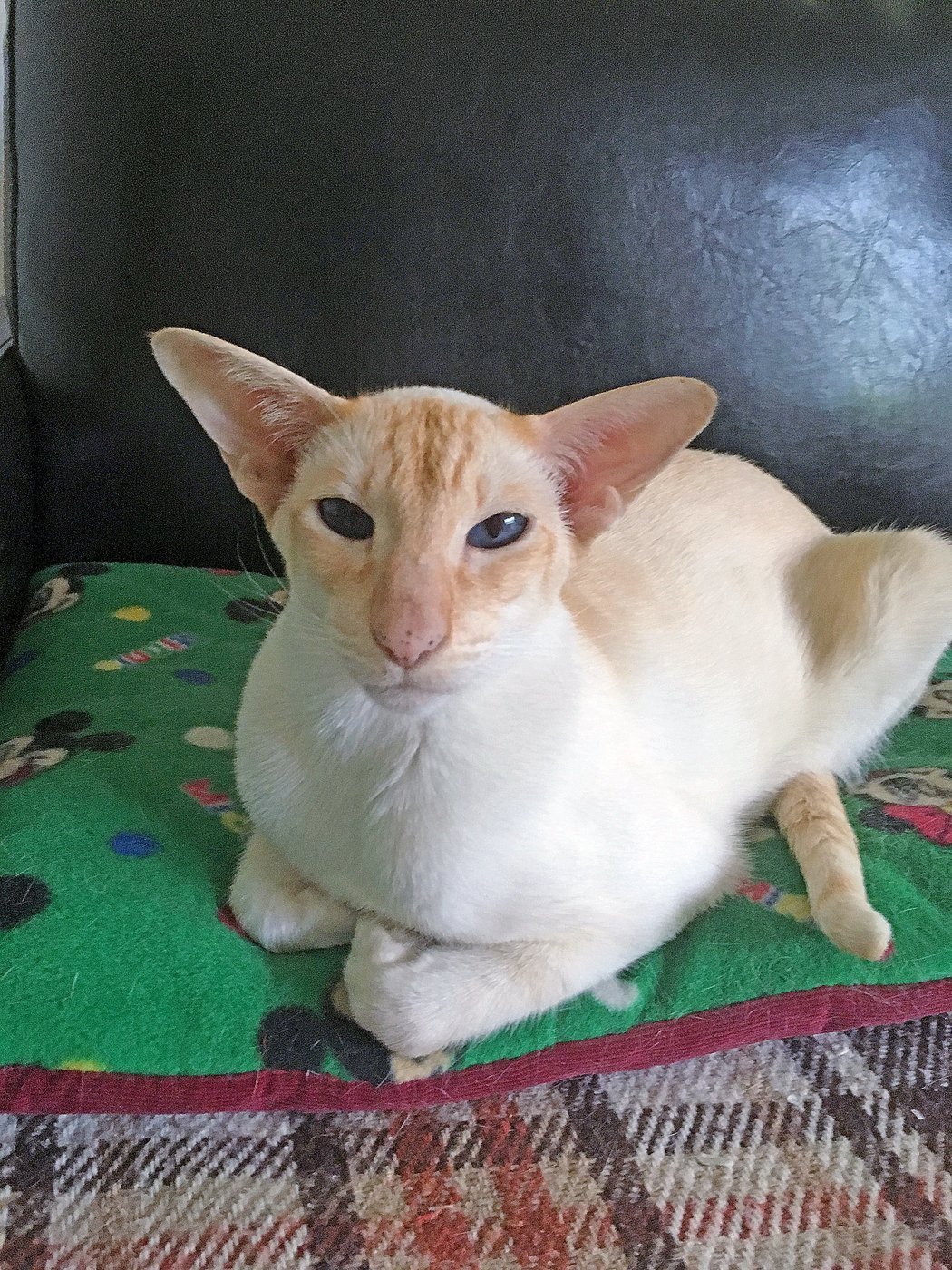
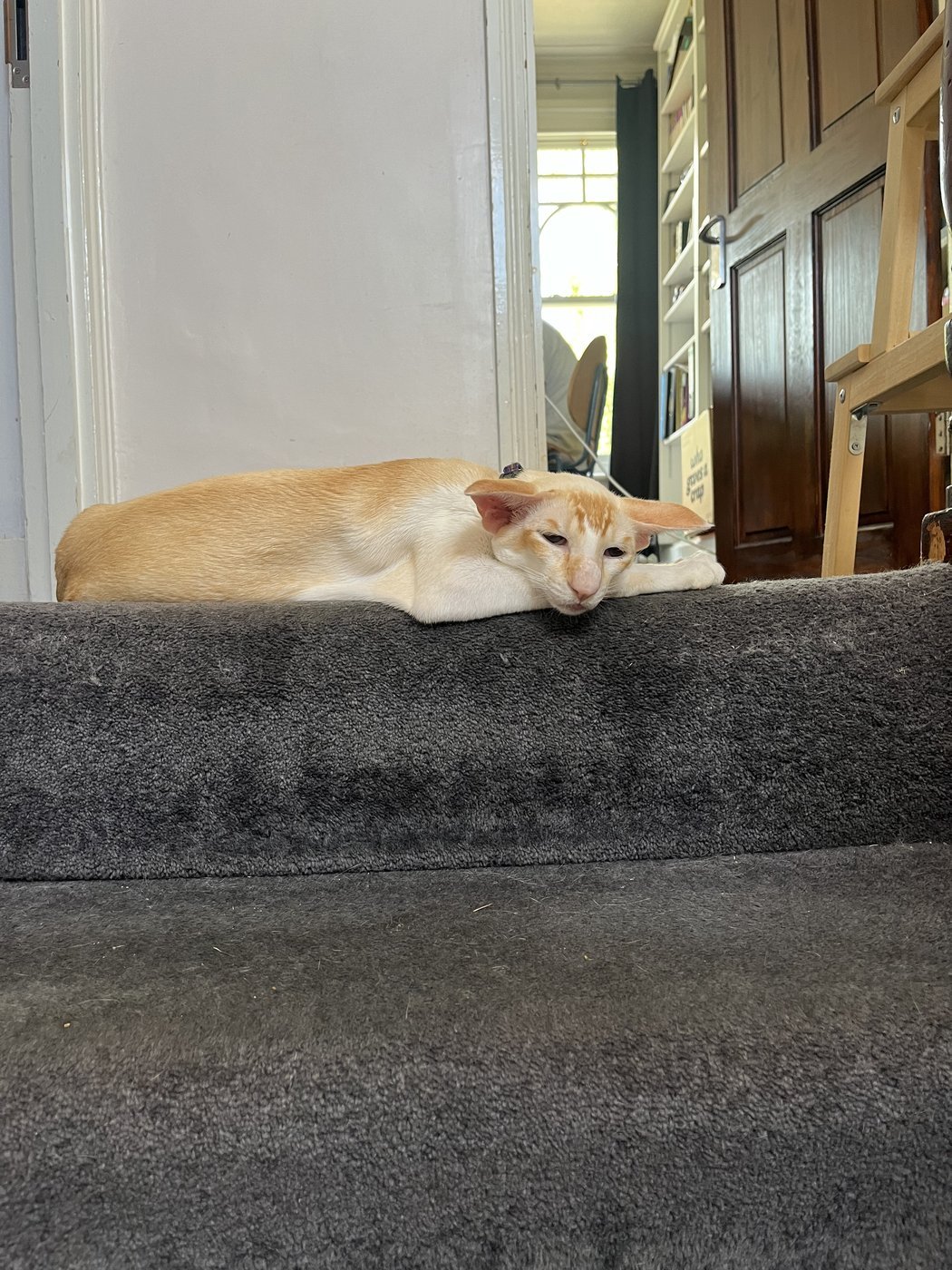
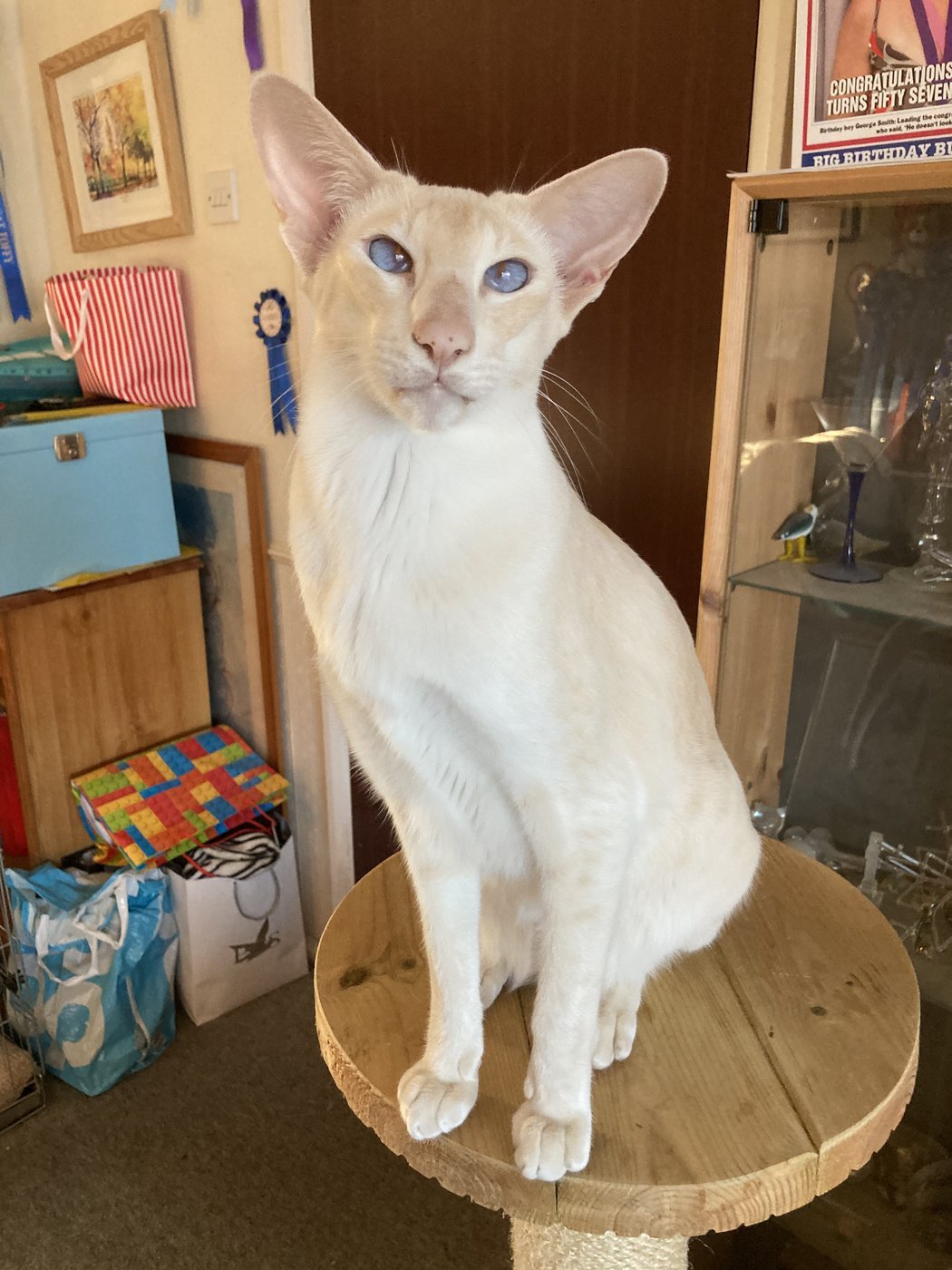
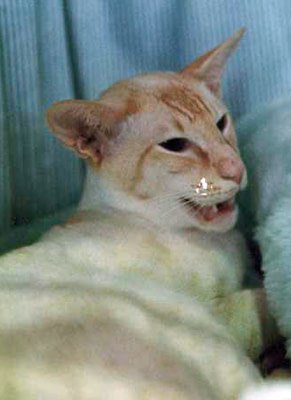
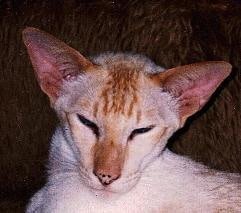
A selection of red point Siamese — pet companions and pedigree show cats. Click any photo to open the scrollable gallery.
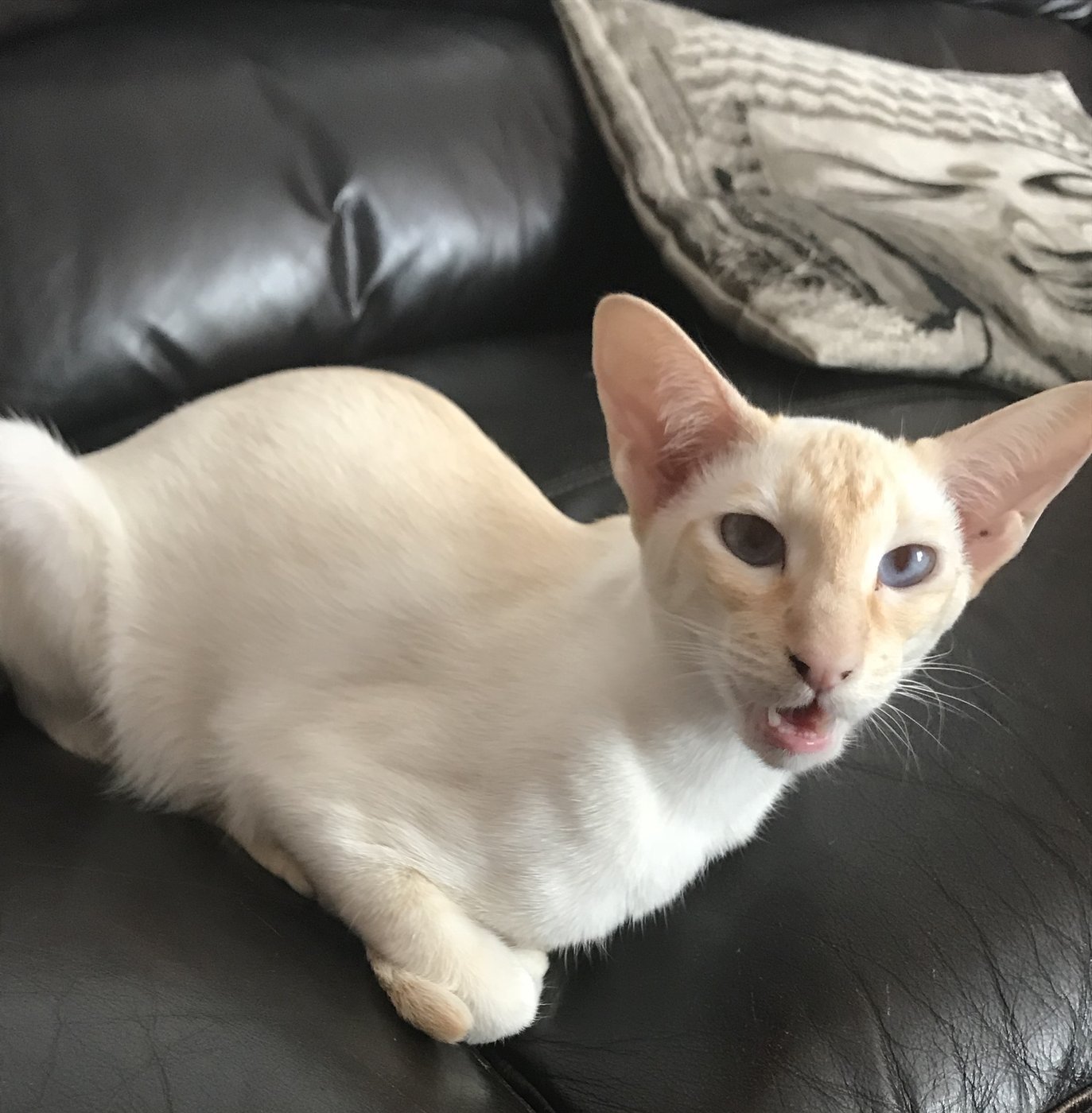
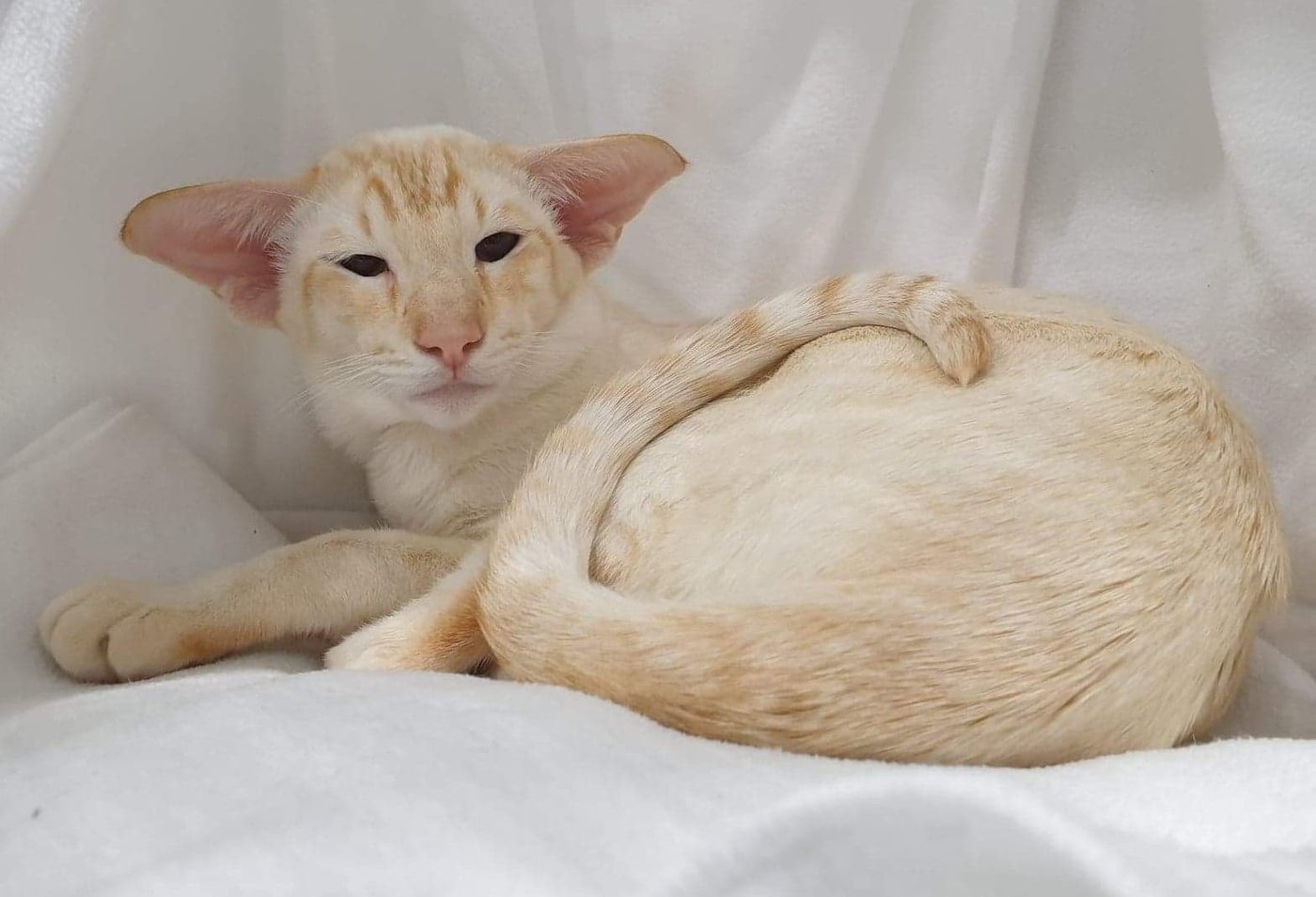
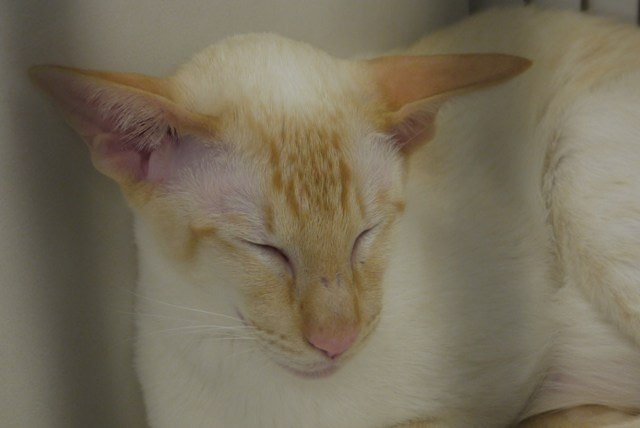
📸 Got a Red Point Siamese? Add your cat to this gallery
This gallery grows over time — pet or pedigree, every red point is welcome. Enter our photo competition and your cat could feature here.
Notable Show Winners
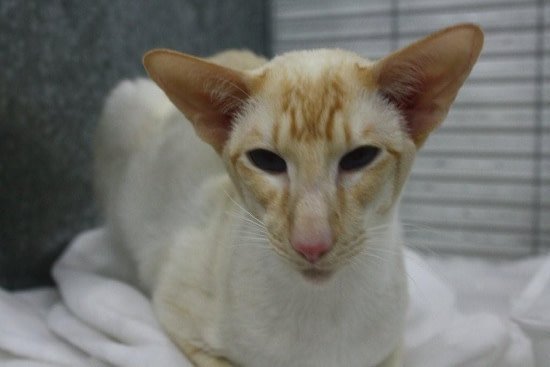
Red point Siamese that have made their mark in the show ring over the years.
Red Point Siamese Personality and Temperament
Colour has no bearing on temperament in Siamese cats—a red point is genetically identical to a seal point or cream point in terms of personality. That said, Siamese as a breed are famously vocal, social, and people-oriented.
Red point Siamese are demanding cats in the best possible way. They expect to be included in family life, will “talk” to you throughout the day with their distinctive voice, and form strong bonds with their owners. They are playful well into adulthood and retain a kitten-like curiosity and energy. Many Siamese owners describe their cats as dog-like in their loyalty and willingness to engage with their human companions.
Red point Siamese do not do well in homes where they’ll be left alone for extended periods. They thrive on interaction, mental stimulation and the sense that they are part of the household’s daily activities. This applies equally to red point, seal point, cream point and all other Siamese colour varieties. If you’re considering a red point Siamese, ensure you can commit to an interactive, engaged ownership experience.
Many breeders will tell you that Siamese cats are intelligent enough to train. Red point Siamese can learn to walk on a harness, respond to their name, and even play fetch. Their intelligence and responsiveness make them rewarding cats to live with—but also means they require enrichment and attention.
When Do Red Point Siamese Kittens Develop Their Colour?
This is one of the most magical aspects of owning a Siamese kitten. Red point (and all Siamese colour) kittens are born almost completely white. There may be faint hints of colour on the ears or tail, but the full richness of the point colour develops gradually over weeks and months.
By 4–6 weeks of age, the points typically begin to darken noticeably. A red point kitten will show warm peachy or buff tones emerging on the mask, ears and tail. By 12 weeks (around the time they leave for their new homes), the point colour is usually well-developed and distinctive. However, the colour will continue to deepen and intensify for the first 12–18 months of life.
Temperature can influence the shade of red point colouration. Siamese cats produce less pigment in warmer body areas and more in cooler areas (the face, ears, tail, legs and feet are naturally cooler). This means a kitten raised in a warm environment may develop slightly lighter points than one raised in a cooler home. This is a normal biological response and is not a sign of poor health or breeding.
Kittens also darken as they mature. A kitten’s points may be quite pale initially; by adulthood (1–2 years), the same cat’s points will be noticeably richer and deeper. This maturation process is entirely normal and expected.
Red Point Siamese Health
Red point Siamese are subject to the same health considerations as any Siamese cat. The colour variety itself does not predispose red points to specific health issues. However, prospective owners should be aware of breed-wide health concerns and responsible breeding practices.
Hypertrophic cardiomyopathy (HCM): This is a form of heart disease that can affect Siamese cats. Responsible breeders screen breeding cats for HCM using echocardiography and only breed cats with clear or borderline results. When acquiring a red point kitten from a breeder, ask for evidence of HCM screening in the parents.
Progressive retinal atrophy (PRA): This is an inherited eye condition that, over time, causes vision loss. It is less common in Siamese than some other breeds, but responsible breeders are aware of it and work to avoid it in their lines.
Congenital deafness: While most commonly associated with white cats, some Siamese lines have carried a predisposition to congenital deafness. This is rare in well-bred Siamese from reputable breeders, but it is worth asking about when acquiring a kitten.
Strabismus and nystagmus: Some Siamese cats have a slight cross-eye appearance (strabismus) or eye-flicking movements (nystagmus). These are largely cosmetic and do not typically affect vision or quality of life, though they are considered show faults. They appear to be linked to Siamese genetics and are not preventable through selective breeding alone.
The best protection against health problems is acquiring your red point Siamese kitten from a responsible, health-tested breeder who is transparent about health screening and breeding practices.
Red Tabby Point and Red Tortie Point Siamese
The red point colour can be combined with pattern genes to create visually striking variations that add another layer of complexity to Siamese colour genetics.
Red tabby point (also called red lynx point): A red tabby point Siamese has the red point colour but with visible tabby striping and barring on the points. The mask shows the characteristic “M” marking on the forehead, the ears have thumb-marks, and the legs and tail display bars or stripes. The body remains the characteristic warm cream. Some breeders and owners find red tabby points even more visually striking than solid red points, as the pattern adds texture and definition to the points. Interestingly, the GCCF standard for red point explicitly permits barring and striping, so a red point with tabby markings may be registered and shown as a standard red point.
Red tortie point (also called red patched tabby point or flame tortie point): A red tortie point Siamese is female (or, rarely, a male with an XXY chromosome pattern). She carries both the orange gene and a non-orange colour allele on her two X chromosomes, resulting in a “patched” appearance where the points show both red and a darker colour (often brown or seal). Red tortie points may also show tabby markings within the coloured patches, creating a complex and beautiful pattern. These cats are genuinely unique—no two red tortie point cats will have exactly the same patch pattern.
Red tabby and red tortie points are produced by crosses involving red point cats, tabby carriers, or other colour varieties. They are less common than solid red points but are recognised by GCCF breed standards and are occasionally seen in the show ring.
The GCCF Breed Standard for Red Point Siamese
Understanding the official breed standard is essential for breeders, judges and anyone seeking a truly representative example of the variety. Here are the key GCCF specifications for red point Siamese:
EMS Code: SIA d (Siamese, red)
Old Breed Number: 32a
Eyes: Brilliant intense blue, the deeper the better
Points (Mask, Ears, Tail): Mask, ears and tail should be rich bright reddish gold. Legs and feet are slightly paler than the mask and ears. Barring and striping on the mask, legs and tail is permissible. Freckles (small areas of darker pigmentation) may occur on the nose, paw pads, lips, eyelids and ears.
Body: Warm white. Shading, if any, should tone with the points.
Nose Leather, Eye Rims and Paw Pads: Pink
The breed standard reflects centuries of selective breeding to refine the Siamese type while maintaining the colour integrity that makes the variety so striking. A well-bred red point Siamese should display all of these characteristics: brilliant blue eyes, a distinct warm-cream body, and richly coloured points with the acceptable variations noted above.
Frequently Asked Questions About Red Point Siamese
What is a flame point Siamese?
Flame point is the American term for red point Siamese. There is no genetic or physical difference between a flame point and a red point—it’s purely a naming convention. The term “flame point” reflects the intense, flame-like reddish-gold colouration of the points. If you’re researching Siamese online and encounter “flame point,” you’re reading about exactly the same cat that UK and international breed standards call “red point.”
Are red point Siamese always male?
No. Red point Siamese can be male or female. However, the sex-linked nature of the orange gene does mean that the sex ratio of red point Siamese litters may skew male. A red point male carries the orange gene on his single X chromosome (XOY), which he inherited from his mother. A red point female must carry the orange gene on both her X chromosomes (XOXO), which means both her mother and father contributed the gene. This makes red point females genetically “rarer” to produce, though not impossible. Many litters will include both male and female red points.
Why does my red point Siamese have tabby markings?
Tabby markings (stripes, bars, or swirls) on a red point Siamese are completely normal and are permitted by the GCCF breed standard. Red point Siamese often carry tabby pattern genes, and the combination of red colouration and tabby patterns creates the distinctive appearance of red tabby point (or lynx point) Siamese. These cats are registered and judged as standard red points and are not considered a separate variety. The tabby markings become more visible with age and environmental factors, particularly in cooler temperatures when point colour is richer.
What is the personality of a red point Siamese?
Red point Siamese have the classic Siamese temperament: vocal, social, loyal and highly interactive. They form strong bonds with their owners, are playful and curious well into adulthood, and demand involvement in family life. They are not independent cats—they thrive on attention, conversation and engagement. Red point Siamese are often described as dog-like in their willingness to follow their owners from room to room and respond to their name. They require enrichment, play time and regular interaction to be happy and healthy.
How much does a red point Siamese kitten cost?
A pet-quality red point Siamese kitten from a responsible, health-tested breeder typically costs between £1,000 and £1,200. Show-quality red point kittens may cost more, depending on their pedigree, health certifications and the breeder’s reputation. These prices reflect the cost of responsible breeding practices, including health testing (HCM screening, genetic testing), veterinary care, socialisation, and the expertise required to breed healthy, well-tempered kittens. Kittens offered significantly below this range may come from irresponsible sources; conversely, exceptional pedigree lines may command higher prices. Always verify that your breeder is registered with the GCCF and has appropriate health screening in place.
Browse More Siamese Colour Profiles
Red point Siamese are just one of many striking colour varieties within the breed. Explore the full spectrum:
Traditional Colours
- Seal Point Siamese Cats — The classic, iconic Siamese with deep seal-brown points
- Blue Point Siamese Cats — A cool, silvery-grey version of seal point
- Chocolate Point Siamese Cats — A warmer, lighter brown than seal point
- Lilac Point Siamese Cats — The dilute chocolate, with soft pinkish-grey points
Red Series Colours
- Cream Point Siamese Cats — The dilute red point, with soft pale cream points
Patterned Colours
- Tabby Point Siamese Cats — Any Siamese colour combined with tabby striping
- Tortie Point Siamese Cats — Patched colours combining two or more base colours
Reference & Resources
- Siamese Colour Chart — A complete visual and genetic reference for all Siamese colour varieties
- Siamese Cat Breed Profile — The complete hub for Siamese breed information, history, and characteristics
Finding a Red Point Siamese Breeder
Finding a responsible breeder should be your first step towards acquiring a red point Siamese kitten. Look for breeders who are registered with the GCCF, who perform health testing (particularly HCM screening) on their breeding cats, who can provide references, and who are willing to answer detailed questions about their breeding practices. A good breeder will ask you questions in return about your home, lifestyle and expectations—they care about where their kittens go.
For a comprehensive guide to identifying a good cat breeder and what to look for during your search, see our detailed guide: Finding a Good Cat Breeder.
Red point Siamese will repay your careful search with years of loyal, loving and entertaining companionship. These are not cats for hands-off owners, but for anyone willing to embrace an interactive, vocal, intelligent and deeply affectionate cat breed, a red point Siamese is an extraordinary choice.
Bringing home a kitten? Don’t wing it.

I wrote an eBook for new kitten owners that covers everything you actually need to know — how to prepare your home, what to feed, litter training that actually works, stopping the biting and scratching, reading your kitten’s body language, and what’s normal versus what’s not. It comes with printable checklists, a vaccination record and a first-week diary.
It’s called Kitten Care for New Cat Owners, it’s an instant download, and it will save you a lot of late-night Googling at 4am.